Resilience and challenges in the global economy
The global economy is demonstrating remarkable resilience, despite all the uncertainty associated with Trump’s tariff policy. However, the risks to the global economy persist, with trade relations posing one of the biggest challenges.

The global economy is demonstrating remarkable resilience
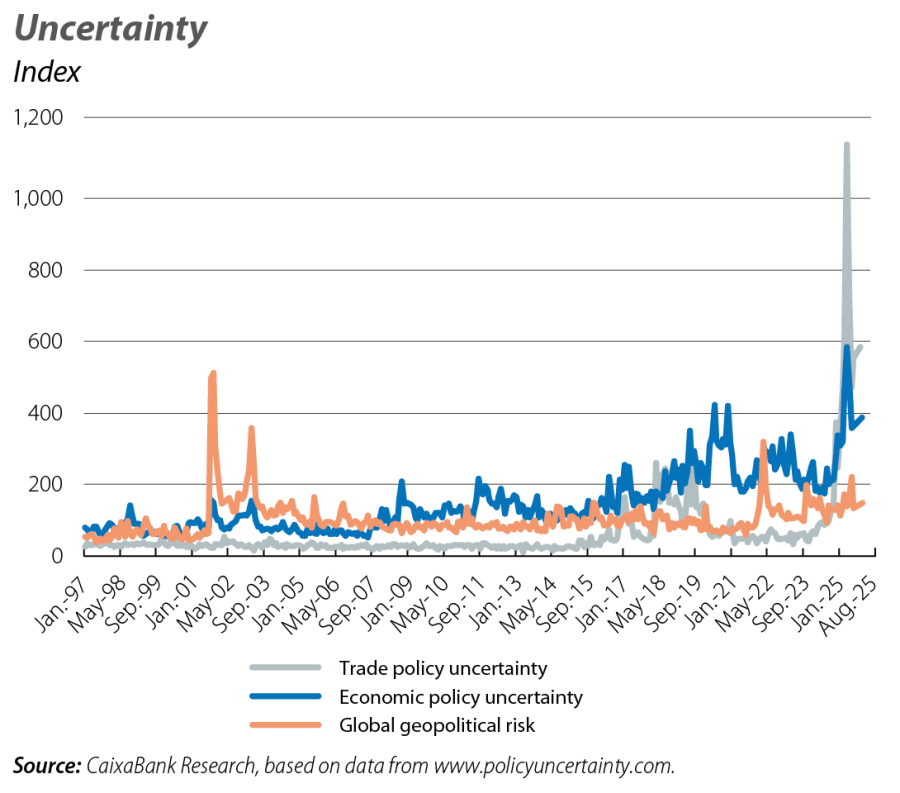
The global economy is demonstrating remarkable resilience, despite all the uncertainty associated with Trump’s tariff policy. In September, the Purchasing Managers’ Index (PMI), which indicates business activity, stood at 52.4 points (50 marks the threshold of positive growth), and in July, August and September as a whole it reached its highest level this year. This good result is explained by the improvement in both services and manufacturing. For Q3 as a whole, the data from the major international economies showed some improvement, which justifies the OECD’s upward revision of 0.3 pps in its global growth forecast for 2025, placing it at 3.2%. However, the risks to the global economy persist, with trade relations posing one of the biggest challenges. The summer agreements left the «rules of the game» more or less defined and significantly reduce the risk of the most adverse scenarios, but the uncertainty has not dissipated and further shifts in the US’ position cannot be ruled out, which explains why the trade uncertainty indices remain very high.
The euro area closes another quarter of very modest growth in Q3
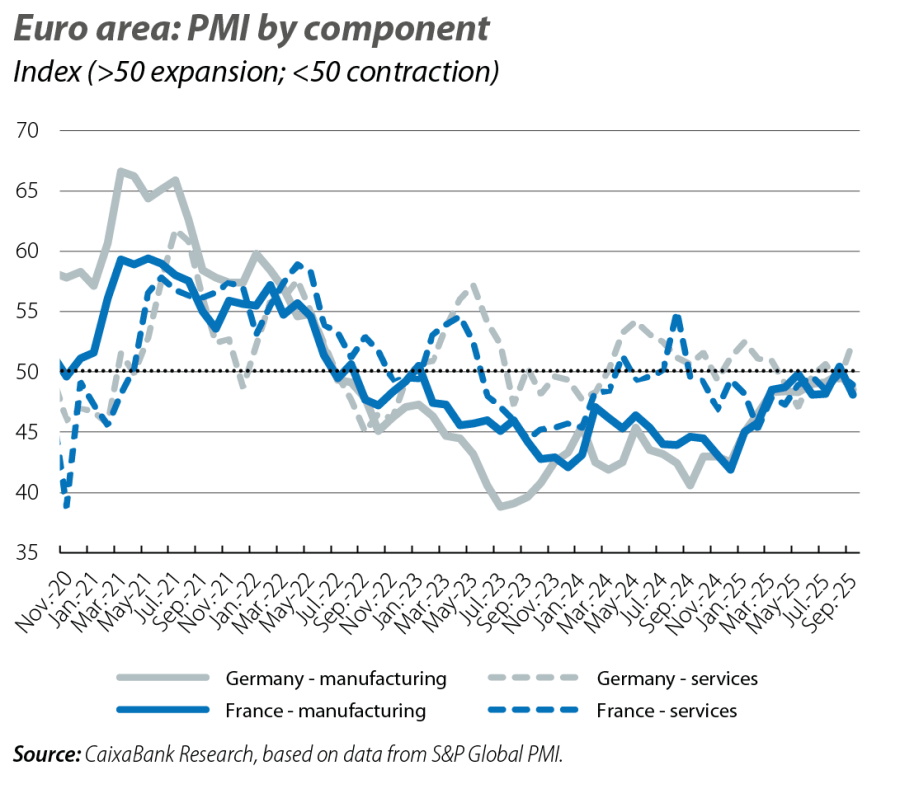
After growing by just 0.1% quarter-on-quarter in Q2, reflecting the falls recorded in Germany and Italy (–0.3% and –0.1%, respectively) and with France growing solely due to the accumulation of inventories, the available indicators for Q3 do not suggest any significant rebound in growth in the euro area. Specifically, the PMI climbed 0.2 points in September to 51.2, which marks a 16-month high but is still only just above the 50-point threshold that denotes positive growth, while the average for Q3 stands at 51.0, compared to 50.4 in Q2. In addition, there are some divergences among the major economies. Germany closed Q3 with a little more vigour (the PMI rose in September to 52,0), but the weakness in the components related to orders has dampened any optimism, as shown by the fall in the Ifo Business Climate Index in September (to 87.7, with 100 being the reference threshold). Despite the major infrastructure plan that has been proposed, but has not yet begun to be implemented, the business environment remains unfavourable, and this explains the cautiousness in the German economy in the short term. Meanwhile, in France economic activity remains subject to the country’s fragile political situation and the PMI fell in September by more than 1 point, placing it at 48.1, marking the thirteenth consecutive months below the 50-point threshold. The lack of support to approve the new budgets led to the resignation of Prime Minister Lecornu, barely a month after his appointment, reiterating the climate of political uncertainty and hindering the introduction of measures to bring the fiscal deficit down from the 5.6% of GDP forecast for this year.
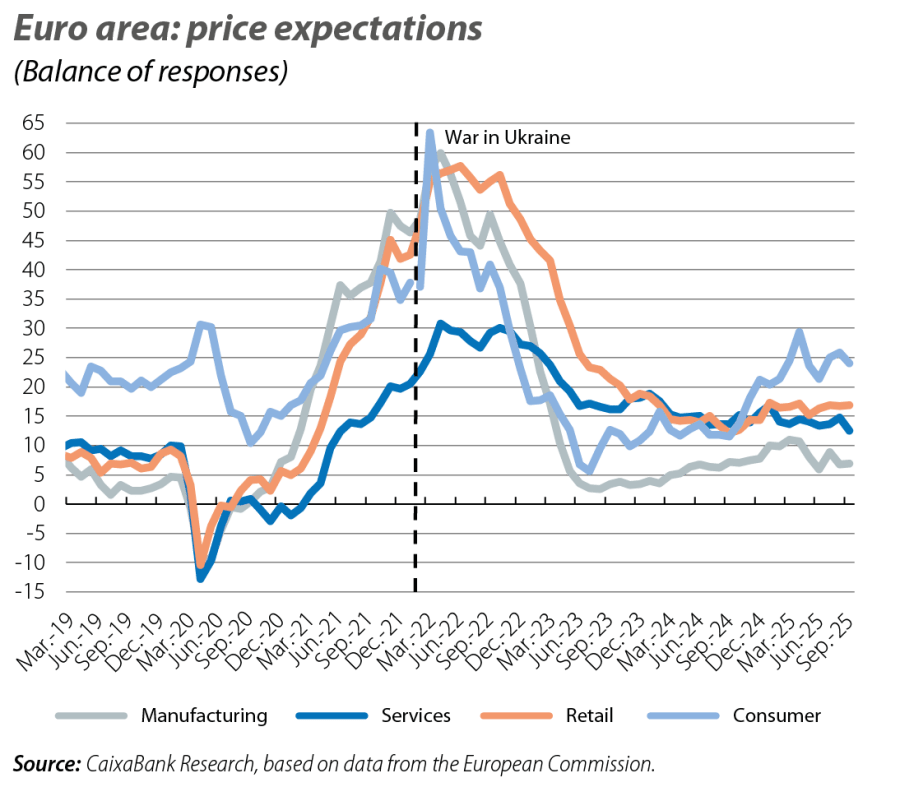
In this context, inflation remains practically stable around the ECB’s target: in September, the headline rate stood at 2.2%, while the core index remained at 2.3% for the fifth consecutive month. In addition, economic agents’ inflation expectations remain fairly contained: despite higher tariffs, business leaders in the manufacturing, retail and service sectors in September still showed no intention of substantially raising their sales prices, and consumers are also confident that prices will remain relatively stable.
The US continues to surprise with its dynamism, although the labour market is cooling
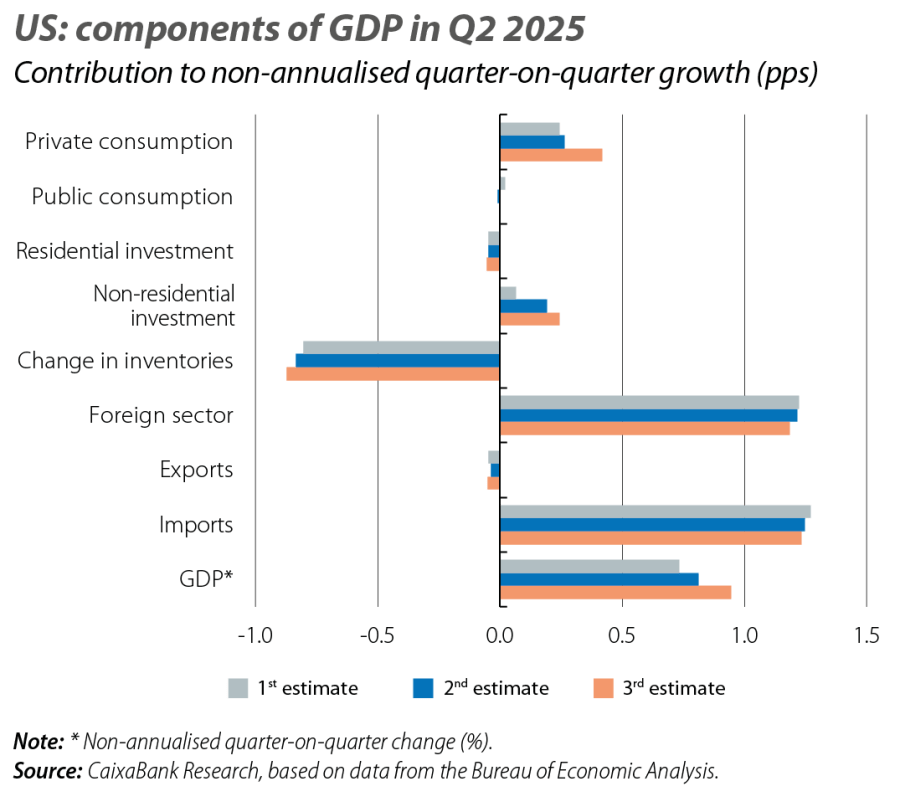
The US economy continues to show little evidence of the impact of the tariff hikes. For starters, the final revision of GDP reveals growth of 0.95% quarter-on-quarter in Q2, compared to the 0.8% initially published. This improvement is driven by private consumption, which remains robust (+0.6%), supported by highly dynamic investment in fixed capital (1.1%) amid the drive for greater investment in new technologies and AI (computer equipment +2.8% and software +6.1%). In addition, the latest data also point to a vigorous Q3. In fact, in August, private consumption continued to grow (retail sales rose again by 0.6% month-on-month) and industrial production remained buoyant. With all this, the New York and Atlanta Feds’ GDP trackers suggest that GDP has advanced by 0.6%-0.9% quarter-on-quarter in Q3.
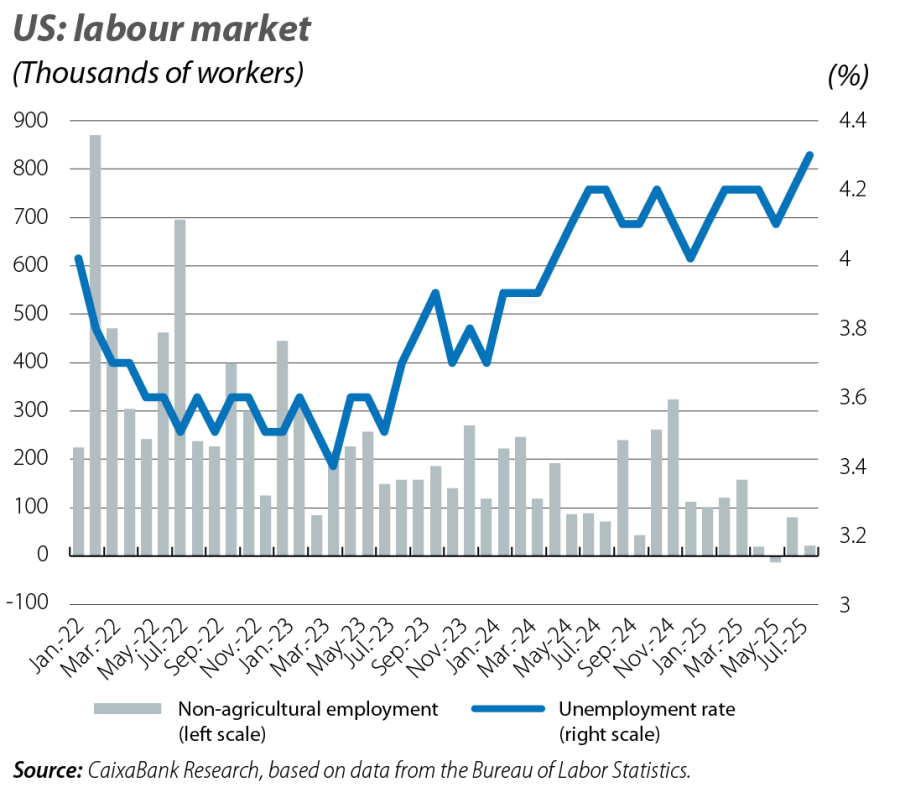
In this context of economic dynamism, inflation continues to show some downward resistance: in August, the headline rate rose by 0.2 pps to 2.9%, while the core index climbed just 0.1 pp, to 3.1%. Although these figures remain above the 2% reference rate, the data suggest that the tariffs have had a modest impact so far, possibly because firms are absorbing much of the cost increase they have induced. However, the latest labour market data are beginning to show signs of exhaustion. The annual revision of the statistics showed almost 911,000 fewer jobs in the period April 2024-March 2025 than initially estimated and in August just 22,000 jobs were created, compared to an average of over 100,000 jobs in the first four months of the year. The unemployment unemployment rate, meanwhile, has risen to 4.3%, compared to 3.5% at the beginning of the year.
The US federal government is facing a shutdown
The US federal government is facing a shutdown, as of the close of this report, due to the lack of agreement between Republicans and Democrats to approve the budgets (the main point of friction is the cuts in health spending). This first government shutdown in seven years means that all non-essential services are suspended until a new budget is approved. The impact on growth will depend on how long it lasts, but the historical evidence indicates that it is usually quite limited, especially as much of the losses caused by the shutdown are recovered once the government reopens. In fact, the five-week partial government shutdown between 2018 and 2019, the longest in US history, had an estimated cost of around 11 billion dollars (just 0.05% of GDP) according to the Budget Office, and almost 75% of those losses were recovered once the government resumed normal operations.
China’s domestic demand remains weak
Retail sales grew by 3.4% year-on-year, compared to 5.4% on average in Q2. This loss of momentum will continue in the coming months: household spending will be weighed down by the exhaustion of the effect of the tax incentives, which had stimulated the purchase of durable goods at the beginning of the year. Industrial production, meanwhile, maintained resilient growth rates of 5.2% year-on-year, albeit 1 pp lower than the Q2 average, and looking ahead it faces the challenge of a more demanding external environment. In fact, in August, Chinese exports grew by 4.8% year-on-year (compared to a 7.4% year-on-year increase in Q2), weighed down by a fall of almost 33% year-on-year in exports to the US.
