Executive summary. The Spanish real estate market consolidates its expansive phase in 2025
The supply of housing continues to be insufficient to absorb demand, which continues to grow strongly due to the formation of new households. This housing deficit and the pressure it exerts on prices underscores the need to accelerate the construction of affordable housing.

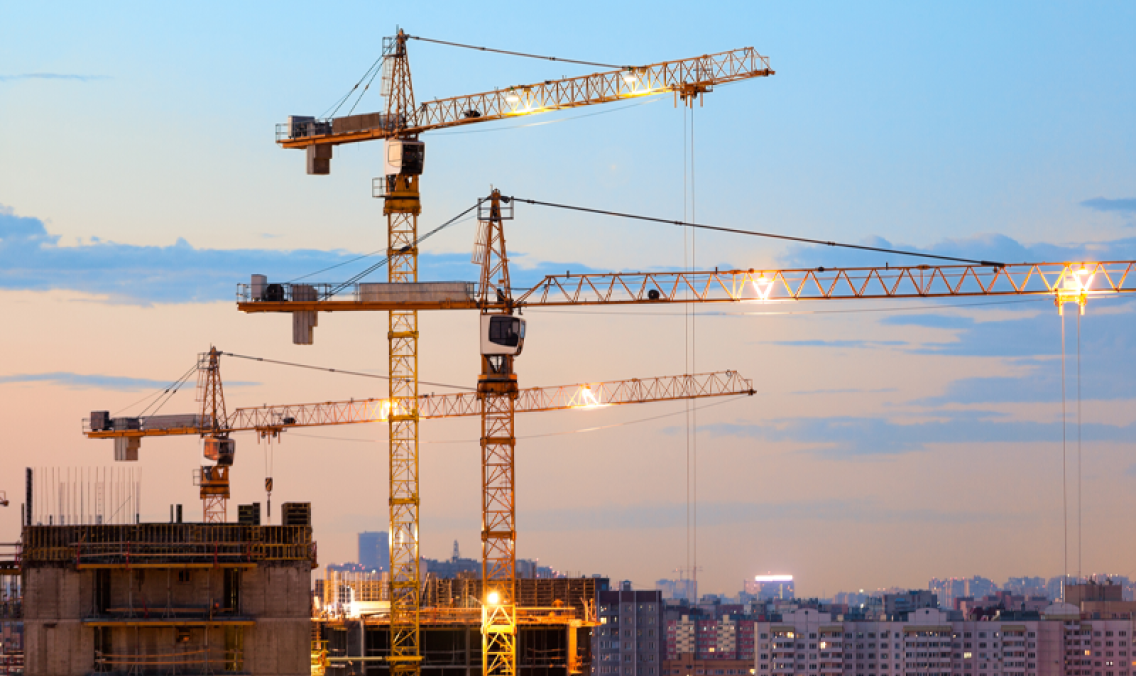
During the first half of 2025, the Spanish real estate market has confirmed that it is in full expansionary phase. The revival of demand, which began in the second half of 2024, has consolidated this year with 700,000 sales registered in the trailing 12 months to June, 19.7% more than the first half of the previous year. This dynamism is explained by the improvement in financing conditions, increased household purchasing power and sustained population growth. On the supply side, the construction sector is showing signs of recovery. In the 12 months to May, around 132,000 permits for new homes have been approved, a 13% increase year-on-year. However, new housing production is still not reaching sufficient levels to balance the market and the housing deficit continues to widen.
The housing deficit that has accumulated in recent years is, in fact, one of the determining factors behind the recent price pressures, which continue to accelerate and hamper housing affordability, especially in areas of higher demand. Although some indicators are beginning to detect signs of overvaluation in the Spanish real estate market, it should be recalled that the current context is very different from the boom of the 2000s. Households, the construction and development sector, and the financial system itself are in a much stronger financial position this time round, and the risks of a sudden correction in house prices are contained. Still, imbalances persist that deserve attention.
The housing deficit accumulated in recent years is generating price tensions. We estimate that between 2021 and 2024, a deficit of between 515,000 and 765,000 homes has accumulated, according to different definitions, which is equivalent to 3%-4% of the stock of primary homes. In the second article of this report we show that the correlation between the deficit and the growth of house prices is significant: it is estimated that the accumulated deficit could explain up to 39% of the increase observed in the period, which underscores the urgency of reviving residential development to mitigate price pressures. At the territorial level, the deficit is concentrated in the provinces with the greatest demographic pressure and tourist demand, such as Madrid, Barcelona, Alicante, Valencia and Malaga, while in depopulated regions the deficit is smaller.
The third article focuses on foreign demand, which has played a significant role in the current expansive cycle. In year to Q1 2025, approximately 18% of the homes sold have been acquired by foreign citizens, reaching 133,000 sales, an all-time high. More than half of these purchases are by resident foreigners, while 44% of them are by non-residents. The profile of these non-resident buyers has evolved and shows a greater diversity of nationalities and a growing interest in new locations. The provinces located along the Mediterranean arch and the island regions are where most of the foreign demand is concentrated, but new hotspots have also emerged in less traditional areas, such as Castellón, Asturias, Huelva and Córdoba.
Non-resident foreign buyers tend to have higher purchasing power, which translates into higher average prices and a preference for mid-to-high or high-end properties, a trend that directly influences market developments in certain areas.
Once again, the main conclusion of this report is that the supply of housing remains insufficient to absorb a demand that continues to rapidly expand due to the formation of new households, primarily as a result of the significant migration flows that our country is experiencing. This housing deficit and the pressure it exerts on prices underscores the need to accelerate the construction of affordable housing.