The Spanish economy maintains its momentum, but inflation takes centre stage
The Spanish economy is entering the final stretch of 2026 with solid growth and a more prominent role of domestic demand, although the rise in inflation and heightened uncertainty surrounding the conflict in the Persian Gulf advise caution. In its regular review, the National Statistics Institute (INE) confirmed the momentum of the economy in Q2 and reinforced the view of growth driven mainly by domestic factors. As the third quarter draws to a close, indicators suggest that economic activity remains buoyant, driven by the dynamism of the labour market and services. However, the rise in energy costs has pushed inflation close to 5% and could reduce household spending power in the coming months.
Growth in Q2 is more clearly supported by domestic demand
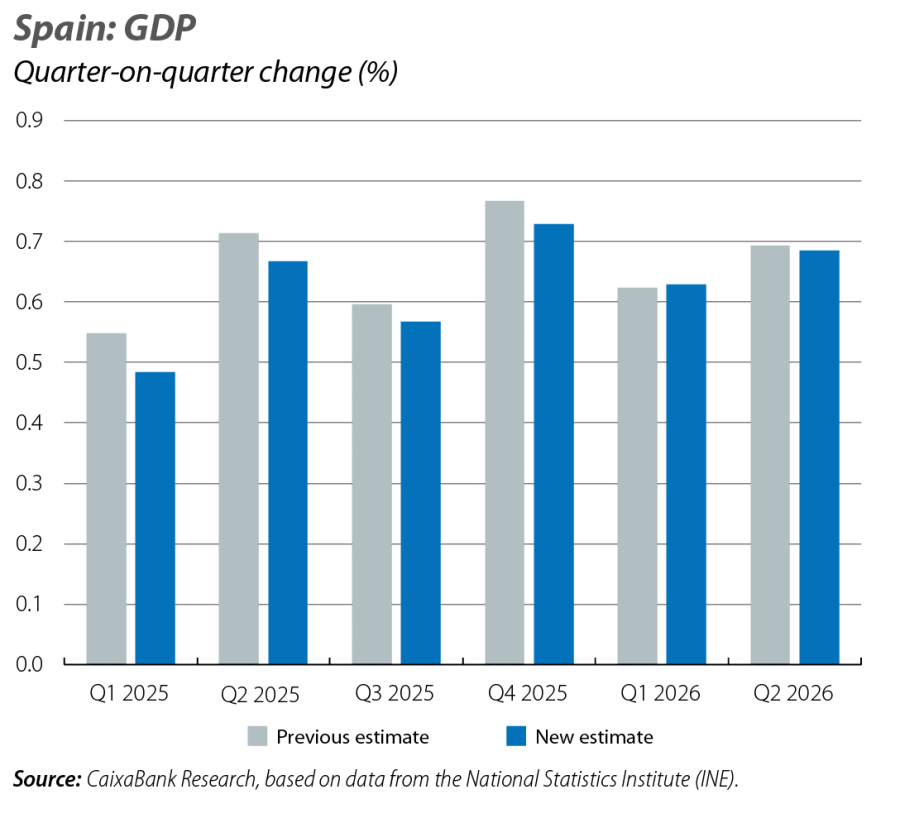
The INE’s review confirms this view: the economy maintained solid growth in Q2, with GDP advancing by 0.7% quarter-on-quarter. It also highlights the role of domestic demand, which contributed 1.1 pps to growth, driven by the dynamism of private consumption and investment: the former increased by 1.2% quarter-on-quarter and the latter by 1.4%. In contrast, external demand subtracted 0.5 pps from growth due to the sharp rise in imports, as might be expected in a context of strong domestic spending. This composition reflects an economy that is less reliant on momentum in the external sector, but also more vulnerable to a potential loss of household purchasing power. For now, the savings cushion and job creation continue to support consumption, although rising prices could begin to strain household real incomes.
Indicators reveal uneven progress across sectors in Q3
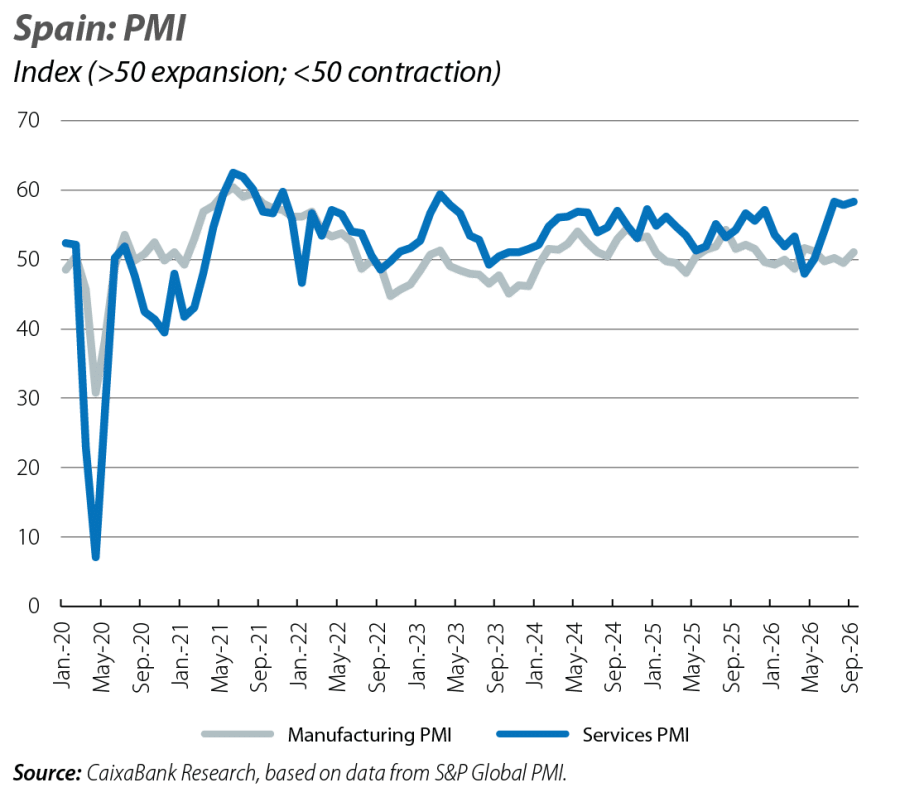
The latest data suggest that economic activity remained buoyant in Q3, albeit with mixed signals. The services PMI reached 58.3 points in September and averaged 58.1 points in Q3, well above the 50-point threshold denoting growth. The manufacturing industry also improved at the end of the quarter, with a PMI of 51.0 points, although the quarterly average of 50.2 points indicates a more moderate pace of growth. On the demand side, retail sales fell by 0.4% year-on-year for the second consecutive month in August, adding to the weakening observed in this indicator since the start of the conflict. Overall, the strength of the services sector offsets the sluggishness in retail consumption and industry, although inflation could further weaken consumption by eroding household purchasing power.
Energy continues to drive up inflation
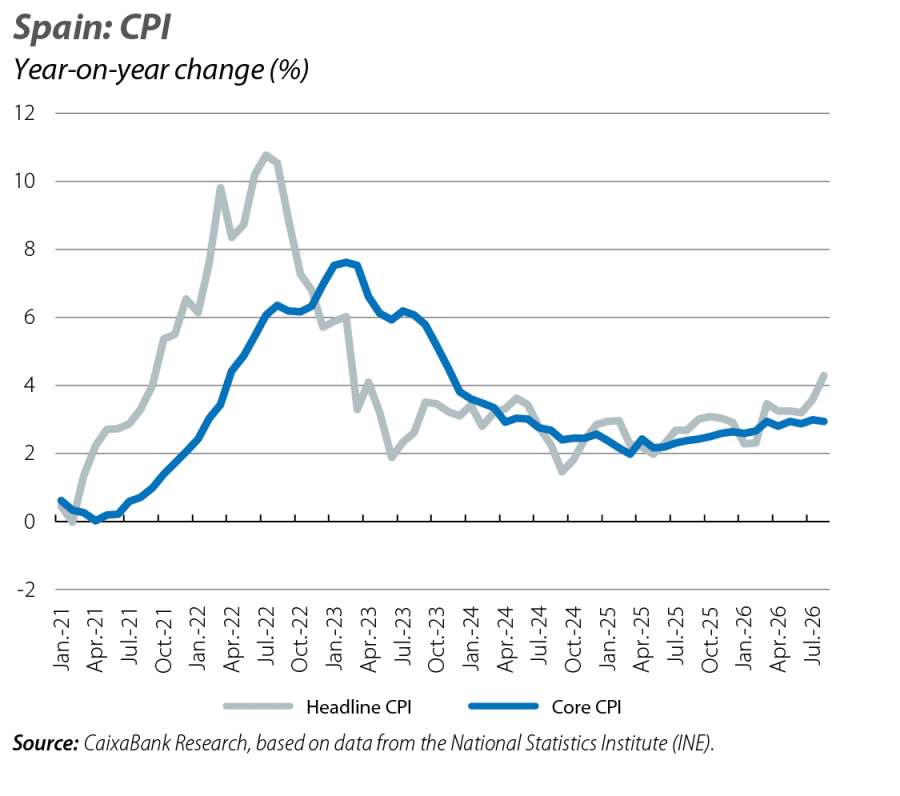
One of the main risk factors in the current scenario is the resurgence of inflation. Headline inflation rose by 0.6 pps in September to 4.9%, while core inflation increased by 0.2 pps to 3.1%. The increase was again concentrated in energy, where inflation reached 21.6%, amid rising oil and gas prices and changes in fuel subsidies. However, inflationary pressures also intensified in some core components, such as industrial goods, while services inflation remained close to 4%. This figure exceeds the range forecast by CaixaBank Research and introduces upside risks to our inflation forecast. Nevertheless, the measures approved by the government – notably the increase in fuel discounts to 20 cents per litre and the VAT cut on electricity from 21% to 10% – could bring inflation slightly below 4% in the coming months, which will help cushion part of the shock.
Employment continues to enjoy rapid growth, influenced by the exceptional regularisation
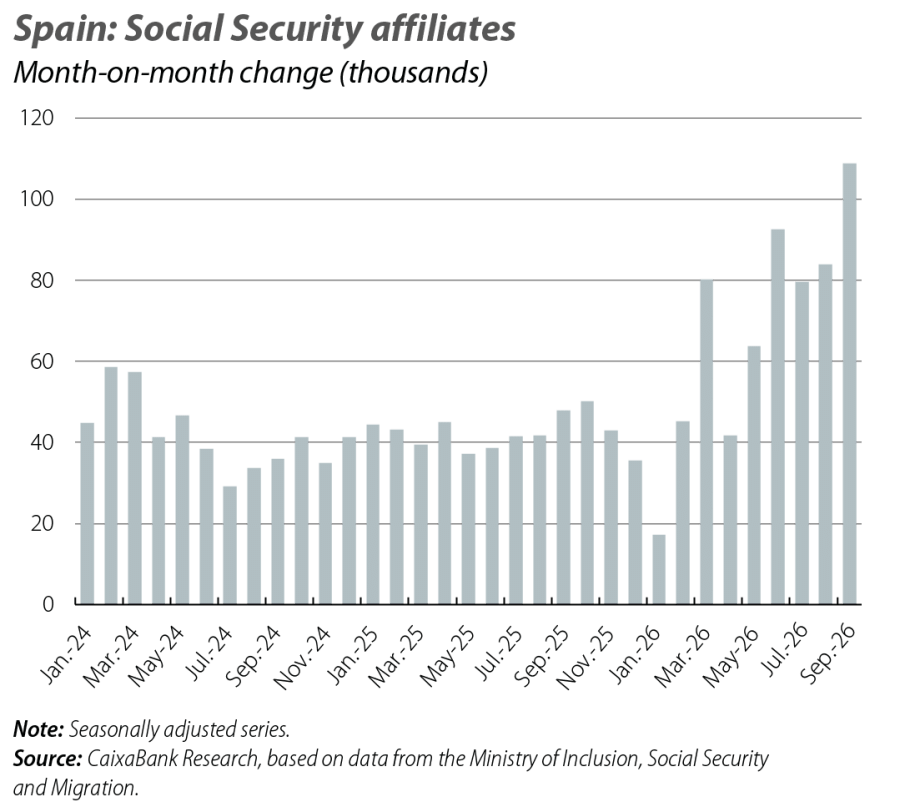
The labour market ended the third quarter with a significant improvement. The average number of registered workers rose by 92,327 people in September, which represented a 0.4% rise compared to August, exceeding the usual growth for this month of the year. The figure remained influenced by the extraordinary regularisation of undocumented migrants, which since April has enabled 420,000 people to register with Social Security, 83,000 of them in September. In seasonally adjusted terms, the number of affiliates rose by 108,832 people, a 0.5% month-on-month increase and 0.1 pps more than the average of the previous three months. However, given the impact of the regularisation on the data, this acceleration cannot be attributed to an improvement in the underlying dynamics. The upcoming data, once the contribution of this process fades, will allow for a more precise assessment of the strength of the labour market.
Household savings continue to provide a significant cushion
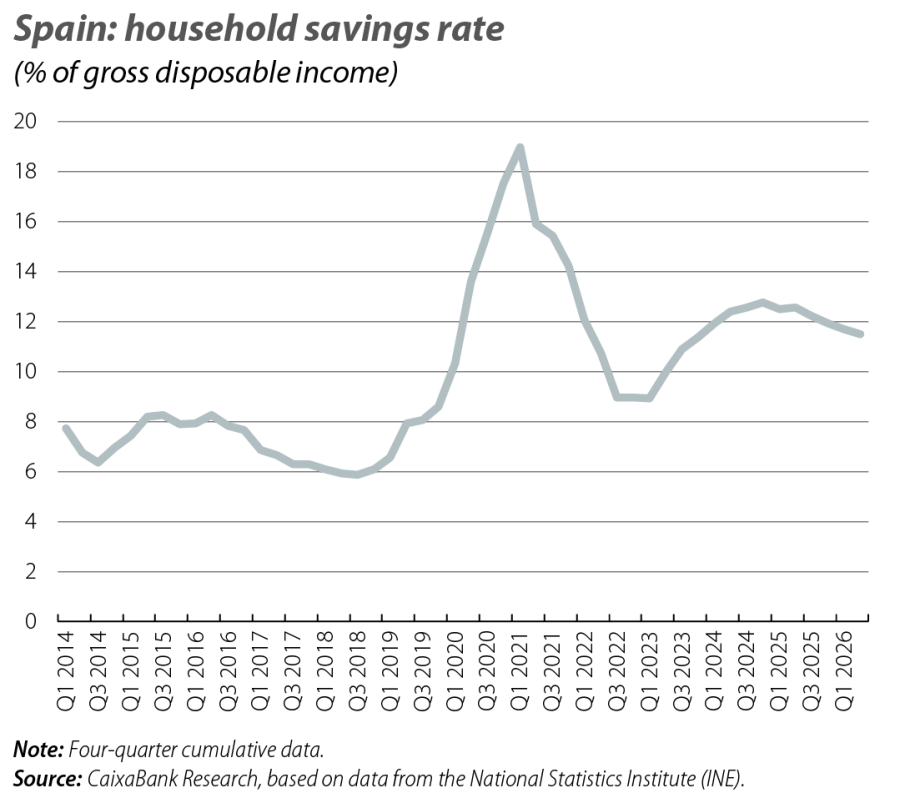
Unlike the previous inflationary episode, households are facing the current one from a relatively comfortable financial position. The savings rate moderated slightly in Q2 as consumer spending grew more than disposable income. The strong performance of the latter, driven mainly by the strength of the labour market, prevented a sharper decline. Specifically, gross disposable income increased by 5.5% year-on-year, compared to a 7.1% rise in consumption. The savings rate thus fell to 11.5% of gross disposable income on a cumulative basis for the trailing four quarters, compared to 12.6% a year earlier. Despite this moderation, the savings rate remains well above the 8.6% average recorded between 2000 and 2019. This gives households some leeway to cushion the impact of rising inflation on consumption, although this buffer will diminish if spending continues to outpace incomes.
Housing demand remains high and price pressures persist
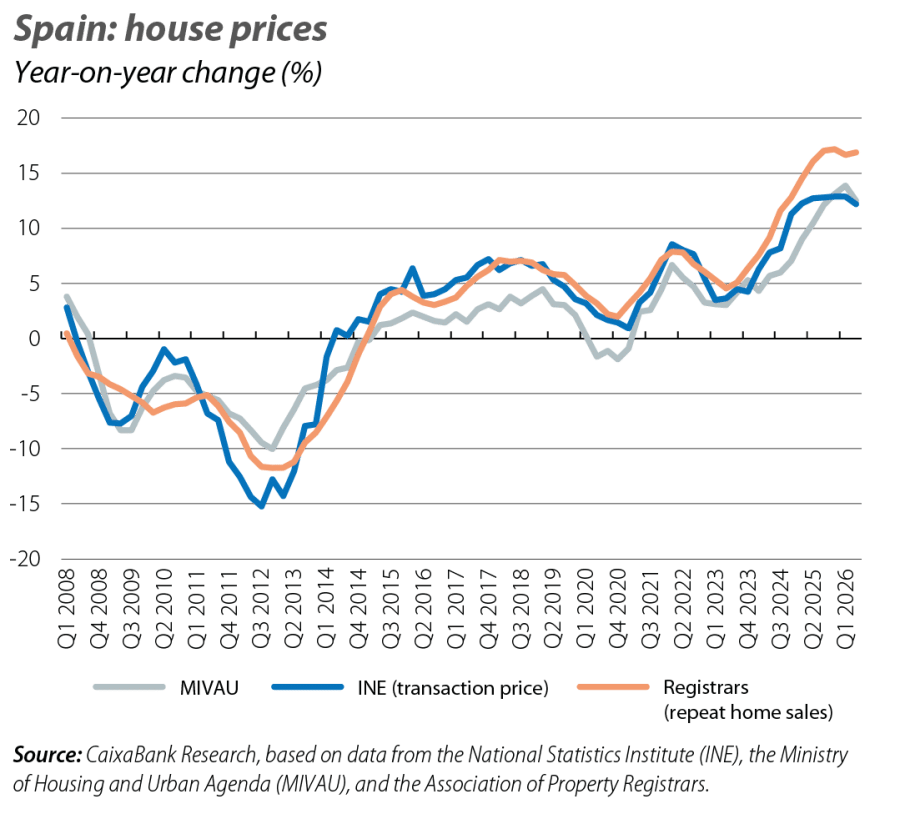
Sales fell by 5.1% year-on-year in July, totalling around 409,000 transactions between January and July. Although this is 3.0% lower than in the same period last year, the figure remains relatively high and similar to the levels of 2023 and 2024. The correction is widespread, with noticeable declines in Madrid and Barcelona. For now, this development seems more like a correction following the rapid growth of 2025, rather than a significant weakening of demand. House prices also slowed their growth rate: the appraisal value increased by 12.5% year-on-year in Q2, compared to 13.9% in the previous quarter, and rose by 1.7% quarter-on-quarter. Although this slowdown introduces a downward bias for the price growth forecast, supply remains insufficient to meet the ongoing high demand. Consequently, significant upward pressures are likely to persist over the coming quarters.