Risk aversion dominates market sentiment
Geopolitical tensions and energy concerns are fuelling market caution, while risk aversion pushes sovereign bond yields lower and European risk premia rise. The ECB and Fed keep rates unchanged, concerns over AI weigh down stocks and the dollar shows volatility.
Geopolitical tensions and energy concerns fuel market caution
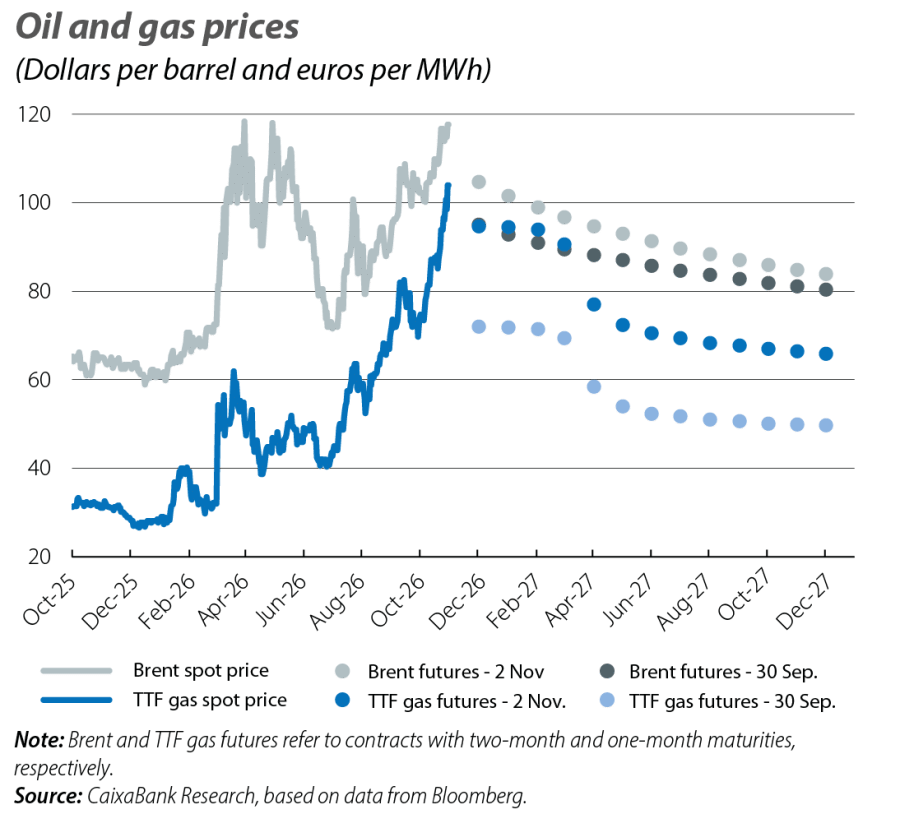
The conflict in the Middle East, amid an intensification of direct tensions between Iran and Saudi Arabia, led to sustained uncertainty over global energy supplies and kept Brent crude above 100 dollars a barrel throughout the month. It even exceeded 115 dollars, reaching new highs for the year. The TTF natural gas price was also affected and surged by over 40% in October, bringing it close to €100/MWh. Brent and TTF gas futures curves for the coming quarters also shifted upwards, reflecting revised market expectations amid the persistent risk of supply disruptions. Investors also faced renewed doubts surrounding the sustainability and profitability of AI-related investment amid tight financial conditions. In Europe, risk aversion also increased amid persistent fiscal risks in France. This led to a sharp widening of the French sovereign risk premium, some spillover to Italy and a limited impact on Spanish and Portuguese risk premia. In this context, the ECB and the Fed kept interest rates unchanged but signalled that monetary policy would remain restrictive.
Risk aversion pushes sovereign yields lower
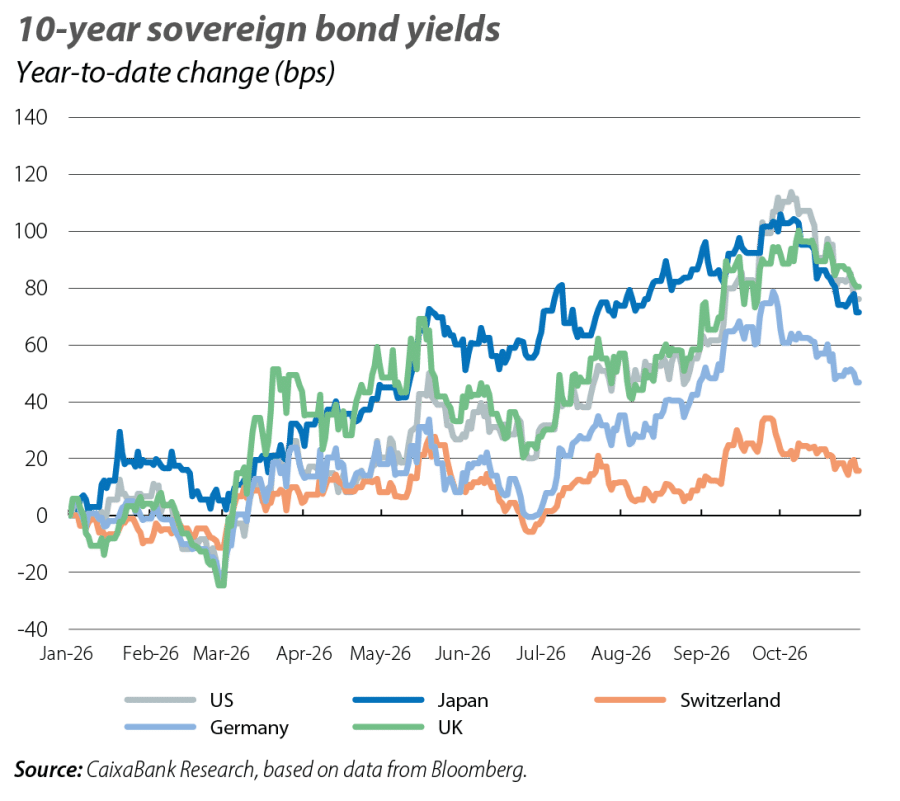
Despite higher energy prices, US and German government bond yields fell, reflecting risk aversion amid geopolitical uncertainty and doubts surrounding stock valuations in the technology and AI sectors. The yield on the 10-year treasury reached its peak at the beginning of the month, hitting 5.30%, a level not seen since 2002, before retreating to around 5.0%. This was still more than 30 bps above the end of september, while the year to date increase remains close to 80 bps. German yields fell, with the yield on the 10-year Bund dropping by more than 20 bps. In the United Kingdom, sovereign yields reached their highest level in almost 20 years in early October before falling in the latter weeks, as the government’s forecasts and budgets were received relatively favourably.
European risk premia rise, with tensions concentrated in France
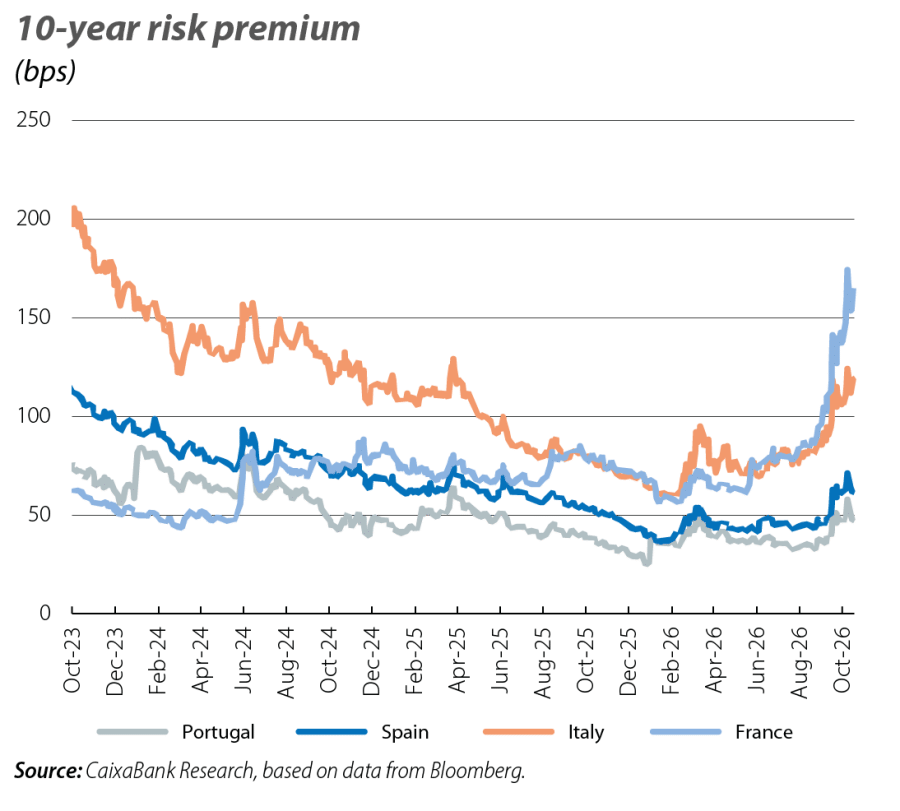
Euro area sovereign debt markets came under pressure amid concerns over France’s public finances. Specifically, France’s high public debt and the political difficulty of bringing it down, given a fragmented parliament and presidential elections due in the spring, pushed the yield on the 10-year French government bond (OAT) above 5%. The risk premium continued to widen too, exceeding 170 basis points after reaching levels not seen since the European sovereign debt crisis, before easing slightly towards the end of the month after rating agency Moody’s maintained France’s Aa3 credit rating. Against this backdrop, both ECB President Christine Lagarde and the governor of the Bank of France stated that it was for the French authorities to correct the fiscal imbalances, suggesting that the conditions for an intervention by the ECB have not currently been met. The spillover to other euro area risk premia was limited. Italy’s spread remained around 120 bps, well below the levels reached in 2023, while the Spanish and Portuguese spreads rose by less than 10 bps and remained close to their lowest levels since 2009.
The ECB and Fed keep rates unchanged but signal further hikes to come
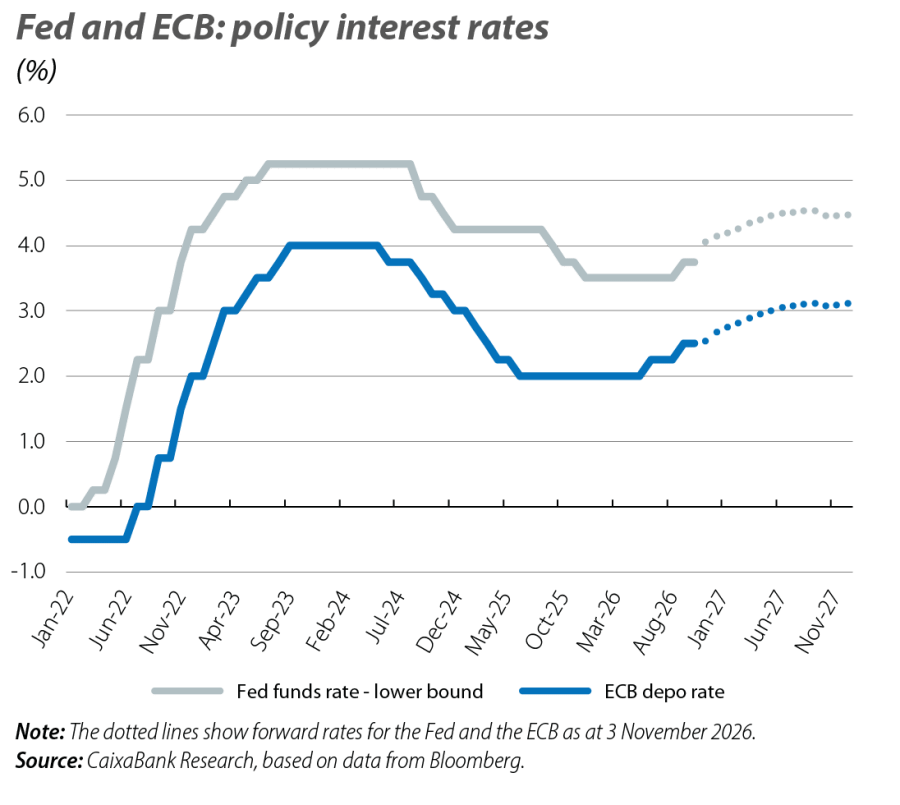
As expected, both the ECB and the Fed left interest rates unchanged at their October meetings. The ECB unanimously kept the deposit rate at 2.50%, arguing that conditions remain consistent with a gradual tightening of monetary policy. With financial conditions tighter and core inflation readings subdued so far, the ECB opted to await further data before taking any new action. Besides the monetary policy message, the main focus was the announcement by Christine Lagarde that she will step down as ECB president in early February, around eight months before the end of her term. The Fed kept the federal funds rate within the 3.75%-4.00% range, although two members dissented in favour of a 25-bp increase. Chair Warsh stressed the need to gather more information before considering further monetary policy adjustments, while acknowledging that inflation remains too high and highlighting the strength of the US economy. Despite the pause, markets continued to price in interest rate rises at the Fed and ECB’s December meetings as the most likely scenario. Market expectations also point to a continuation of the monetary tightening cycle in 2027, with two further 25-bp increases by the ECB and one further hike by the Fed.
Concerns over AI weigh down stocks
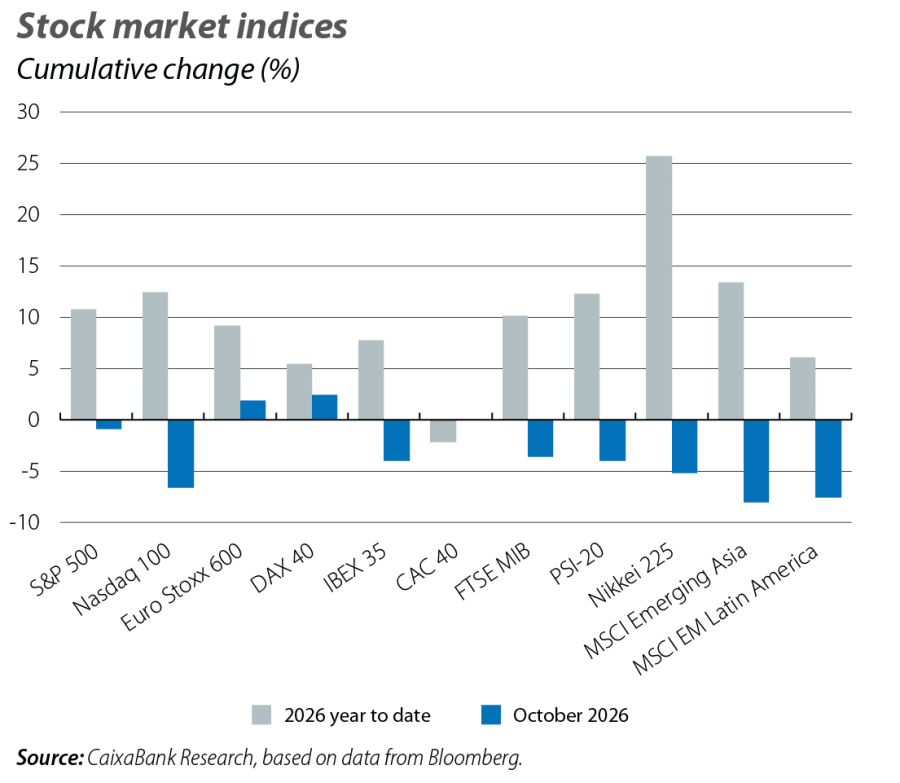
Equity markets were volatile in October, a month marked by the start of the third-quarter earnings season, with investors focused on large tech firms. Despite generally solid results, markets were concerned about the surge in AI investment and companies’ ability to generate sufficient returns to justify the vast levels of spending on these initiatives. This weighed on share prices in the second half of the month, with declines in the technology and semiconductor sectors reflected in several stock market indices. As a result, the Nasdaq 100 fell by around 6% in October, while the S&P 500, which is less exposed to these sectors, lost less than 1%. European markets performed better, with the STOXX 600 gaining almost 2% over the month, supported by sectors less exposed to AI. By country, Germany’s DAX index ended October up, while France’s CAC 40 managed to finish virtually flat (+0.1%), despite persistent concerns over the country’s fiscal position.
A volatile dollar against major currencies
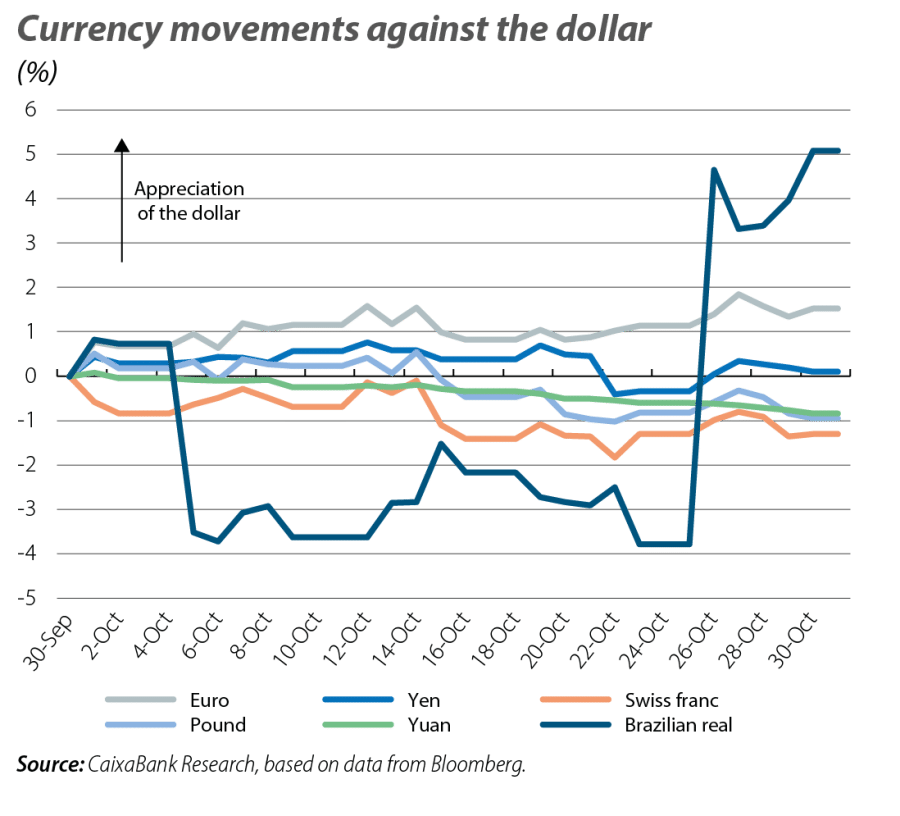
Concerns over France’s debt weighed on the euro, which fell nearly 1% against the dollar and traded at around 1.11–1.12 dollars. By contrast, sterling gained more than 1% against the dollar, while the yen ended the month broadly unchanged. Among emerging-market currencies, the Brazilian real was particularly volatile, weighed down by uncertainty surrounding the presidential election, which ended with Lula da Silva’s victory.