No summer lull for the markets
Financial markets experienced a rather intense and volatile summer, driven by the ongoing conflict in the Middle East and tensions in energy prices, which consequently put pressure on inflation and monetary policy expectations.
The Middle East, volatility and uncertainty shape markets in the summer
Financial markets experienced a rather intense and volatile summer, driven by the ongoing conflict in the Middle East and tensions in energy prices, which consequently put pressure on inflation and monetary policy expectations. July and August were marked by a renewed rise in oil and gas prices, a widespread increase in interest rates, and a certain weakness in the US dollar. This occurred amid investors’ somewhat cold reaction to Fed Chair Kevin Warsh's lack of clear communication, and the currency and bond market interventions by Treasury Secretary Scott Bessent. Despite this context, the stock markets of the major advanced economies managed to end July and August with gains, thanks to a strong earnings season.
Energy price tensions
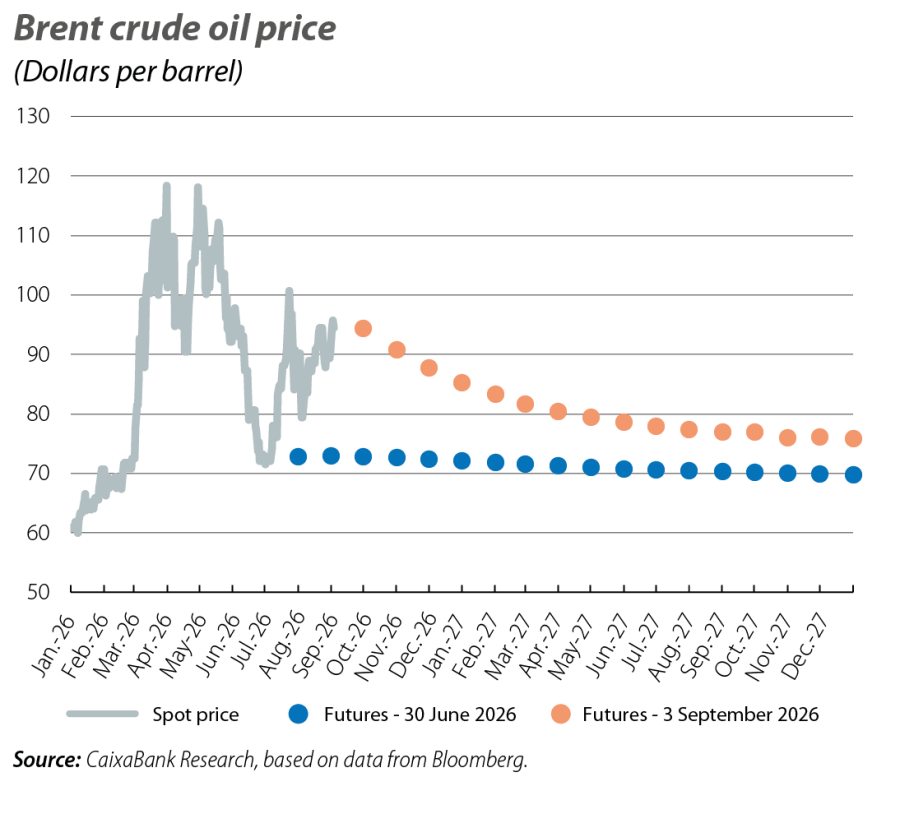
The price of Brent crude oil fluctuated within an exceptionally wide range, influenced by the diplomatic shifts in the Middle East conflict. Until early July, Brent crude was fluctuating around 70 dollars per barrel, reflecting hopes for a resolution to the war and a recovery in supply, which moderated its year-on-year decline to 6.3 mb/d. However, the resumption of hostilities, the renewed closure of the Strait of Hormuz, and Houthi threats in the Red Sea (an alternative route for Saudi Arabia's crude exports) pushed it above 100 dollars. At the beginning of September,
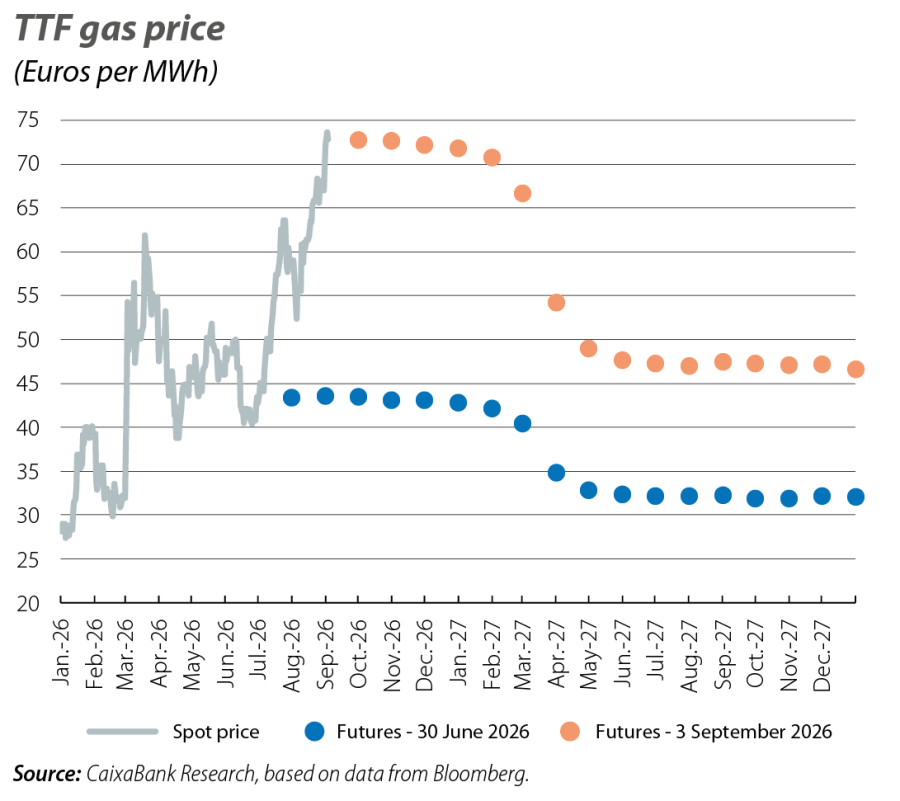
the price fluctuated between 90 and 95 dollars per barrel, torn between the Iran-Oman negotiations to establish a shipping corridor in Hormuz and new military attacks. The pressure on gas prices was even more intense, with the European benchmark (TTF) surging from around €40/MWh in June to over €70/MWh. This was driven by the interplay between the Middle East conflict, higher electricity demand in Europe (linked to the heatwaves), and relatively low gas reserves (just over 60% of the EU's capacity in August vs. 80% on average in the same month in recent years). On the other hand, July and August also saw widespread price increases among agricultural products and metals, while the Bloomberg Commodity Index rose by around 15%.
Widespread increase in sovereign interest rates
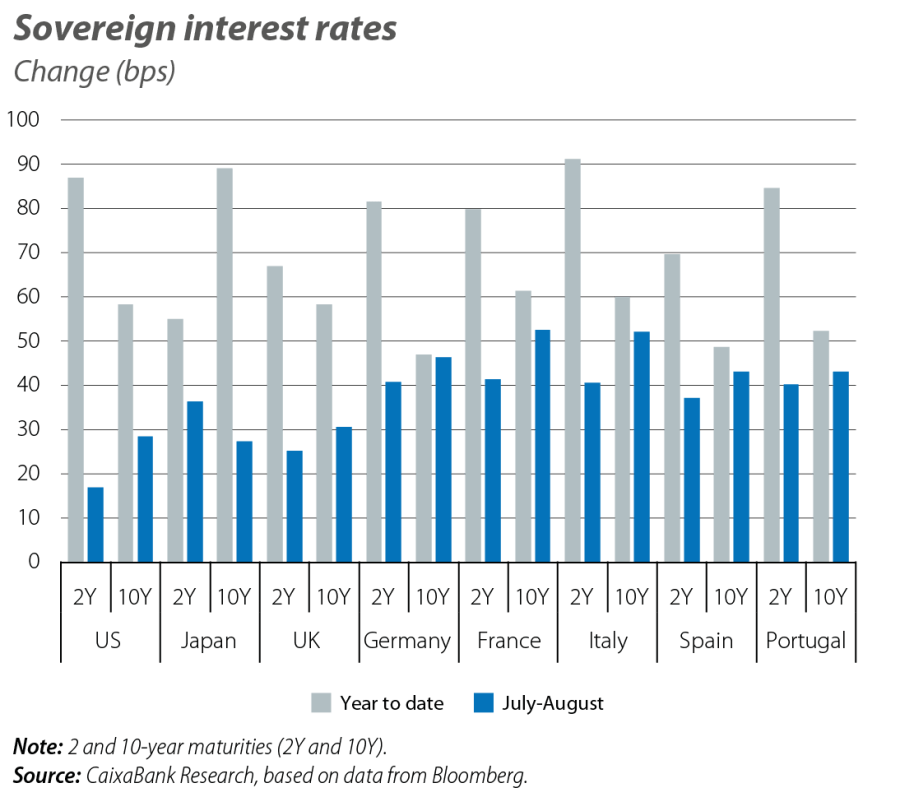
The rising cost of commodities drove up inflation expectations, with 2-year swaps in the US and euro area climbing to 2.5%-2.8%. Together with the resilience of economic activity (see the International Economy - Economic Outlook section) and the hawkish signals from some central banks, along with the global context of high public debt, these factors led to a widespread increase in sovereign interest rates. For the euro area, the cumulative increase reached around 50 basis points in the 2 and 10-year benchmarks, although peripheral risk premiums remained relatively stable. The US also experienced a rise in rates, but with different nuances (10-year rates rose by around 30 basis points, while short-term rates experienced less movement), in markets influenced by the interventions of Scott Bessent (Treasury) and Kevin Warsh (Fed). Specifically, the US Treasury announced an increase in long-term bond buybacks from September to November, raising the amount from the current 2 billion dollars per operation to 4 billion. Bessent presented the announcement in terms of market liquidity management, but among investors it was interpreted as a signal of the Trump administration's desire for low rates. Furthermore, this signal clashed with the philosophy of «less market intervention» advocated by Warsh since his arrival at the Fed.
Markets eye Fed and ECB hikes
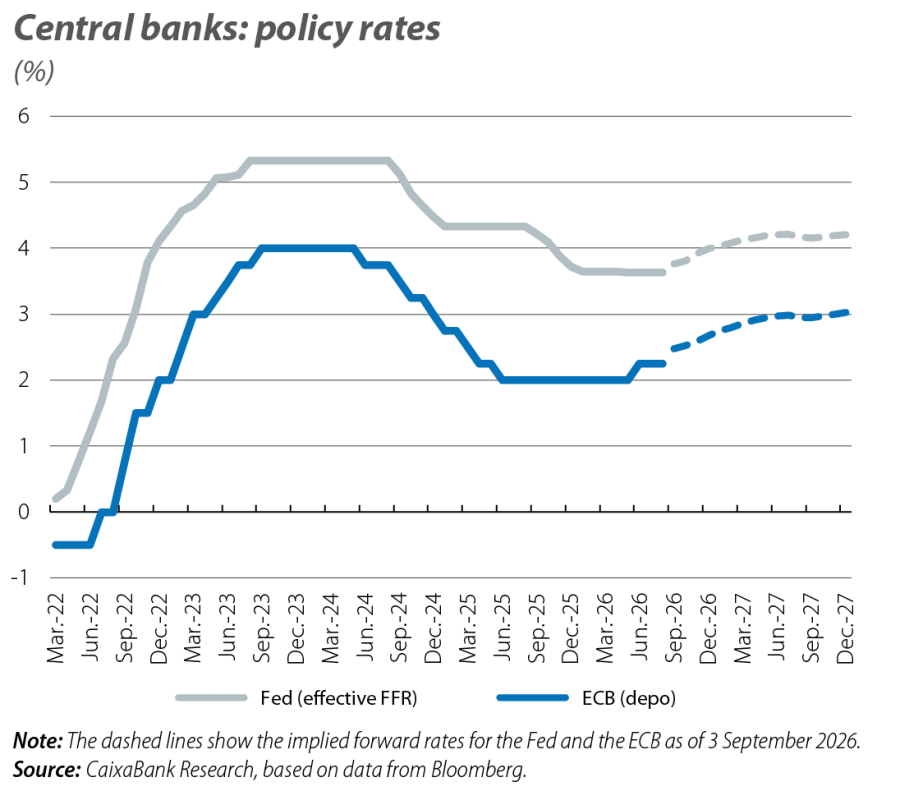
Despite keeping rates unchanged at their July meetings, the communications from the Fed and the ECB displayed a hawkish tone throughout
the summer, highlighting the risks of excessively high inflation amid resilient economic activity. At the annual Jackson Hole symposium, Fed Chair Kevin Warsh talked of strong economic activity, while admitting his concern about some inflation figures and noting that financial conditions are not restrictive. This provided a more explicit assessment than usual and reversed the indecision perceived by investors in July. In response, markets closed August pricing in one Fed rate hike before the end of the year (placing the fed funds rate at 3.75%-4.00%) and another in 2027 (rates at 4.00%-4.25%). In Europe, most ECB members expressed a desire to raise interest rates again in order to prevent the rebound in energy inflation (stemming from the Middle East) from triggering indirect effects and causing headline inflation to exceed 2% for too long, in a context of resilient economic activity. Thus, markets were almost 100% certain that the ECB would raise the depo rate to 2.50% in September and were pricing in one or two more hikes in 2027.
Stocks end a volatile summer on a positive note
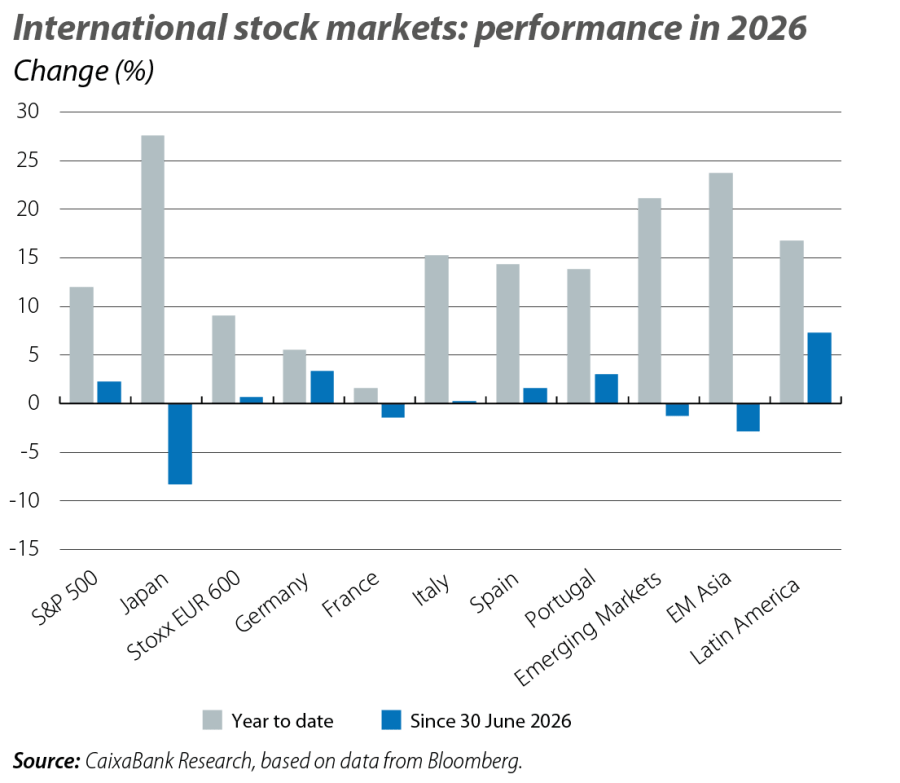
In July and August, the main European and US stock indices closed with gains, with the Stoxx EUR 600 and the S&P 500 climbing between 1% and 2%, respectively. This balance was supported by the resilience of economic activity and a strong earnings season on both sides of the Atlantic, with profit growth exceeding consensus forecasts and a technology sector that continued to surpass expectations. However, there were mixed dynamics, with a decline in July (more pronounced among tech firms) and a recovery in August. By sector, energy, the financial sector, and basic resources performed particularly well, while among European countries, the rise of the German stock market (over 3%) contrasted with the difficulties of the French CAC. The Japanese stock market also disappointed, with the Nikkei slipping more than 5% over July and August (further weighed down by the weakness of tech stocks in July and the resumption of hostilities in the Middle East). Among emerging economies, stock markets recorded gains in Latin America and losses in Asia.
The US dollar weakens
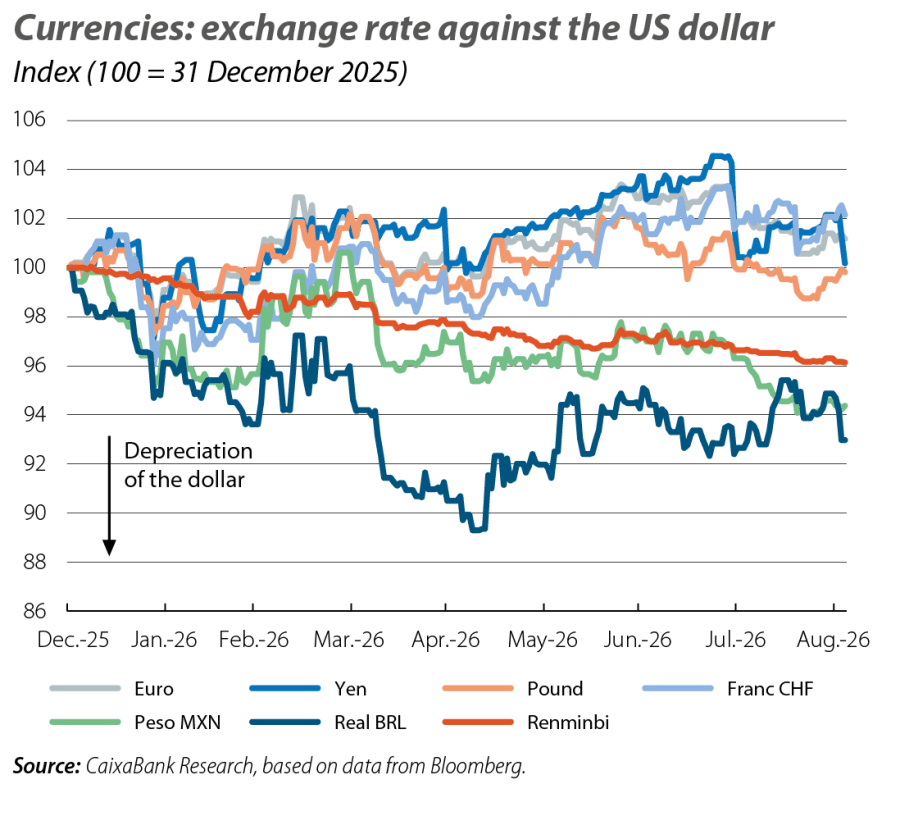
Currency markets saw a moderate but widespread depreciation of the US dollar against its major counterparts. This depreciation occurred in two stages, at the end of July and mid-August. On 30 July, the dollar depreciated by around 3% against the yen following a joint intervention by the US Treasury and Japanese authorities to strengthen the latter currency. On the other hand, the announcements of long-term bond buybacks by the US Treasury in mid-August triggered a new episode of depreciation. Thus, in July and August combined, the dollar lost nearly 2% (DXY index), while the euro recovered to around 1.16 dollars.