
Spain’s external sector drives the post-pandemic expansion
Spanish exports have emerged as one of the drivers of the country’s economic growth in the current expansionary phase following the pandemic in 2020. Exports now account for 36.0% of GDP, exceeding pre-pandemic levels (34.7% in 2019) and, even more so, those of 2007 (25.9%) prior to the financial crisis. In this article, we analyse the evolution of Spain's external sector during this expansionary cycle and we delve into the details by type of goods and services, comparing it with the previous expansionary cycle (2014-2019) in order to understand the source of the improvement in its performance.
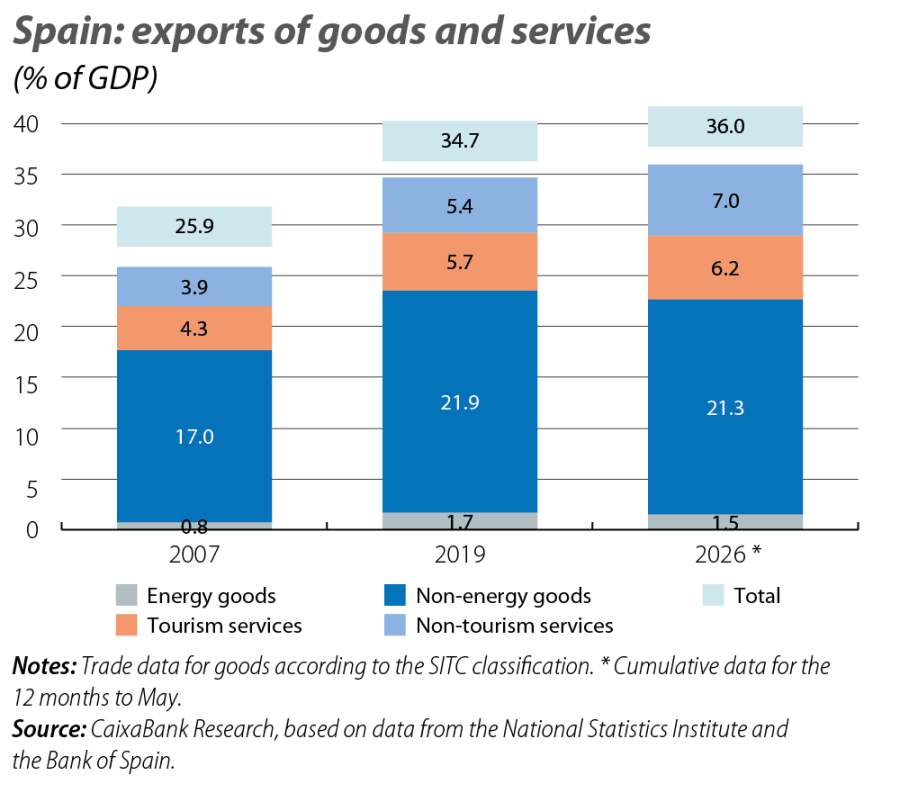
Exports of goods lose momentum
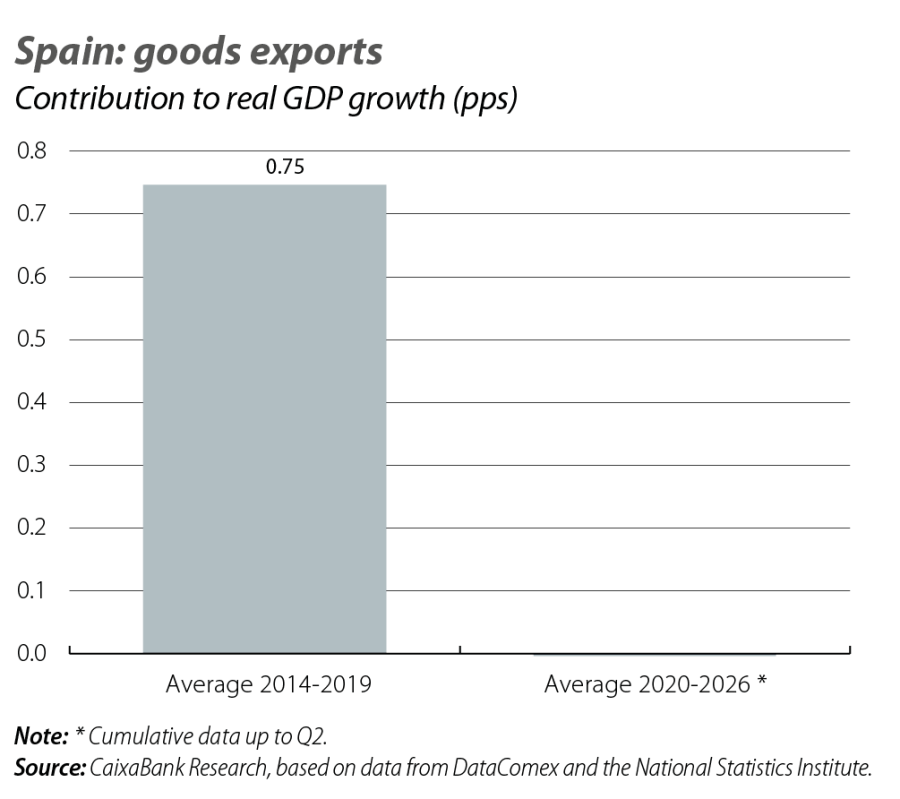
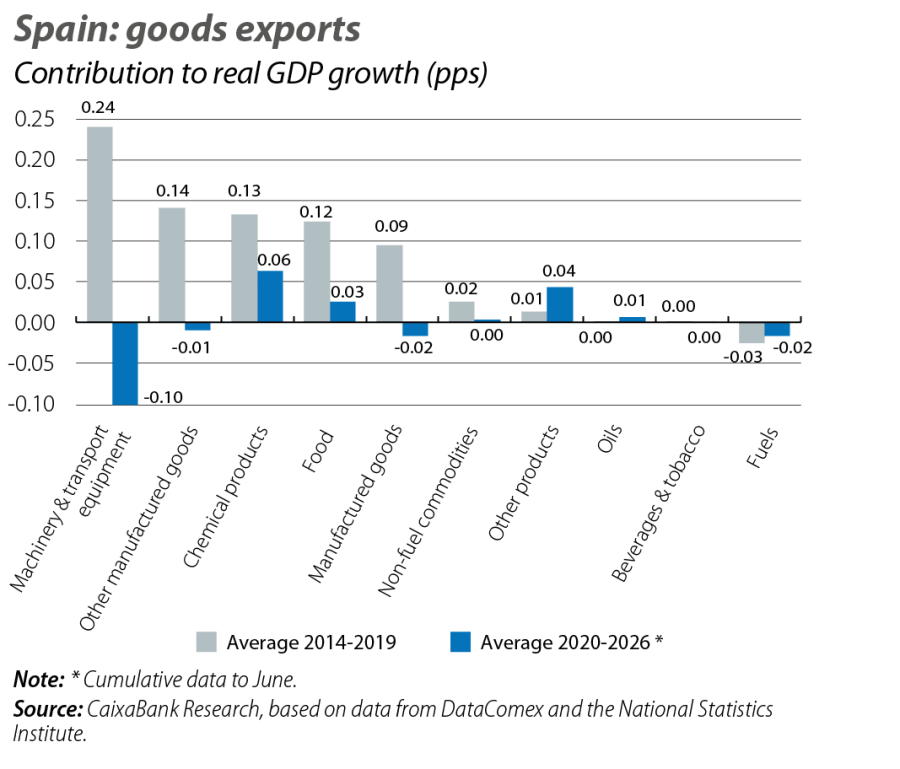
In the realm of goods, exports have shown a loss of momentum in recent years. On one hand, the contribution from goods exports to real GDP growth has fallen sharply, from an annual average of 0.75 pps in 2014-2019 to 0.0 pps in 2020-2026 (see second chart). As can be seen in the third chart, this loss of dynamism is widespread, except for in exports of other products.1 The slowdown is particularly pronounced in machinery and transport equipment (possibly reflecting the difficulties faced by the automotive sector), in manufacturing and in food, the latter being significantly affected by the sector’s poor performance in 2022 and 2023 due to the drought that ravaged the country.
- 1
Mainly includes unclassified goods and postal packages, non-legal tender coins, and non-monetary gold.
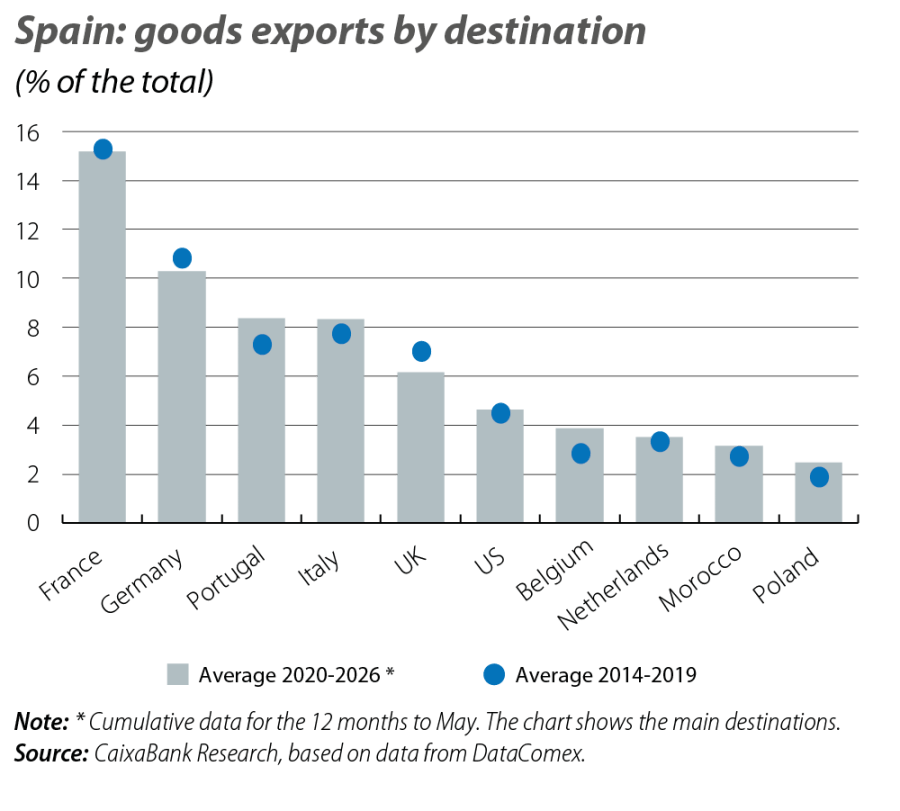
Regarding export destinations, no substantial changes are observed compared to the pre-pandemic period. The euro area countries remain our main clients and have even increased their share of the total, rising from 51.8% in 2014-2019 to 54.0% in 2020-2026. France and Germany top the list, although they have lost some prominence (0.1 and 0.6 points, respectively). Their decline has been largely offset by Portugal and Belgium, which have gained 1.1 and 1.0 points (see fourth chart). Within the top 10 destinations, the most notable change is the decline in the United Kingdom’s share (almost 1 point), linked to Brexit.
Service exports, the pillar of growth
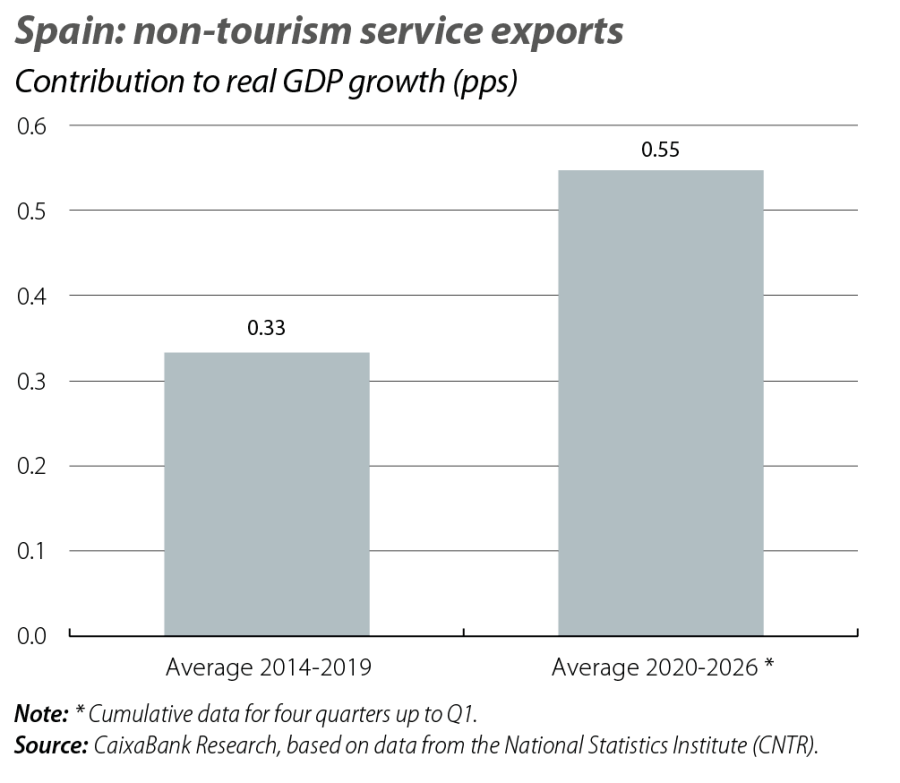
Regarding service exports, a distinction must be made between tourism and non-tourism services. Tourism continues to be a key pillar of Spain’s external sector and its contribution to average real GDP growth remains similar to during the pre-pandemic period (0.24 pps in 2014-2019 and 0.23 pps in 2020-2026). However, in this article, we want to focus on non-tourism service exports, where we see an improvement. In particular, they are making a significant contribution to real GDP growth, contributing an average of 0.55 points annually from 2020 to 2026, compared to 0.33 points during the period 2014-2019.
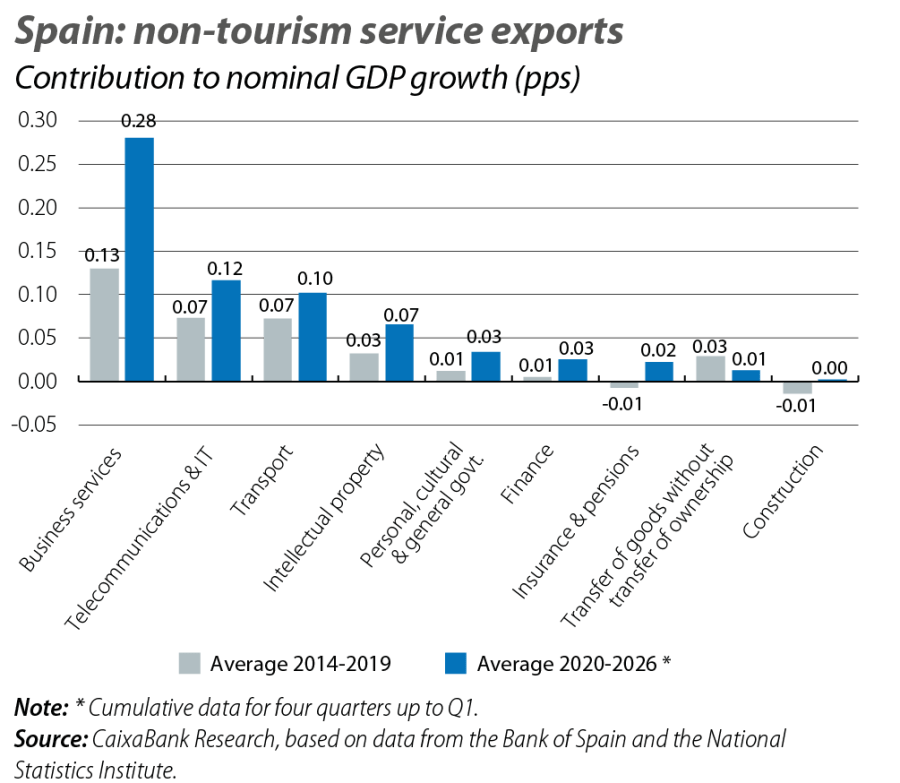
Unfortunately, we do not have price indices for the components of non-tourism services, so the analysis of each type of service’s contribution to growth must be based on nominal data.2 As can be seen in the last chart, there have been notable contributions to nominal GDP growth from business services (0.3 points), and from transport and technology services (0.1 points each). Business services in particular have increased their contribution the most (by 0.2 points) relative to the previous period.
- 2
In any case, the average annual contribution from non-tourism service exports to nominal GDP growth is very similar to that of real GDP: it has increased from 0.33 to 0.66 points, so the analysis of contributions to nominal GDP remains informative.
As a result, we are witnessing a structural transformation of Spain’s external sector, as growth is increasingly being driven by high value-added exports, particularly in business and technology services. These are knowledge-intensive activities that create skilled and better-paid jobs and typically have relatively high productivity and margins. Ultimately, in addition to exporting goods and attracting tourists, Spain is increasingly exporting knowledge, technology, and professional services.