
How do we shop? Scroll down & click!
Consumption is one of the main drivers of the Spanish economy. In recent years, it has grown at a rate of around 3% in real terms. So far, few surprises. Where profound changes have occurred, however, is the way in which this consumption takes place, particularly for certain population groups and in specific sectors. Many people still visit physical shops to see, touch and try the product before purchasing it. However, people are increasingly making their purchases through digital channels. Some, in fact, already carry out most of their spending online. Who are these digital consumers? In which sectors are they most present?
E-commerce took a leap forward during the pandemic.1 Although online shopping had already been gaining ground prior to 2020, the mobility restrictions led many people to discover the benefits of shopping from home. Since then, spending through digital channels as a share of total card spending and cash withdrawals has continued to rise, now reflecting an increase of nearly 10 pps compared to 2019 (see first chart).
- 1
Study conducted using anonymised data on spending with cards issued by CaixaBank.
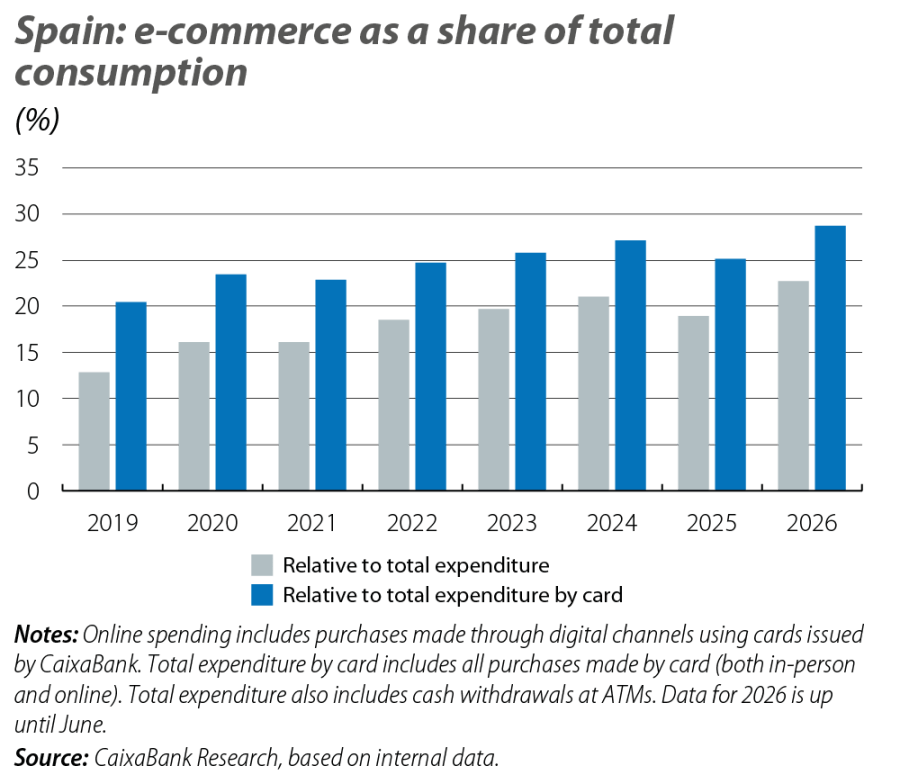
This progress has been widespread. The growth of online shopping has occurred in both urban and rural areas and across all income levels. Before the pandemic, the share of e-commerce was very similar across different income groups, and it remains so today, albeit at significantly higher levels.
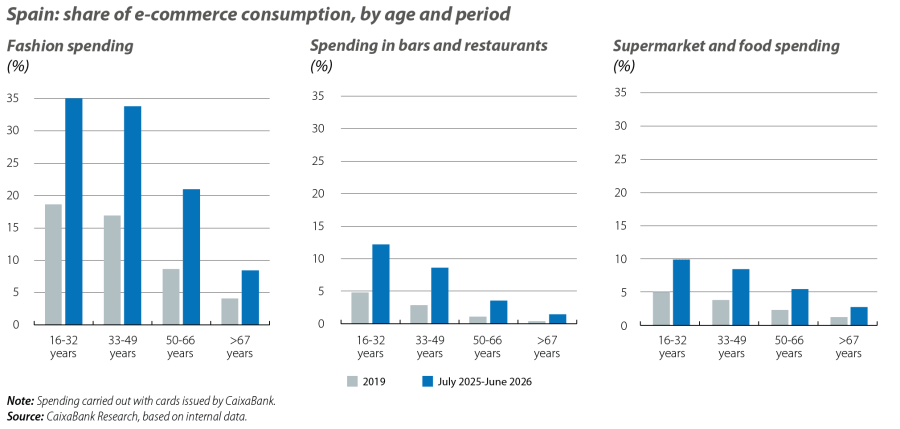
What differentiates consumption patterns are age and sector (see second chart). Young people are, by far, the group that allocates the largest proportion of their spending to the digital channel. They were already the most digitalised before the pandemic, and they have also led the biggest shift in behaviour. At the other end of the spectrum, older people have barely changed their shopping habits, and their online spending still accounts for less than 10% of their total spending.
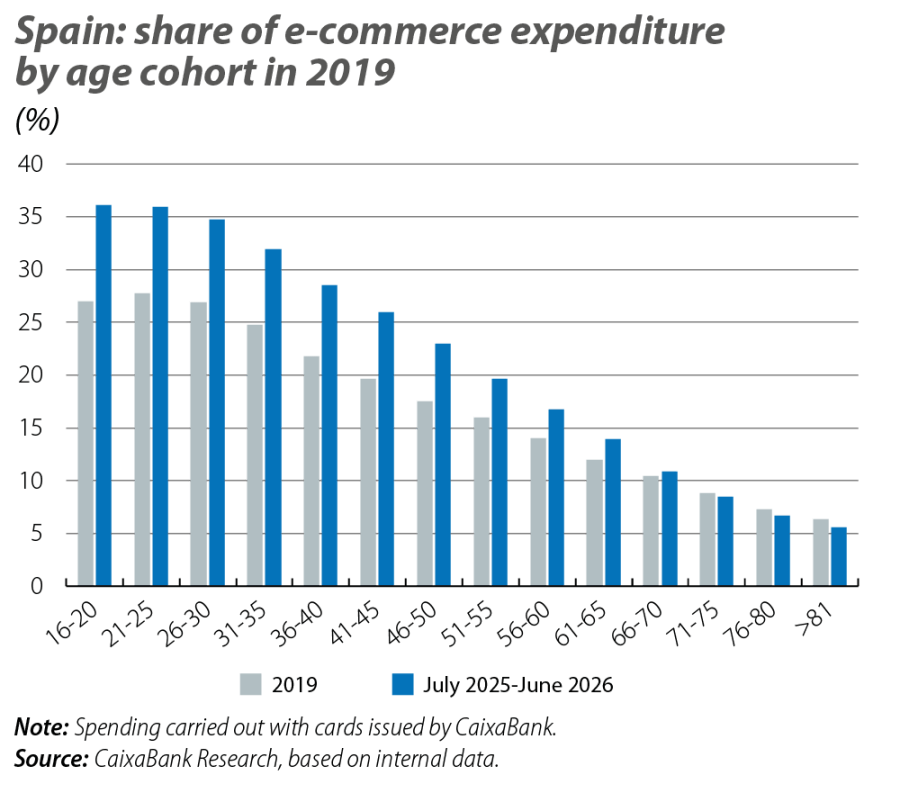
It does not seem like we will be abandoning e-commerce any time soon. Indeed, the more time passes, the harder it becomes to change established consumption habits. Thus, the older generations, who throughout their lives have shopped in physical shops, remain loyal to this channel. Middle-aged people have significantly increased their digital spending and continue this pattern as they age. Moreover, all the indicators suggest that today’s young people will not reverse this trend over time either. In fact, the new generations purchase more online than young people did before the pandemic. Those young people from back then, meanwhile, are now slightly older and continue to buy more online than previous generations did at their age (see third chart).
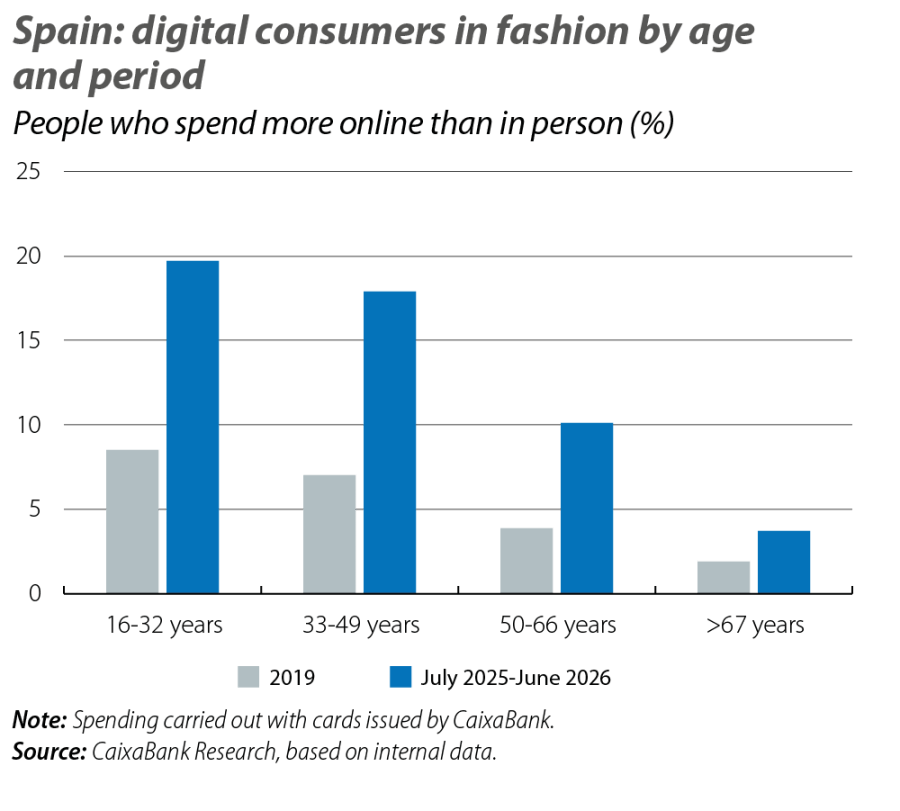
The sector where e-commerce has achieved the greatest penetration is fashion. Both young people and adults now carry out around a third of their spending in this sphere through digital channels. It is also in the fashion sector where a higher proportion of consumers are predominantly digital: around 20% of young people and adults make more than half of their purchases online (see fourth chart). Even among older people, significant changes are observed, with nearly 8% of their fashion purchases being made online.2
- 2
Spending on major platforms cannot be categorised and accounts for approximately 20% of total online expenditure.
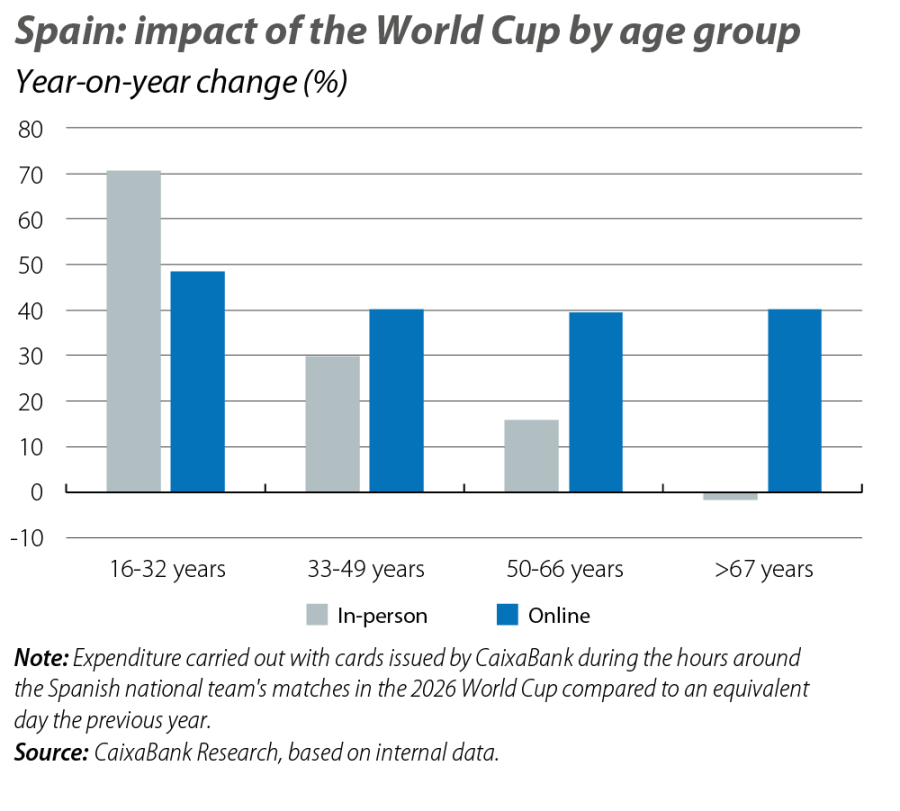
In supermarkets and food, the share of digital purchases has also increased in recent years, especially among young people, although it remains lower than that observed in fashion. This does not prevent sharp upturns from occurring at certain times and breaking with usual patterns. During the World Cup, for example, on the days when the Spanish team played, in-person spending in bars increased by 36.3% compared to a normal day. At the same time, online spending on bars and restaurants increased by 43.3%.
This time, the increase in in-person spending was mainly driven by younger people: their spending in bars soared by 70.6% while the national team was playing (see fifth chart). The increase in spending on bars and restaurants through digital channels was more widespread, although it was also young people who increased their orders for home deliveries while watching the match. Consumption patterns are different. The desire to celebrate, not so much.
Digitalisation & Technology
The keys to understanding how digitalisation and new technologies are substantially transforming the economy and how society works.

Real-Time Economics
Follow the evolution of the Spanish economy with our real-time indicators and our published articles.