Geopolitics and fiscal policy weigh on financial markets
Markets were influenced by the ongoing conflict in Iran and growing concerns about long-term fiscal sustainability. In this context, central banks continued to raise interest rates, although they softened their rhetoric towards the end of the month. Sovereign debt yields rebounded sharply and spreads widened in the euro area, while the Fed's monetary tightening strengthened the dollar and the political crisis in France put pressure on the euro. In the stock markets, the technology sector continued to stand out compared to other stocks, and the price of oil remained high despite volatility in the final week of the month.
The conflict in Iran and long-term fiscal concerns determined the course of markets
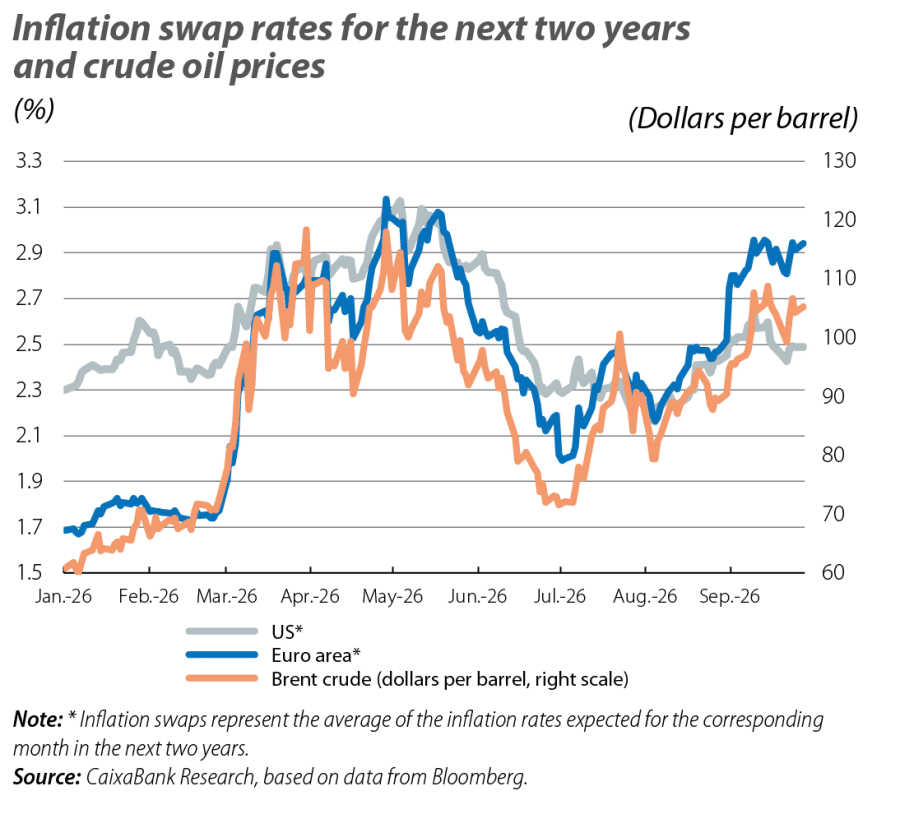
The blockade of the Strait of Hormuz kept energy prices and inflation expectations high, prompting interest rate hikes by the ECB, the Fed and the Bank of Japan. However, towards the end of the month, ECB and Fed officials softened their hawkish rhetoric, which lowered investors' expectations for intervention rates over the next 12 months, as well as for further rate hikes in October. Expectations regarding central bank rates and fiscal concerns drove up sovereign yields across major developed economies. In the euro area periphery there was a widening of risk premiums, led by France. This was driven by the start of negotiations for the 2027 budgets and the challenges the French government is facing in correcting its deficit. This put pressure on the euro (already weighed down by a dollar that capitalised on the Fed's rate hike) and on European stock markets, while in the US, technology and semiconductors provided some support to stock market indices. Higher real interest rates in the US and the strength of the dollar also weighed on precious metals by eroding their relative appeal as a store of value.
Central banks raised rates but softened their rhetoric towards the end of the month
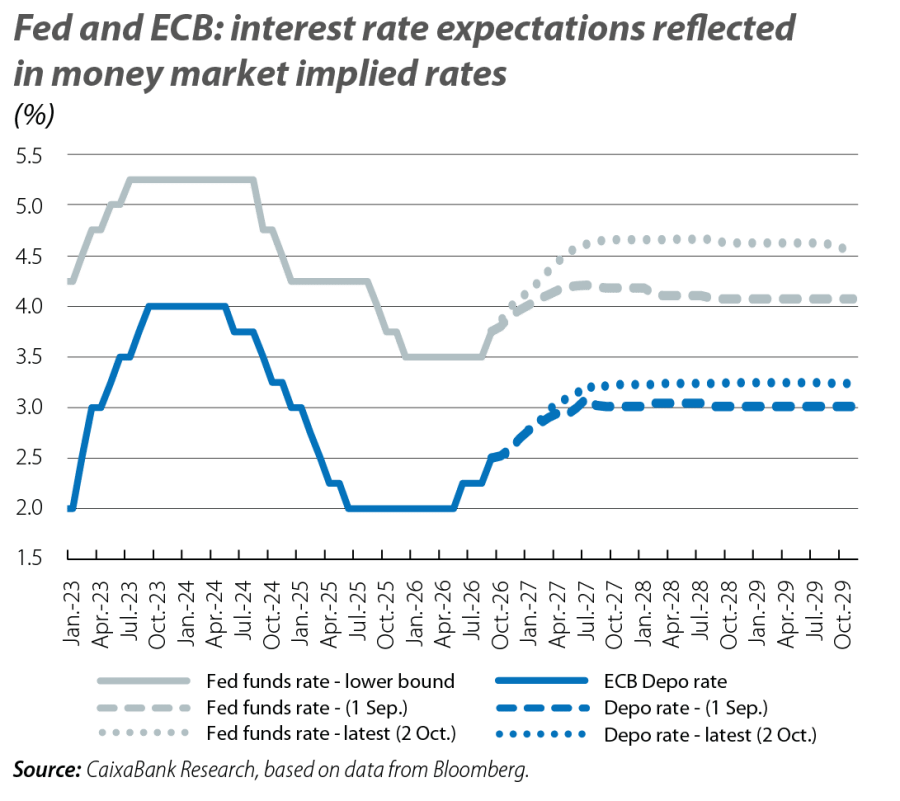
The ECB raised interest rates by 25 bps, bringing the depo rate to 2.50%, while the Fed set the fed funds rate in the range of 3.75%-4.00%. In both cases, the rate hike was justified by persistent inflationary pressures. However, their rhetoric softened in the last week of the month. For the ECB, Lagarde argued that the economy remains in a scenario of «controlled monetary tightening» and highlighted that recent market movements, with higher long-term rates, are also tightening financial conditions and helping to reduce inflationary pressures. In the US, following unexpectedly low PCE inflation in August, both Williams (New York Fed) and Vice Chair Jefferson advocated taking time to evaluate the economic data before deciding on any new adjustments. Investors thus began to factor in a lower likelihood of rate hikes in October for both central banks (the central scenario is a pause in October) and only three more rate increases on both sides of the Atlantic (compared to four additional hikes previously priced in). Euro area 1 and 2-year inflation swaps fell sharply in the final week, although they remained above their August levels (anticipating average inflation rates over the next two summers of around 3%).
Sovereign yields rebound sharply and spreads widen in the euro area
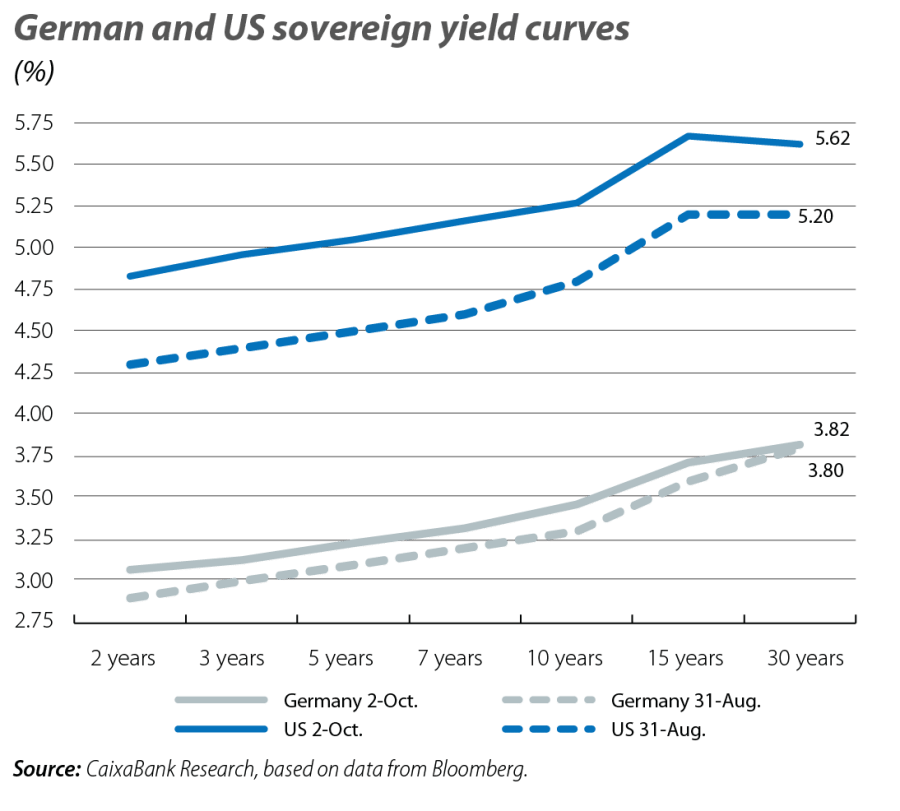
Long-term sovereign yields reached their highest levels in decades, although the dovish tone of central banks at the end of the month softened some of the increases. In the US, the curve shifted sharply upwards (by about 45 basis points on average across the various segments), with 10-year treasuries surpassing 5.20%. The curve, flattened for much of the month, steepened in the closing days. The rise in short-term rates moderated amid lower expectations for Fed rates, while rates at the long end of the curve remained strained by fiscal concerns, pushing the yield on the 30-year treasury up to its highest level since 2002. In the euro area, despite some rate hikes, investors sought refuge in German debt. This applied downward pressure to bund yields, especially at the short-term end of the curve, which also favoured a steeper yield curve. On the other hand, the French spread widened by more than 50 bps to exceed 140 bps, causing some contagion to Italian and Greek debt towards the end of the month. Spanish and Portuguese debt performed relatively better, with spreads widening by around 15 basis points. Despite this increase, they remained at comparatively low levels, below their 2024 average.
The Fed's rate hike strengthened the dollar, while the French crisis weighed on the euro
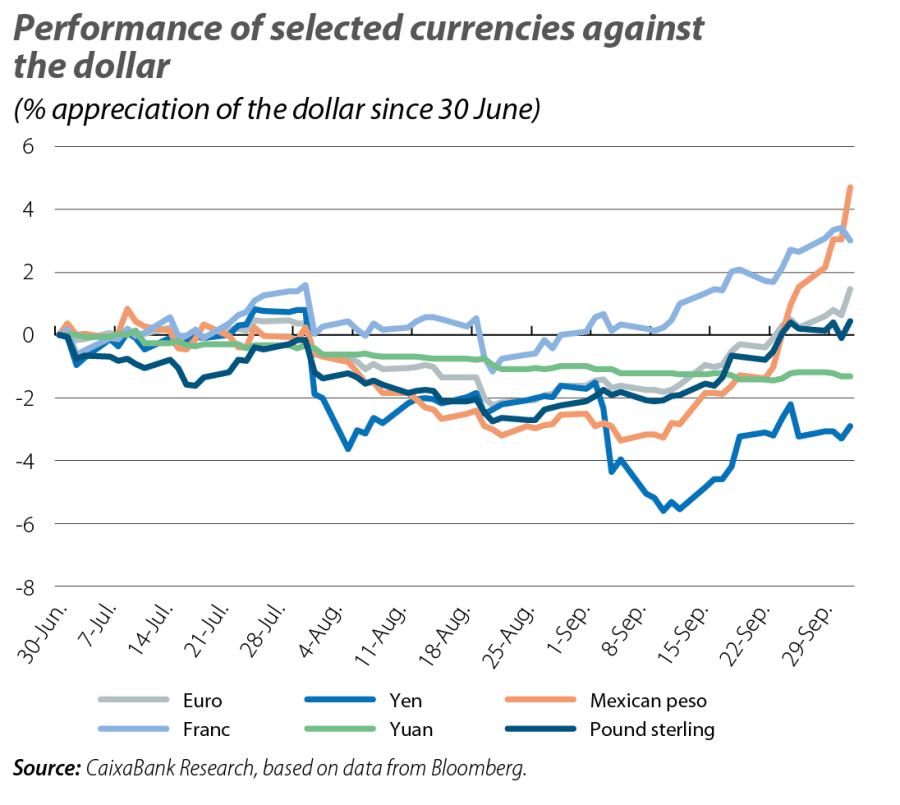
The US dollar appreciated against its main counterparts during the month (the nominal effective DXY index rose 3%), supported by an interest rate hike from the Fed, which successfully conveyed to investors a reduced tolerance for the current pace of disinflation. Against the euro, this movement continued amid a widening of the French premium and heightened political uncertainty, leaving the EURUSD down more than 3% over the month. The euro also fell against the pound and the Swiss franc, with the latter benefiting from a flight to safety. On the other hand, the yen, which started the month appreciating following interventions by the Japanese Ministry of Finance and the US Treasury in the foreign exchange market in August, weakened again towards the end of the month. Among emerging currencies, also affected by the strength of the dollar and high US interest rates, the Mexican peso recorded a particularly sharp depreciation of around 8%.
The technology sector widens the gap with other stocks
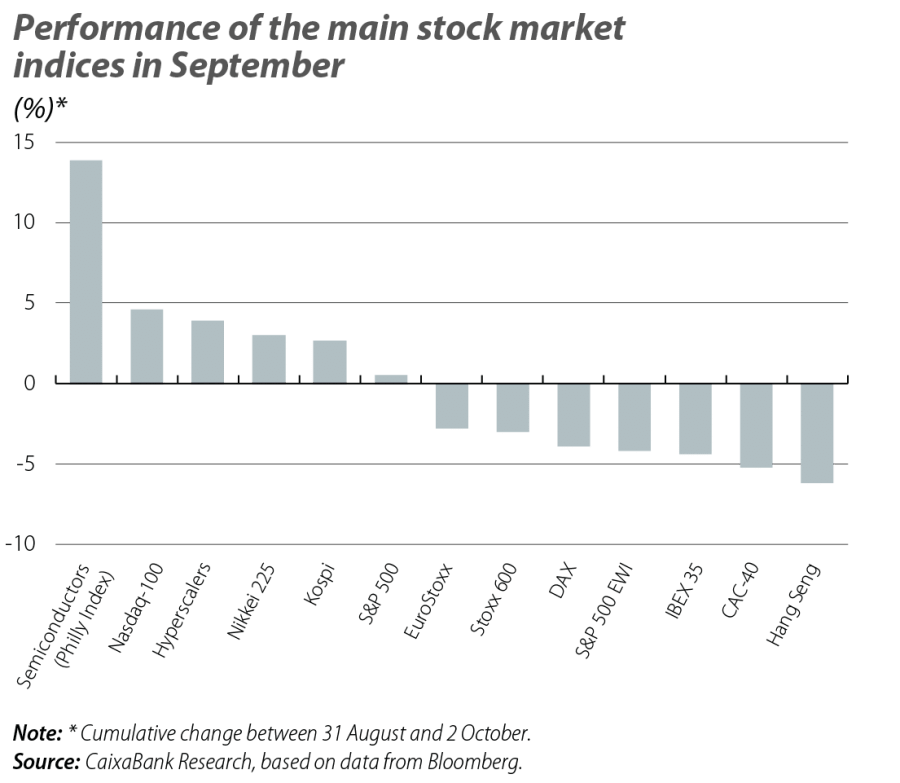
Optimism about AI continued to support the most exposed US companies, increasing concentration in the main indices as well as divergences with European stock markets. The strong performance of semiconductors and the Magnificent 7 allowed the S&P500 to end the month almost flat and the Nasdaq-100 to advance slightly, in what was an overall weak month for stock markets. However, market breadth was limited, with the equal-weighted S&P500, the Dow Jones and the Russell 2000, which tracks small-cap firms, all recording losses. In the euro area, both regional aggregates and the national indices of the main economies recorded setbacks of between 4% and 6%, with France's CAC-40 being the worst-performing index. Within the pan-European Stoxx 600 index, the automotive sector and those most exposed to high interest rates suffered the biggest setbacks, while only the energy and technology sectors recorded gains for the month.
Oil remained high despite volatility in the past week
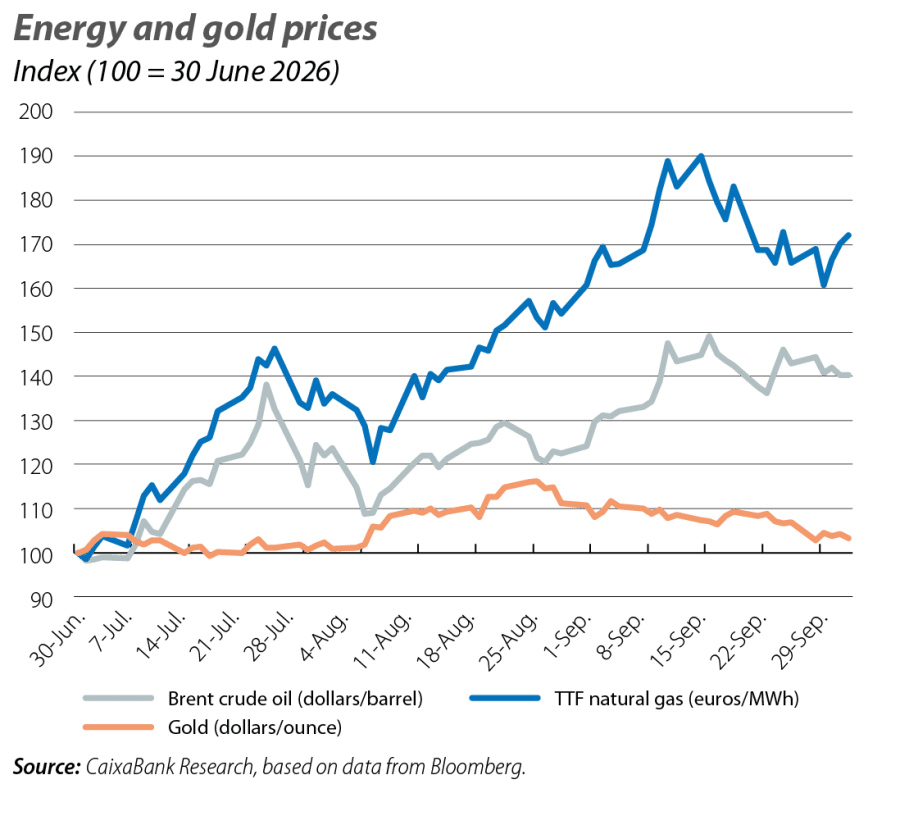
After reaching 110 dollars per barrel, driven by the conflict in the Middle East, crude oil corrected some of its gains after Saudi Arabia resumed flows through an alternative pipeline and the US partially tapped into its strategic reserves. Nevertheless, Brent crude closed above 100 dollars per barrel and rose by more than 10% during the period. Gas prices also continued to rise, with the Dutch TTF benchmark increasing by nearly 5% and exceeding 70 euros/MWh, amid the onset of seasonal demand in Europe. Precious metals extended their losses (around 6% in the case of gold) as their appeal as a safe haven diminished in a context of high real interest rates and a stronger dollar.