The global economy holds firm as the outlook becomes more challenging
Euro area growth exceeded expectations in Q3, although a more challenging Q4 is expected. Inflation remains high due to rising energy prices, while the US economy is buoyant and emerging economies, led by China, continue to prove remarkably resilient to the energy shock.
Euro area growth exceeds expectations in Q3…
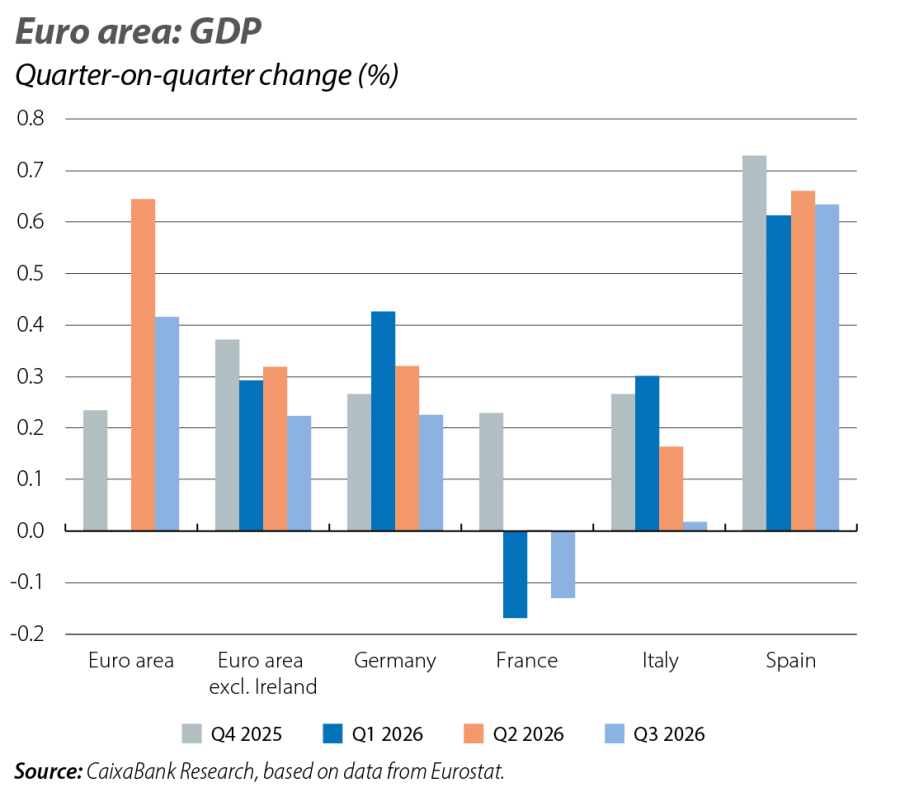
Euro area GDP grew more than expected in Q3 2026 (+0.4% quarter on quarter vs. +0.6% in the previous quarter), although the figure was again distorted by Ireland. Excluding Ireland, euro area GDP grew by 0.2% quarter on quarter (vs. 0.3% in the previous quarter). Although growth slowed compared to Q2, it confirmed the continued resilience of economic activity in the face of the energy shock. Trends varied across countries. Spain again led the growth among the major economies, expanding by 0.6% (see the Spanish Economy - Economic Outlook section in this report), while Germany’s growth slowed to 0.2%, Italy stagnated and France contracted by 0.1%. Overall, while investment and exports have weakened, consumption has held up better, supported by the savings buffer accumulated in recent years. The Q3 figure reduces the downside risks to our full-year forecast (1.0%), although we still anticipate a slowdown towards the end of the year.
… ahead of a more challenging Q4
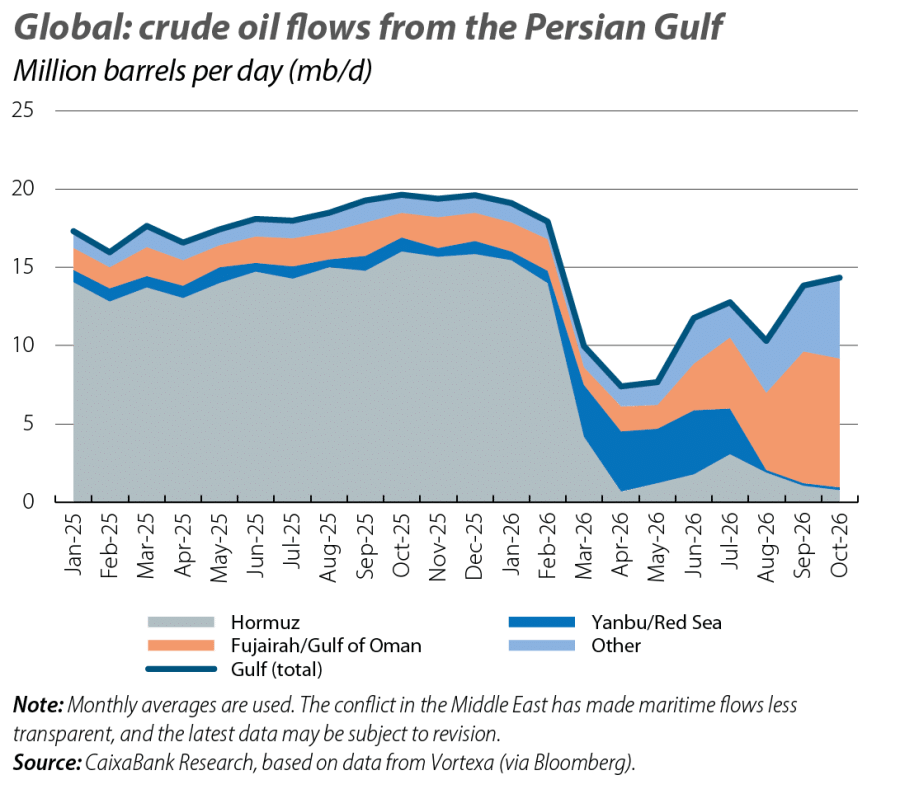
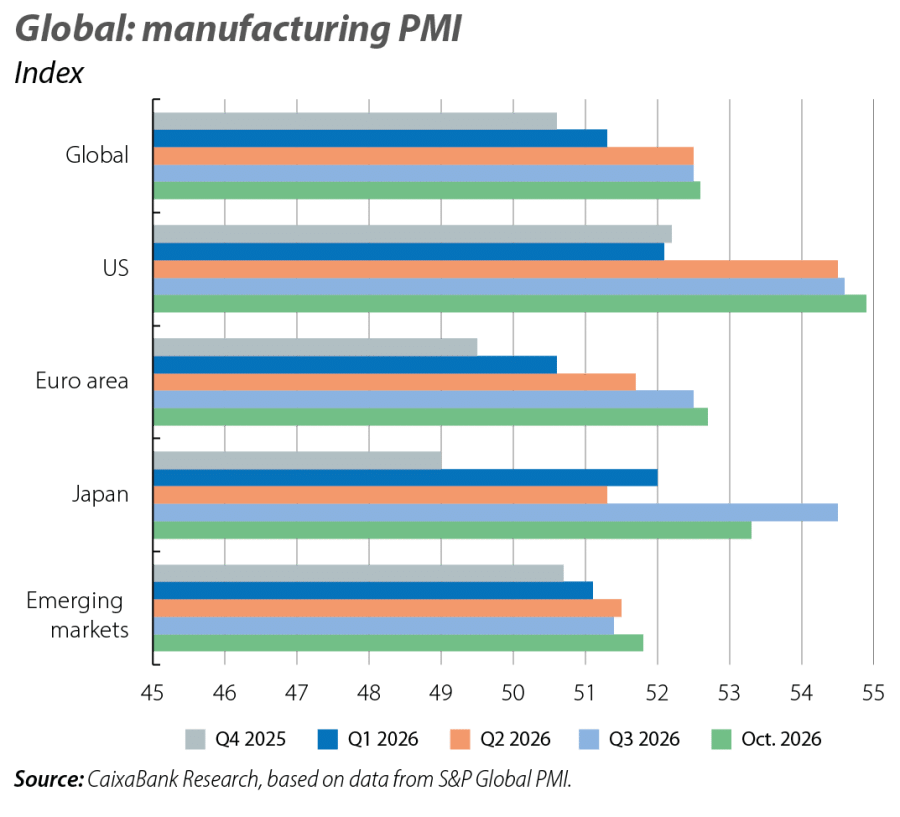
The available data point to a slowdown at the start of Q4, amid weakening confidence and divergence among the euro area's major economies. European consumer confidence fell again in October, weighed down by higher energy costs, political uncertainty and fears of a deterioration in the labour market, which led it to fall to –17.9 points, well below its historical average. Business survey data also point to a loss of momentum, although activity remains in expansionary territory. The euro area composite PMI fell 1.4 points to 51.7, weighed down mainly by France, where it dropped 2.7 points to 48.4 amid a widespread deterioration in services and manufacturing. Meanwhile, energy markets remain constrained by geopolitical deadlock and intermittent flows from the Middle East. In this context, rising sovereign yields amid doubts over France’s fiscal outlook, together with signs of mounting public discontent over the rising cost of living, are creating further sources of tension. Against this backdrop, European countries face a more challenging year-end than expected.
Inflation remains high due to rising energy prices, but pass-through to the rest of the basket remains limited
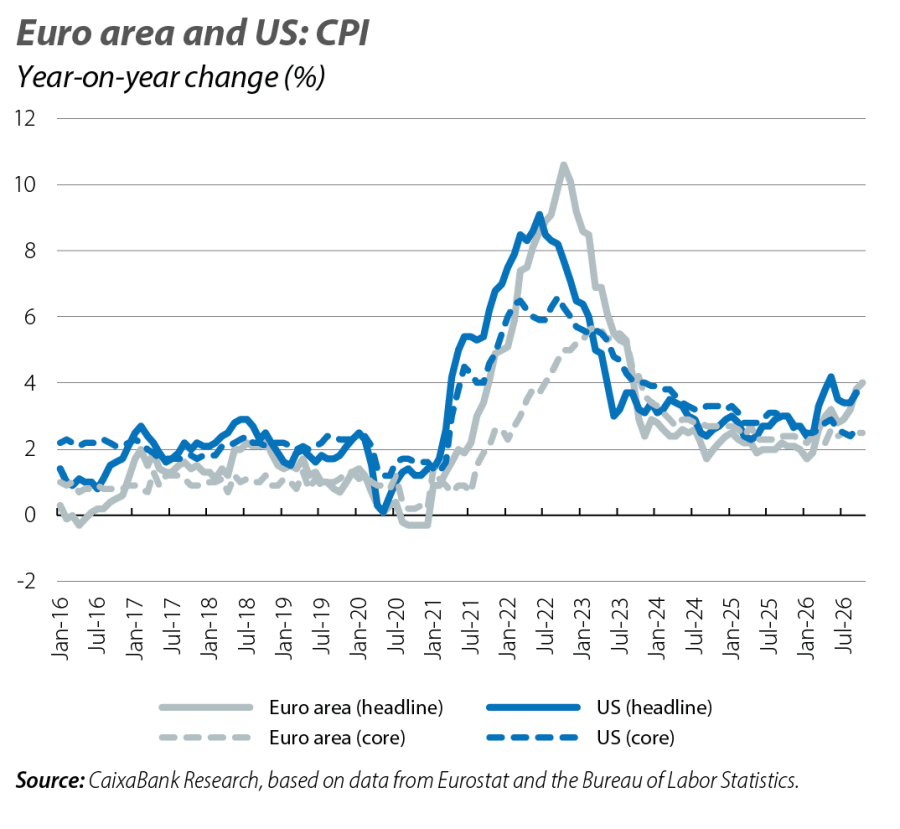
Headline inflation in the euro area rose again in October, to 4.0% (from 3.8% in September). Core inflation remained at 2.5%, indicating stable underlying price pressures, although higher energy costs could push inflation up further in the coming months and increase the risk of spillover to other prices. In the US, inflationary pressures also intensified in recent months. Headline PCE inflation (the Fed’s preferred measure) rose to 3.6% year on year (+0.2 pps), while core PCE inflation increased to 3.1% (+0.1 pps). The rise largely reflects the energy shock, which is most visible in fuel prices, although price pressures are beginning to build in some services. For now, second-round effects remain relatively contained. However, that could change if higher energy prices persist, reinforcing expectations of further rate hikes by the Fed (see the Financial Markets - Economic Outlook section in this report).
The US economy was buoyant in Q3, while the Democrats secured a clear victory in the midterms
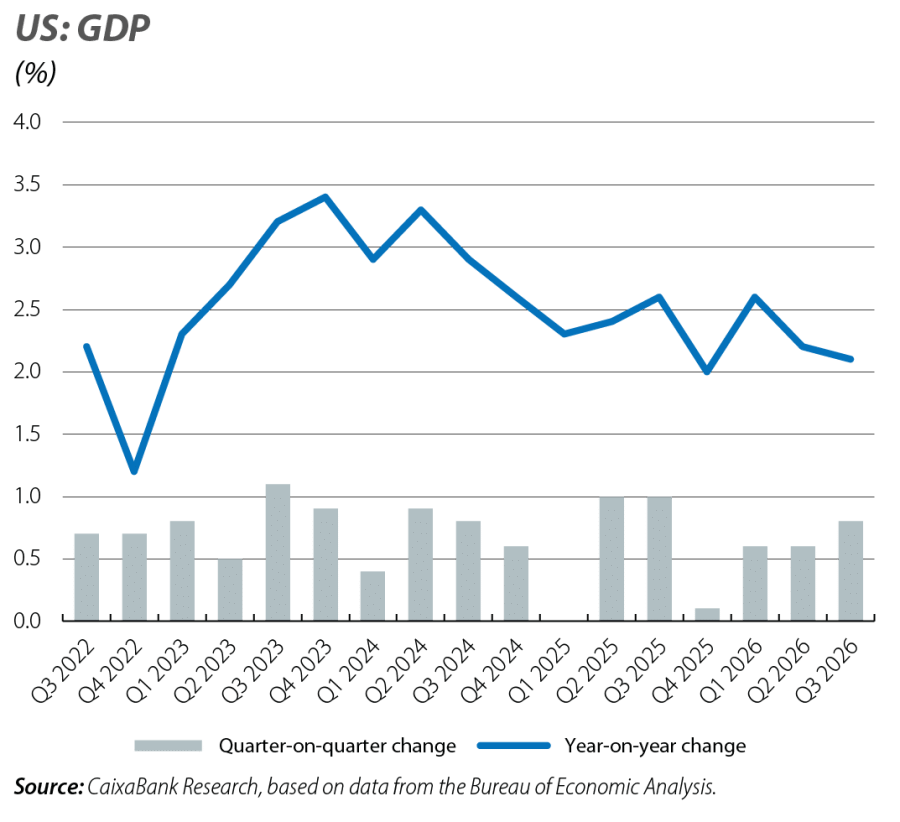
In the US, GDP grew by 0.8% quarter on quarter, accelerating from Q2, supported by strong consumption and investment. As for Q4, the indicators continue to point to robust growth: the composite PMI fell in October but remained high at 57.6, while consumer confidence surveys offered mixed signals. The strength of economic activity contrasts with a gradual loss of momentum in the labour market in recent months. Job creation slowed to 29,000 in September, below analysts’ consensus expectations, and averaged +51,000 a month in Q3 (vs. +76,000 in the first half of the year). At the same time, the unemployment rate edged up by 0.1 pps to 4.2%. The slowdown in employment remains uneven across sectors, with greater resilience in education and health, retail and construction, contrasting with weakness in professional, financial and information services. In this context, the midterm elections delivered a landslide victory for the Democrats, with the party taking control of both chambers and making gains even in areas that backed Trump in 2024. The new majority will strengthen checks on the executive, but will likely lead to two years of political gridlock. This is particularly concerning given the large fiscal imbalances, although the executive retains considerable room for manoeuvre in areas such as trade, migration and foreign policy.
Emerging economies continue to prove remarkably resilient to the energy shock, led by China, but challenges lie ahead
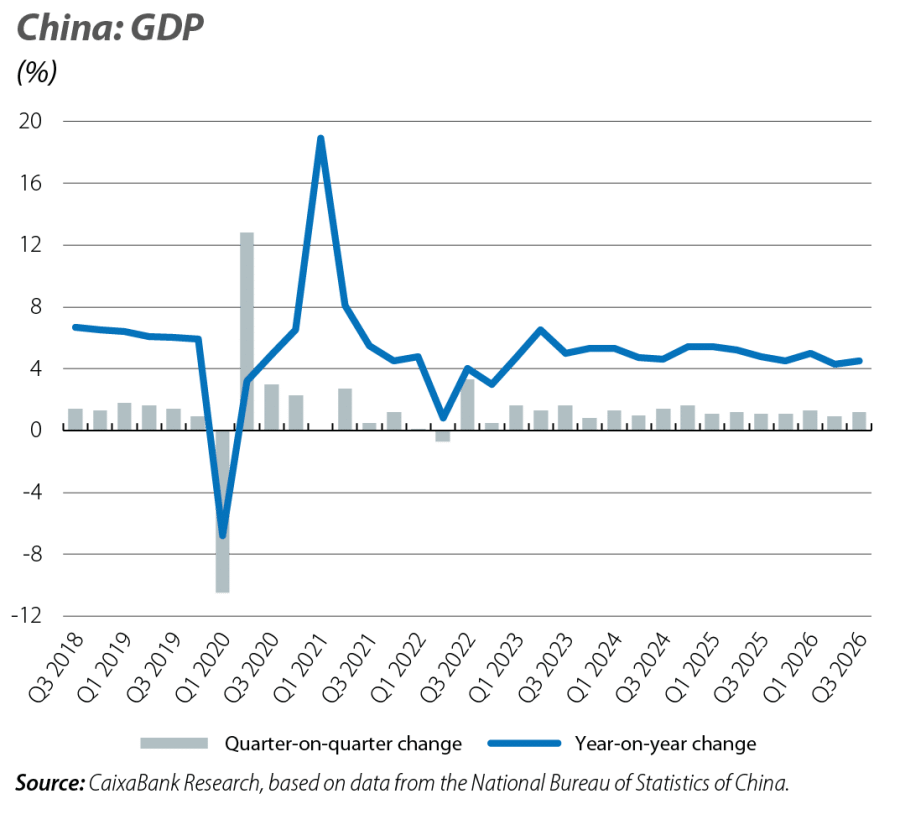
In its autumn report, the IMF maintained its global growth forecast at 3.1% for 2026, down from 3.5% in 2025, against a backdrop it describes as «resilience under strain». Emerging economies face a particularly challenging environment, especially energy importers, and those with the least fiscal headroom to respond to the impact of this shock are the most exposed. By contrast, countries more deeply integrated into the technology supply chain have proved more dynamic. China’s economy gained momentum in Q3, with GDP growing by 1.2% quarter on quarter (vs. 0.9% in the previous quarter), putting year-to-date growth at the lower end of this year’s official target range of 4.5-5.0%. The improvement was driven by industry, while exports remained buoyant, growing by nearly 30% over the quarter. Private consumption remained sluggish, while investment continued to be weighed down by the property crisis. Emerging economies continue to withstand the energy shock better than expected, but challenges lie ahead. In Brazil, President Lula da Silva’s victory in the second round of the presidential election pushed up sovereign yields and weakened the Brazilian real, reversing the market moves that followed Bolsonaro’s first-round victory. This reflected concerns about the country’s fragile fiscal position amid rising global interest rates. In India, the latest indicators continue to point to robust economic activity and a recovery in investment. Growth is nevertheless expected to slow gradually in 2027 as inflation rises and monetary policy is tightened.