The international economy withstands the shocks, for now
The conflict in the Middle East continues to drag on, although the global economy remains resilient. In the euro area, business climate surveys indicate a dynamic third quarter, although actual activity data dampen this optimism, particularly in Germany. Meanwhile, in the United States, inflation remains under upward pressure due to rising energy costs, while the labour market remains highly volatile.
The conflict in the Middle East continues
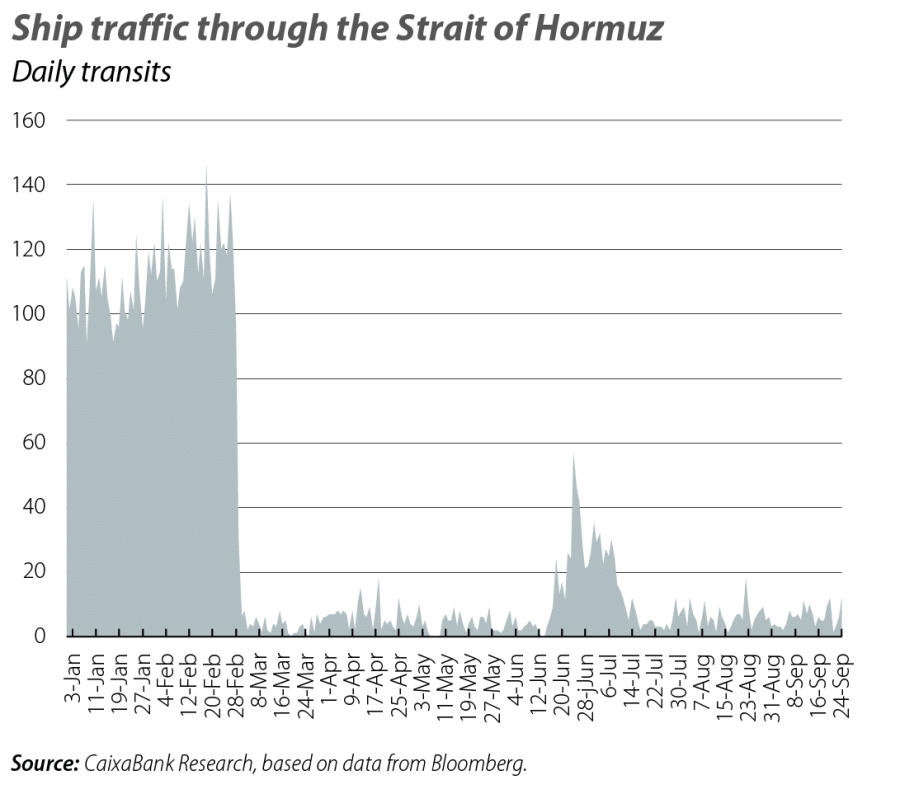
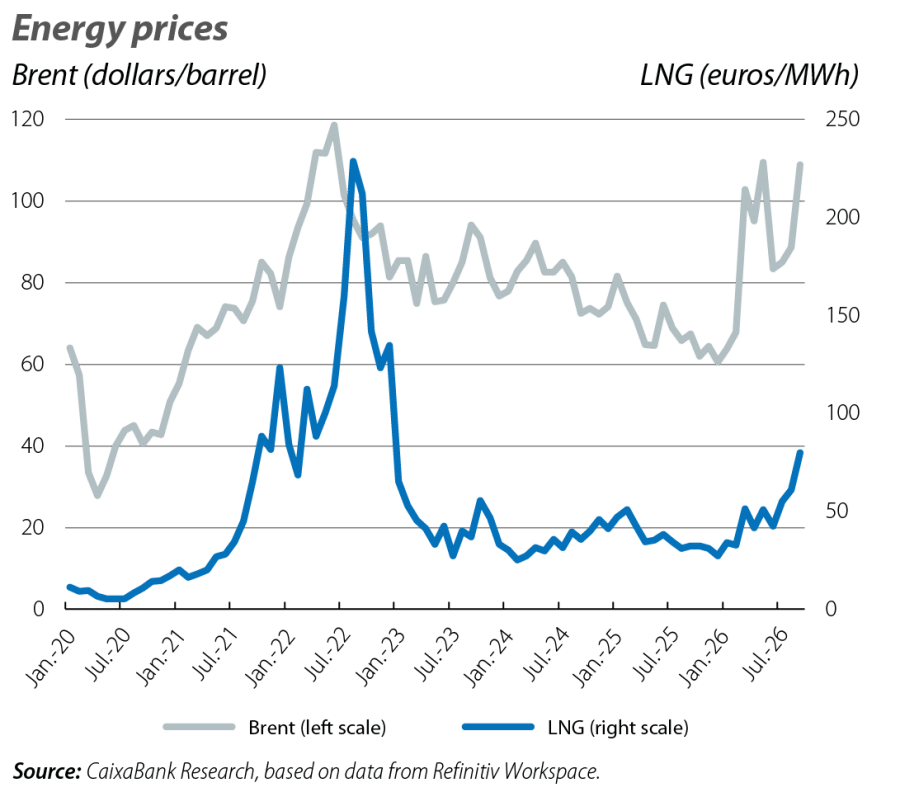
The war involving Iran, the US and Israel has been ongoing for nearly seven months and is currently in a tense phase. The military stalemate on the ground coincides with challenging diplomatic negotiations, as demonstrated during the UN General Assembly held in late September, while Trump intensifies his rhetoric demanding a swift and definitive deal. The Strait of Hormuz remains the strategic centre of the conflict, with barely any maritime traffic passing through it. Furthermore, the attacks by the Iran-backed Houthi rebels from Yemen on Saudi Arabian facilities and ships are exacerbating the situation for the energy market (the Saudi kingdom even closed a pipeline) and are threatening the Bab el-Mandeb Strait, which connects the Suez Canal with Europe. In this context, the price of Brent crude oil exceeded 100 dollars per barrel in September, around 15% higher than in August, while the price of the European benchmark for liquefied natural gas fluctuated between 70 and 80 euros/MWh, reaching an almost three-year high.
Overall, the global economy has shown resilience to date
Overall, the global economy has shown resilience to date, thanks to support from public policies in offsetting the energy shock, the availability of energy stockpiles and the significant boost from AI-related investment and trade. In fact, in its September report the OECD slightly revised its growth forecast for 2026 upwards across the board, although it is somewhat more cautious about 2027. It anticipates that global growth will slow slightly to 2.9% in 2026 and recover to 3.0% in 2027. Meanwhile, the rise in inflation is currently limited to energy, and its impact on other prices is still relatively contained among the major developed economies. This explains why medium-term inflation expectations remain anchored around central banks' targets. However, the trend in energy prices poses a significant downside risk to activity, particularly as the winter season approaches and especially for economies more reliant on energy imports.
Business climate surveys indicate a fairly dynamic Q3 in the euro area
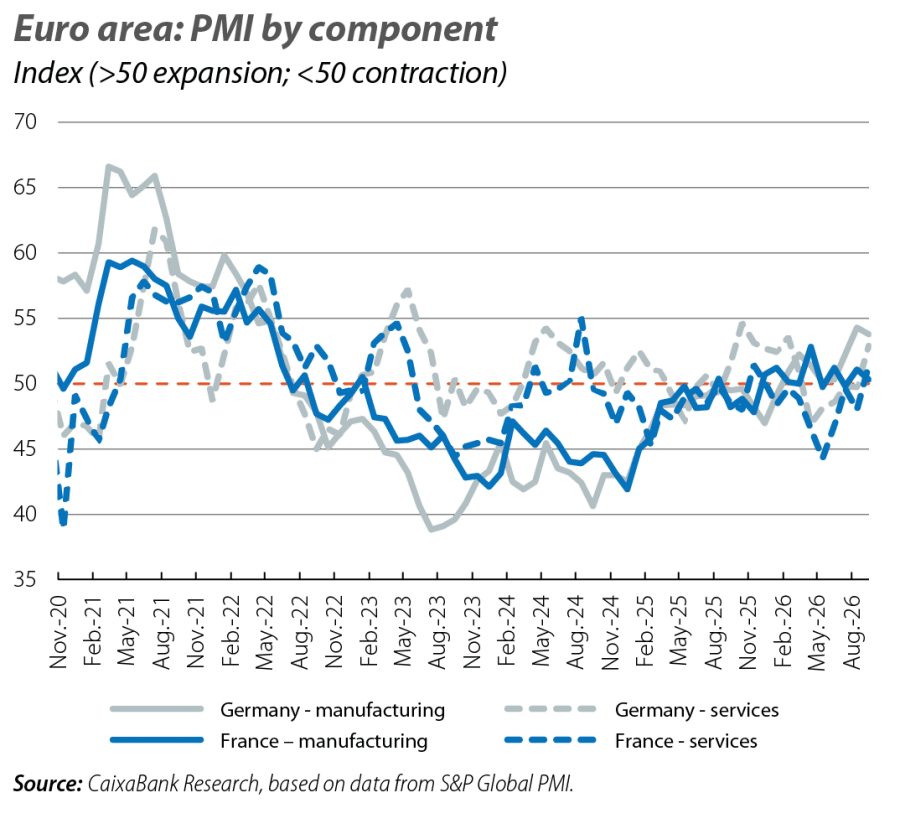
The main business climate and opinion indicators suggest that euro area growth (excluding Ireland) in Q3 maintained the good momentum of Q2, despite the worsening energy crisis and increased uncertainty. The euro area PMI reached a three-and-a-half-year high in September, rising by 1.1 points to 53.1 (with 50 being the threshold indicating positive growth), thanks to the significant revival of the services sector. By country, it surpassed the 50-point threshold in France for the first time this year and reached an 11-month high in Germany. This improvement in business optimism regarding Germany is bolstered by the trend in the Ifo business confidence index, which in September reached its highest level since May 2023 (89.9, with 100 being the benchmark threshold), as well as by signals from the ZEW, with more than 46% of respondents in September anticipating an improvement in the situation, compared to 12% who fear a deterioration.
However, the actual data dampen the optimism among business surveys, particularly in Germany
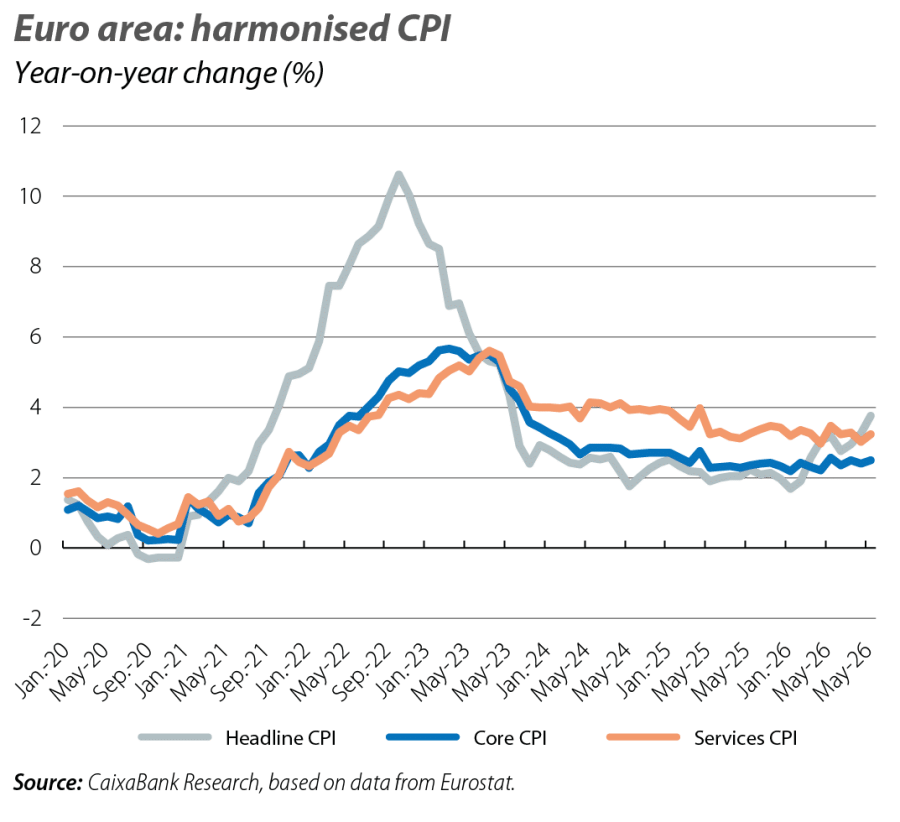
In contrast to the optimism shown by business surveys in Germany, confidence among German households remains low, against a backdrop of a slow rise in the unemployment rate (4.0% in July, the highest since the pandemic) and a rather weak start to the third quarter as suggested by July's activity indicators. In fact, retail sales in the country fell by 3.4% month-on-month (which dragged the figure for the euro area down to –0.6%). The dynamism of industrial orders (+2.5% month-on-month), meanwhile, was mainly explained by the boost from the more erratic items (transport and defence), given that excluding them, orders would have fallen by 1.4%. This underlying weakness aligns with the decline in industrial production (–1.1% month-on-month vs. 0.0% in July) and the slowdown in exports (–0.8% month-on-month vs. 0.0%). In this context, euro area headline inflation rose by 0.6 pps in September to 3.8%, the highest in three years. This increase was driven by the renewed surge in energy prices, as core inflation climbed just 0.1 pps to 2.5%, indicating that the indirect effects of the energy shock remain limited.
Inflation in the US remains under upward pressure due to energy while its labour market remains highly volatile
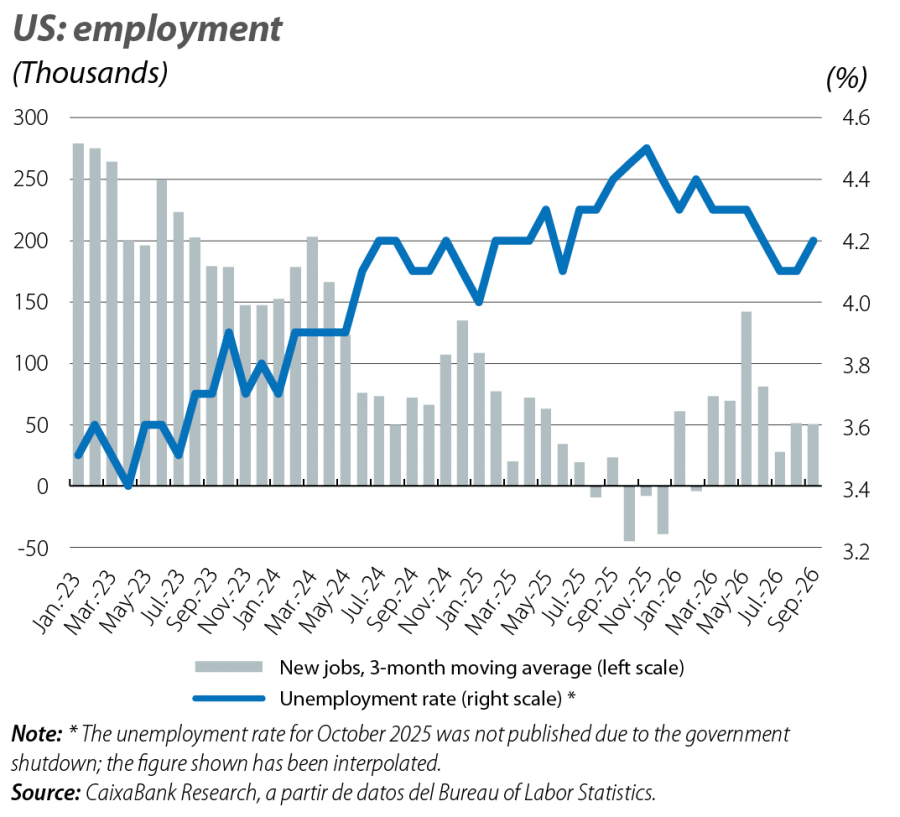
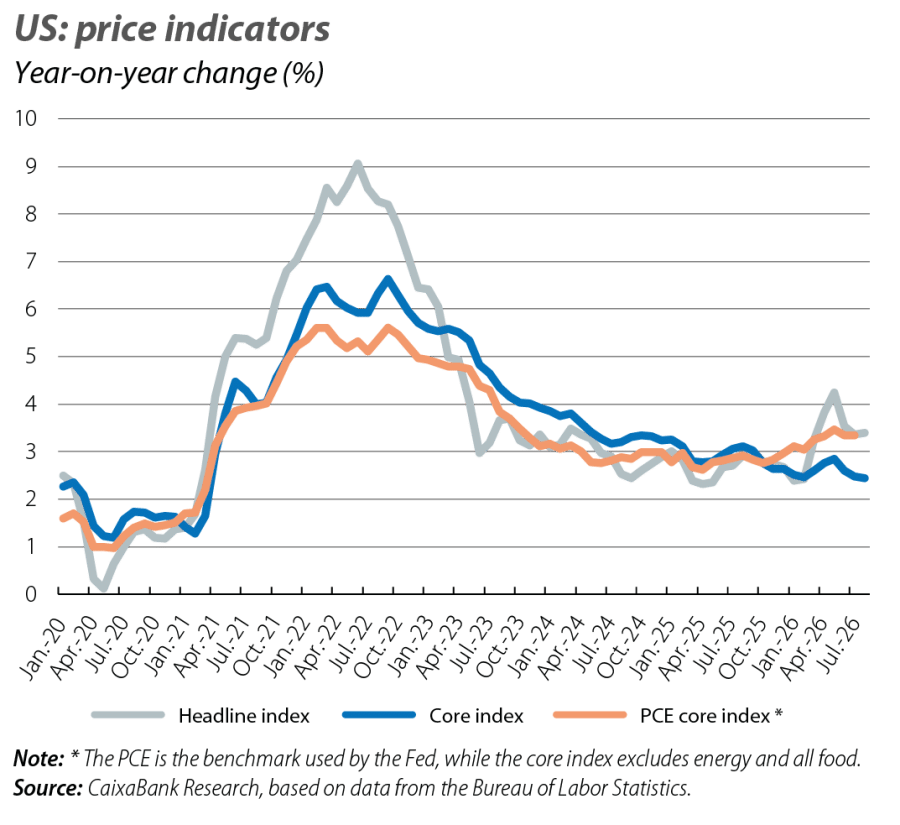
The latest data suggest a slowdown in household consumption: in July, it stagnated in real terms after growing by 0.4% in the previous two months, allowing the savings rate to recover to a four-month high (+0.4 pps, reaching 3.0% of disposable income). Moreover, the indicators do not hint at any substantial recovery in the coming months, in line with the renewed decline in the Michigan confidence index in August (among the lowest since the summer of 2022) and that of the Conference Board, which has spent much of the year fluctuating around its lowest levels since early 2021. Industrial production also stagnated in August (after two months of 0.2% month-on-month growth). However, the trend shown by the sector’s main climate indicators suggests this stagnation may be temporary: in September, the manufacturing PMI (+2.0 points, to 55.9) and the manufacturing ISM (–0.1 points, to 54.5) are firmly at levels consistent with dynamic growth in the sector. Job creation remains highly volatile, closing the third quarter with an average of 51,000 jobs created per month, below the monthly average of 76,000 jobs in the first half of the year. The unemployment rate increased by 0.1 pps to 4.2% in September. Inflation, meanwhile, remains under upward pressure due to energy: in August, the headline rate held steady at 3.4% according to the CPI, while the core rate fell by 0.1 pps to 2.4%.