The global economy holds firm, but challenges persist
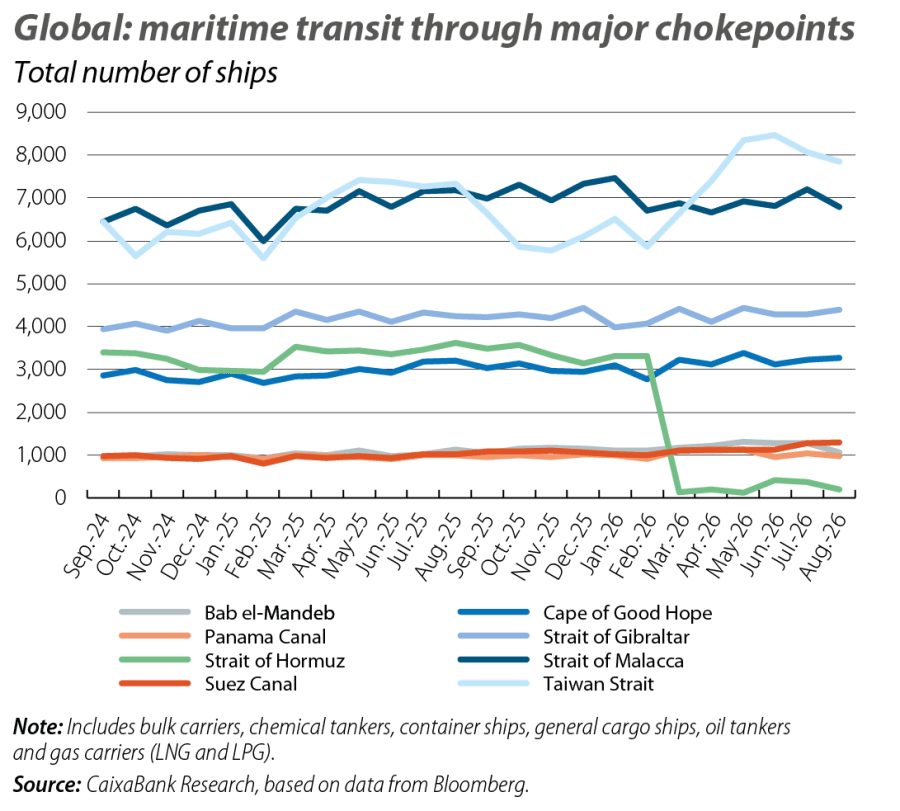
Geopolitical developments continue to loom over the global economy, with the focus remaining on the Middle East.
Geopolitical developments continue to loom over the global economy, with the focus remaining on the Middle East
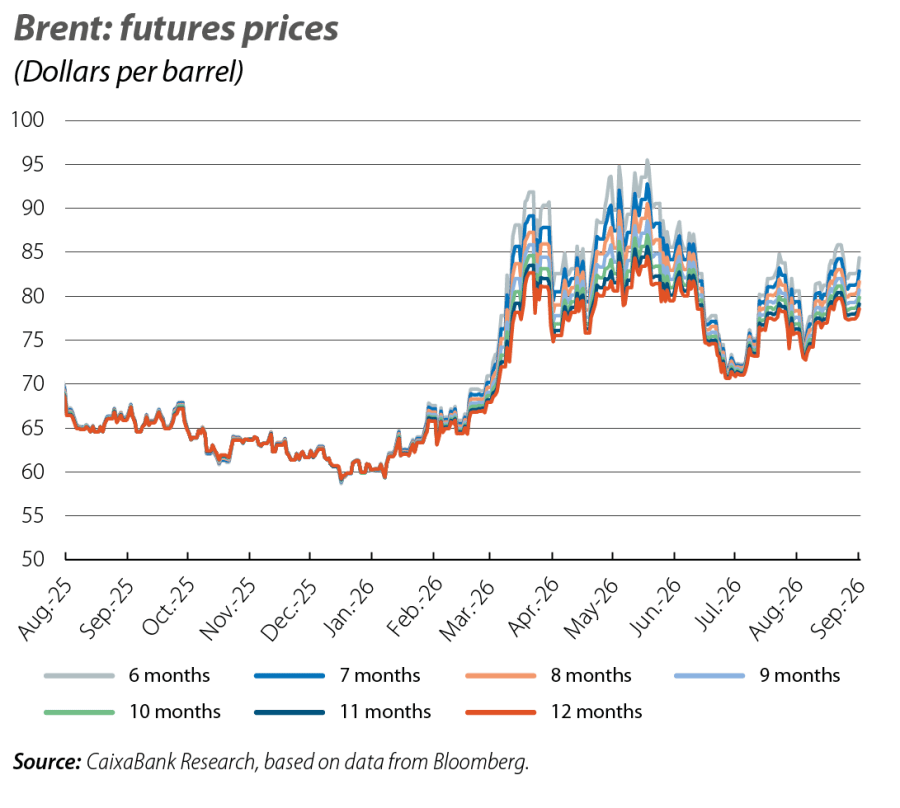
The summer began with negotiations between Iran and the US and expectations of a gradual normalisation of transit through the Strait of Hormuz, which helped ease oil market tensions in June. However, the resumption of hostilities prompted a new price surge. Brent crude remained volatile during August, averaging around 90 dollars per barrel, while futures for 6-12 months fluctuated around 80 dollars per barrel. Underlying concerns about potential supply disruptions and historically low global inventories continue to weigh on the energy market. Furthermore, uncertainty persists regarding the actual volume of crude oil shipments due to the growing opacity of available information. Liquefied natural gas prices also surged in August, with supply being more limited than expected coupled with significant electricity consumption due to the high temperatures recorded in Europe during the summer. The TTF, Europe's main benchmark, exceeded €60/MWh for deliveries through the winter. Overall, the global economy remains at the mercy of geopolitical tensions. An easing of these tensions could alleviate pressure on energy prices and economic activity, but significant risks remain.
Global activity continued to hold up in Q2, despite a global energy shock
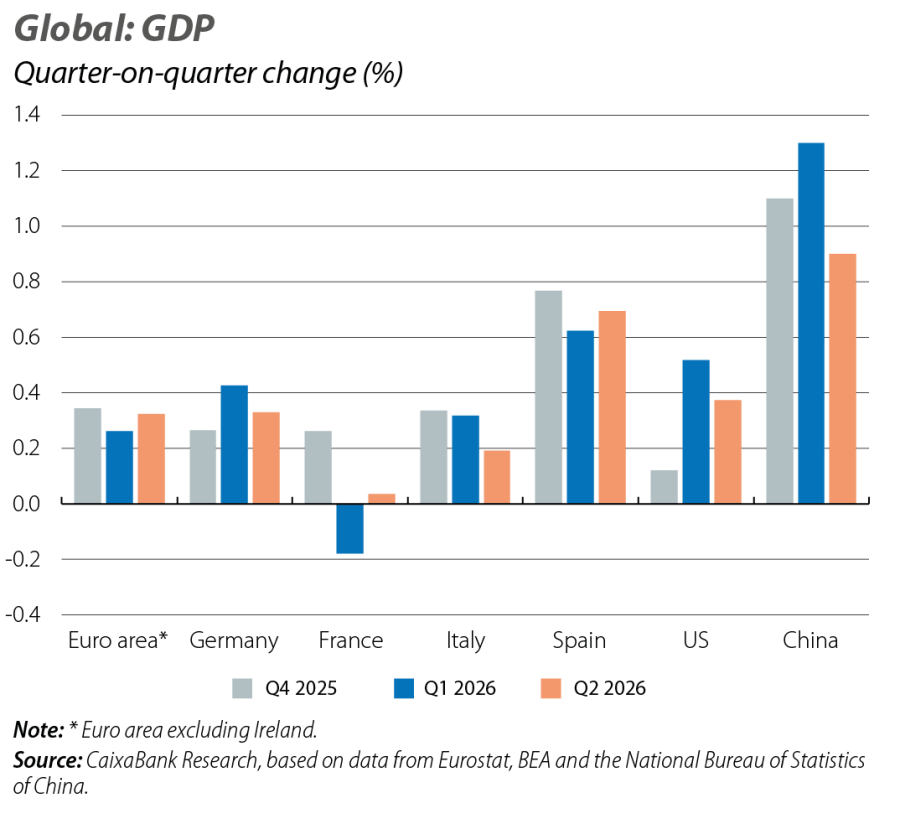
In the euro area, GDP grew by 0.6% quarter-on-quarter (0.3% excluding Ireland), exceeding expectations due to a better-than-expected performance from economies such as Germany (+0.3%), Italy (+0.2%), and Spain (+0.7%), while France stagnated (0.0%, following –0.2% in Q1). In the US, the economy maintained solid quarter-on-quarter growth of 0.4% in Q2, supported by strong domestic demand, particularly household spending and non-residential investment. The economies of the United Kingdom and Japan also performed well, with GDP growth of 0.4% and
0.3% quarter-on-quarter, respectively. In the case of the UK, this growth was driven by domestic demand, while in Japan the external sector and support from fiscal policy were the main contributors.
Activity remained robust in Q3, albeit with exceptions and the return of tariffs
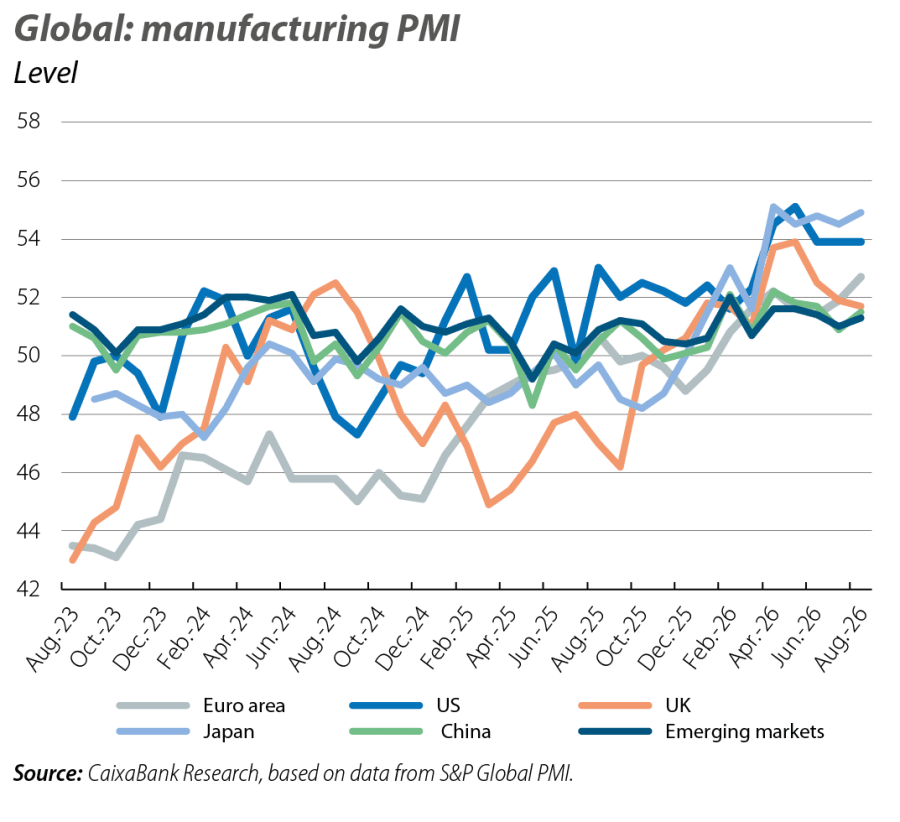
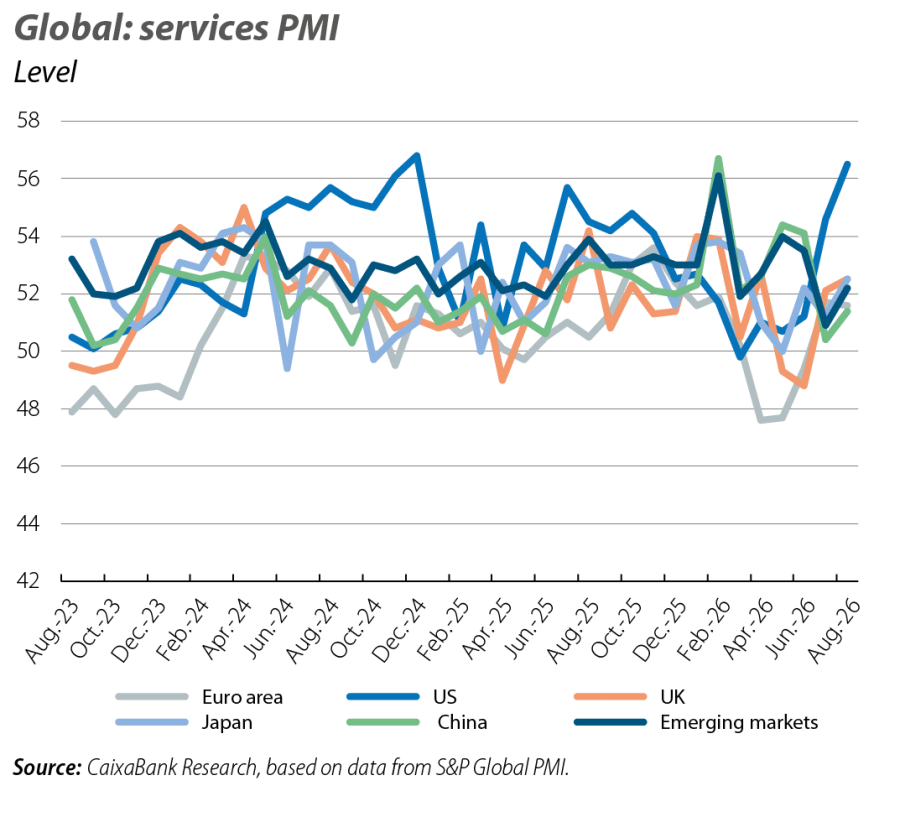
In the euro area, the available indicators point to strong economic momentum in July and August, with the PMIs at expansionary levels. Manufacturing PMIs reached 52.7 points in August (vs. 51.9 in July), the highest in over two years, while the services PMIs stood at 51.6 points (vs. 51.7 previously). In the US, business indicators remain strong, although signs of moderation are beginning to emerge in private consumption and the labour market. On the other hand, following the breakdown of negotiations between the US and Canada, the US administration imposed an additional 50% tariff on Canadian imports worth 20 billion dollars at the end of August and plans to raise tariffs on Canada’s automotive sector to 50% in 2027. Canada's government announced that it will respond with equivalent measures, which are expected to impact North American activity over the coming months. In China, the economy showed a loss of momentum over the summer. Retail sales and industrial production slowed in July, reflecting weak domestic demand, further compounded by extreme weather events. Despite a slight recovery in August (the RatingDog Composite PMI stood at 52.1 points, compared to 50.8 in July), the industrial upturn is driven by external demand, while construction and services remain weak. In this context, the authorities have reiterated their intention to accelerate public spending in the second half of the year, although no new stimulus measures have been announced.
The energy shock continues to drive prices upwards
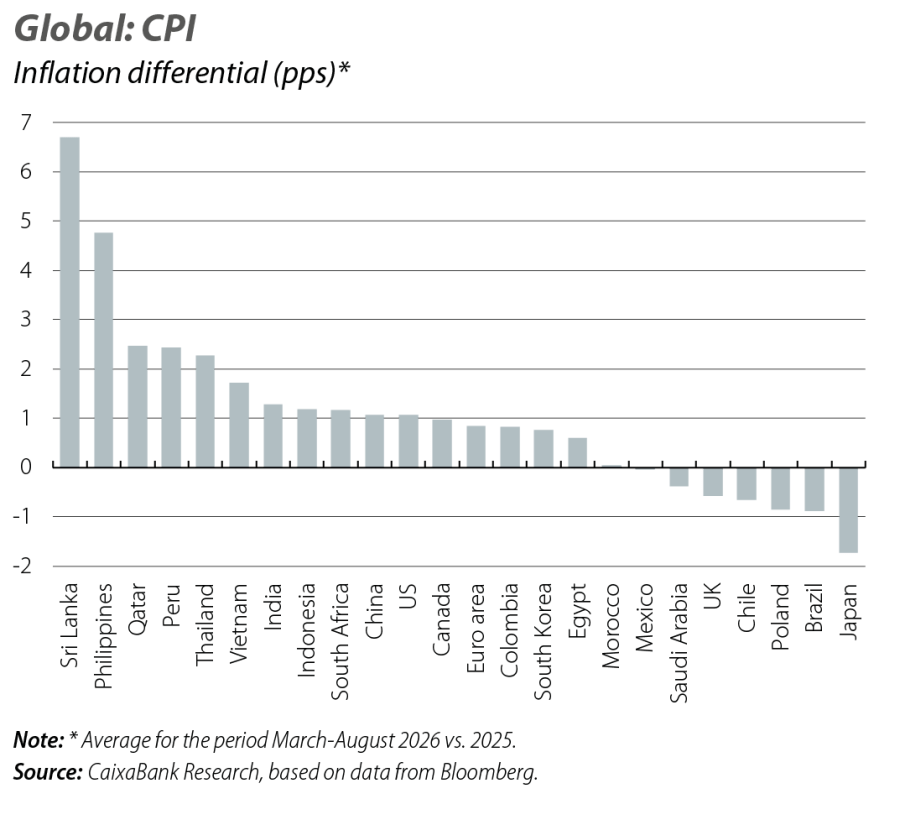
Euro area inflation rose to 3.3% in August (vs. 2.9% in July), driven mainly by rising energy costs, while core inflation eased slightly to 2.4% (vs. 2.5% in July). The increase was widespread among the major economies, with Spain recording the largest uptick (see the Spanish Economy - Economic Outlook section). The data was in line with expectations and reinforces the likelihood of another ECB rate hike in September. In the medium term, the key question remains whether the energy price shock will spread to other prices. In the US, both headline and core inflation fell by 0.1 pp in July (to 3.4% and 2.5%, respectively), but inflationary pressures persist. In this context, and given the rise in US sovereign rates in recent months, the new Fed Chair Kevin Warsh conveyed an optimistic view of US economic activity in Jackson Hole while expressing greater concern about inflation. The latest data indicate that the disinflation process is progressing more slowly than desired, which has reinforced market expectations that the Fed will tighten its monetary policy before the end of the year (see the Financial Markets - Economic Outlook section).
Emerging economies demonstrated remarkable resilience to the energy shock, but remain in a relatively more fragile position
Although rising energy costs impacted consumption in oil-importing countries, much of Asia maintained solid growth due to price regulation and energy subsidies, as well as strong domestic demand. Additionally, the AI investment boom boosted technological exports from economies such as Vietnam, Malaysia, Taiwan and Korea. India continues to exceed expectations, recording a year-on-year growth rate of 7.8% in Q2 (vs. 8.6% in Q1), supported by strong domestic demand and exports. Furthermore, the negative impact of the conflict has been contained and economic activity is expected to regain some momentum over the coming months. On the other hand, stronger inflationary pressures and the rise in global sovereign rates could bring new challenges, especially in countries with significant initial macroeconomic and fiscal imbalances.