The Spanish economy holds firm amid the energy onslaught
Spain’s economy continues to grow at a considerable rate, although the escalating conflict between the US and Iran is once again generating tensions.
Spain’s economy continues to grow at a considerable rate, although the escalating conflict between the US and Iran is once again generating tensions
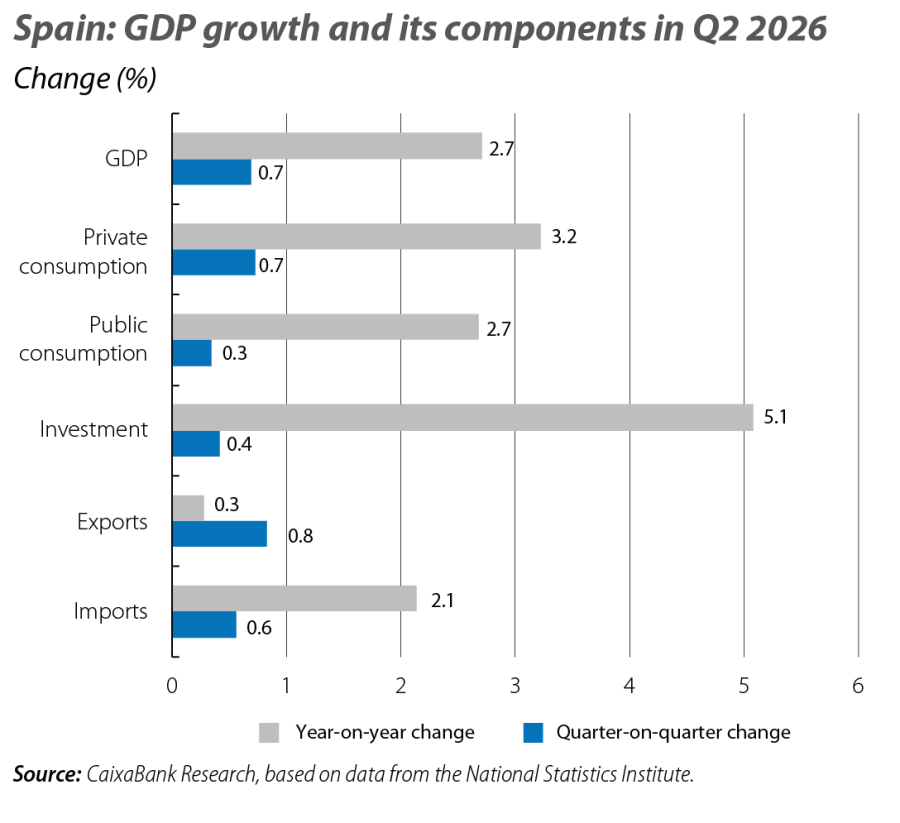
Despite the challenges in the international environment, the Spanish economy once again demonstrated its resilience by recording GDP growth of 0.7% quarter-on-quarter in Q2 2026: 0.1 pp more than in the previous quarter and 0.2 pps above our forecast. The composition was also favourable, with strong growth in both private consumption and investment. Service exports also performed well. The data, which reaffirmed the economy’s resilience, introduces an upward bias to our growth forecast of 2.4% for 2026. However, the resumption of hostilities between the US and Iran since July and the difficulties in normalising transit through the Strait of Hormuz have once again driven up oil and gas prices. This rise in energy costs is already affecting inflation and necessitates caution. Nevertheless, the economy is facing this new challenge from a position of strength.
The initial indicators available for Q3 suggest that economic activity remains robust, albeit it with mixed signals
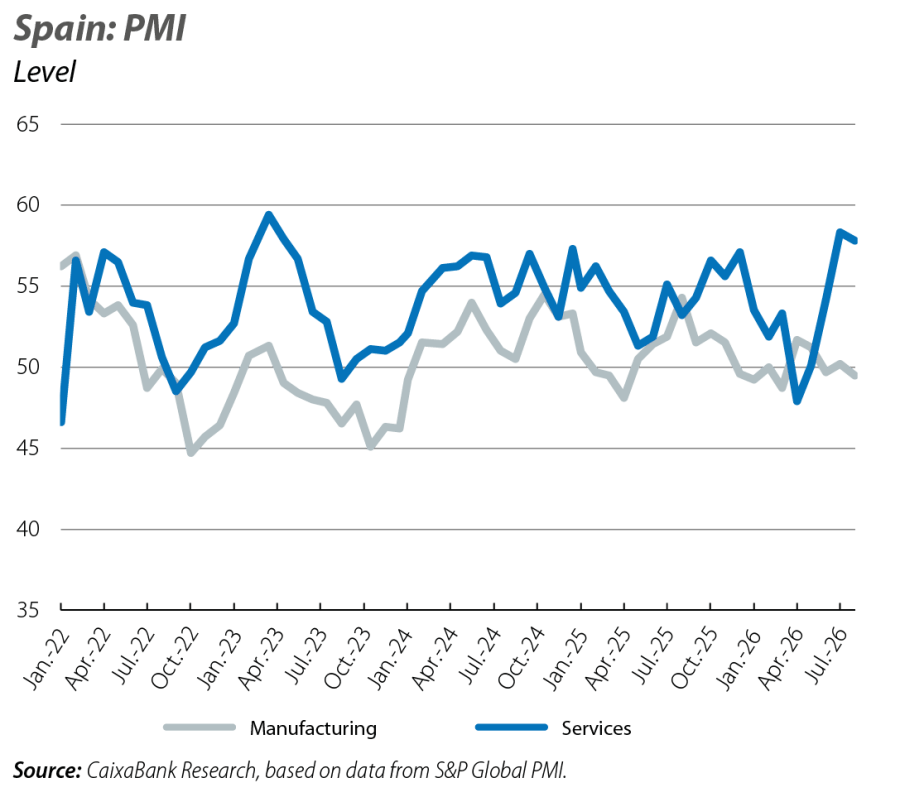
In July and August, the services PMI surged, reaching an average of 58.1 points compared to the previous quarter’s average of 50.7 points. This is a considerable level, indicating substantial growth in the sector. The manufacturing PMI has moderated slightly, averaging 49.9 points in July and August, compared to 50.9 points in Q2, suggesting that growth in the sector so far this quarter may have stalled. The signals from consumption were less favourable: retail sales, in real and seasonally adjusted terms, fell by 0.3% year-on-year in July, compared to growth of 0.8% recorded in Q2. Overall, the strength of the services sector and the buoyancy of tourism, which we will discuss later, suggest that the economy continues to grow dynamically at the start of the third quarter. Nevertheless, the rebound in inflation could gradually moderate household spending.
The labour market remains strong, but the regularisation of migrant workers makes understanding the underlying dynamics more challenging
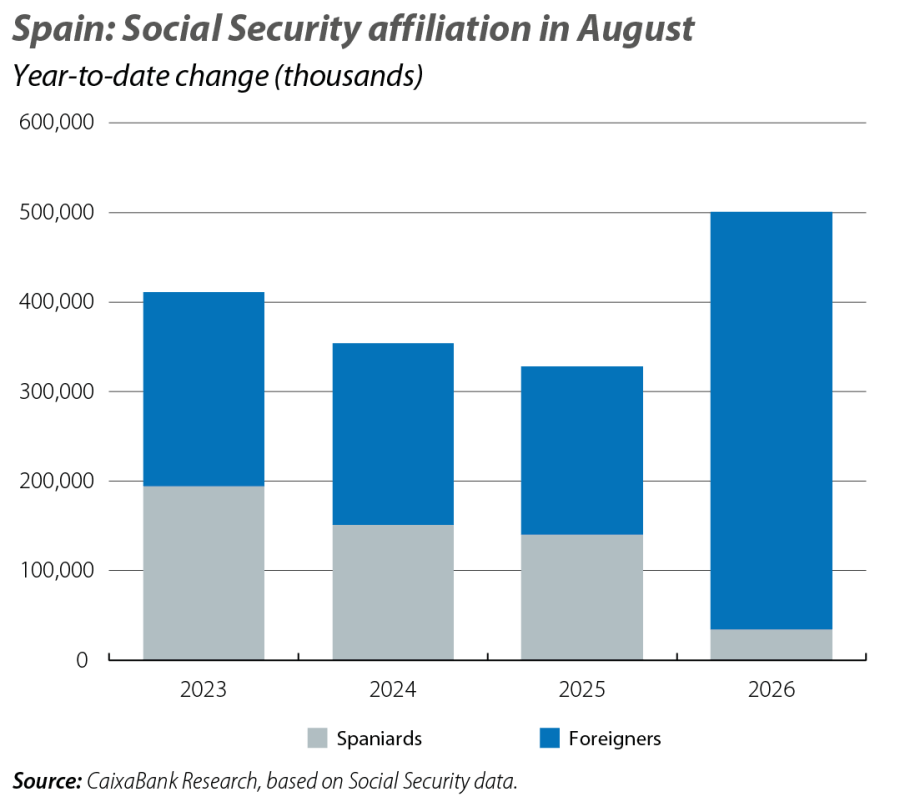
The number of registered workers fell by 162,840 people in August, a smaller decline than usual for this month (around 193,000 people on average in the months of August from 2023 to 2025). In seasonally adjusted terms, the figure increased by some 84,000 registered workers – a substantial advance which exceeds, for example, the average increase in the first quarter of 2026 (of around 50,000 members). However, this pattern is largely explained by the inclusion of workers from the exceptional regularisation process. In August, the number of foreign registered workers rose by around 40,000 people, far surpassing the usual decline experienced in this month of the year. In contrast, the trend in national registered workers sends a different message, as it fell by some 200,000 people, compared to an average decline of 172,000 recorded between 2023 and 2025.
The rise in fuel prices pushes inflation above 4% and skews forecasts upwards
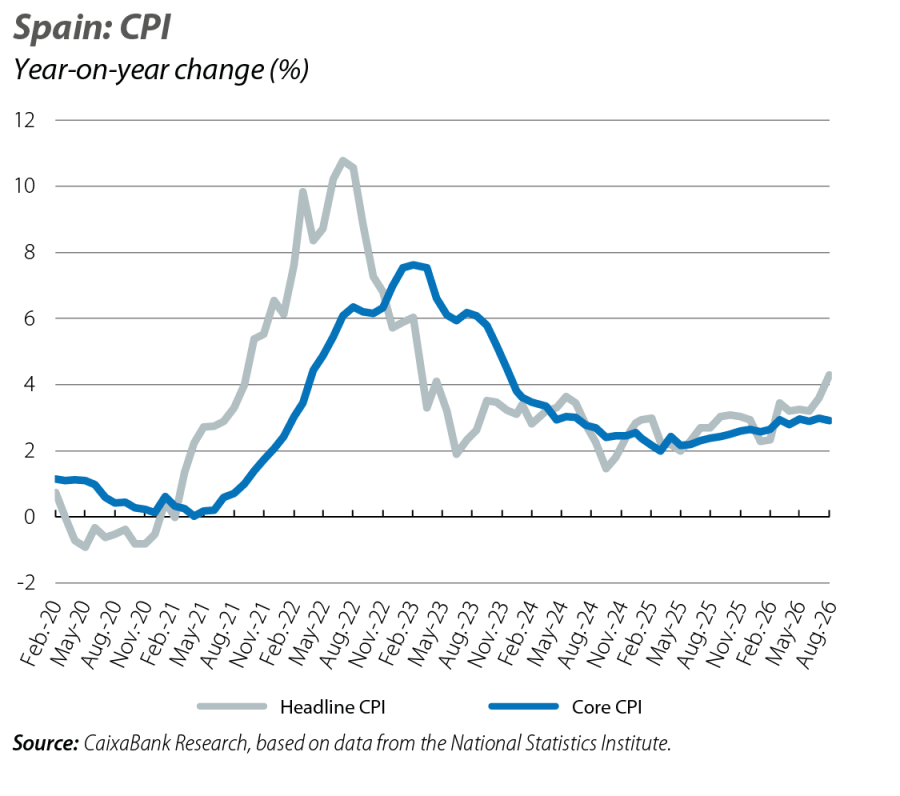
Headline inflation rose by 0.7 pps in August to 4.3%, while core inflation fell by 0.1 pp to 2.9%. The increase was mainly concentrated in energy, with prices rising by 17% year-on-year, driven by higher oil prices and the partial reduction of fuel subsidies. Between 1 and 27 August, the price of petrol climbed 7.6% month-on-month and that of diesel by 12.4%. The moderation of core inflation, in contrast, suggests that the shock remains confined to the energy sector for now. The exception is the services component, where inflation remains relatively high at 3.8%, influenced by the price trends of tourism-related services. The entrenchment of the conflict in the Persian Gulf has kept market expectations for energy prices above those used in our scenario, introducing upward risks to our forecast of an average inflation rate of 3.2% for 2026.
Tourism confirms a solid high season and continues to act as a buffer against the shock
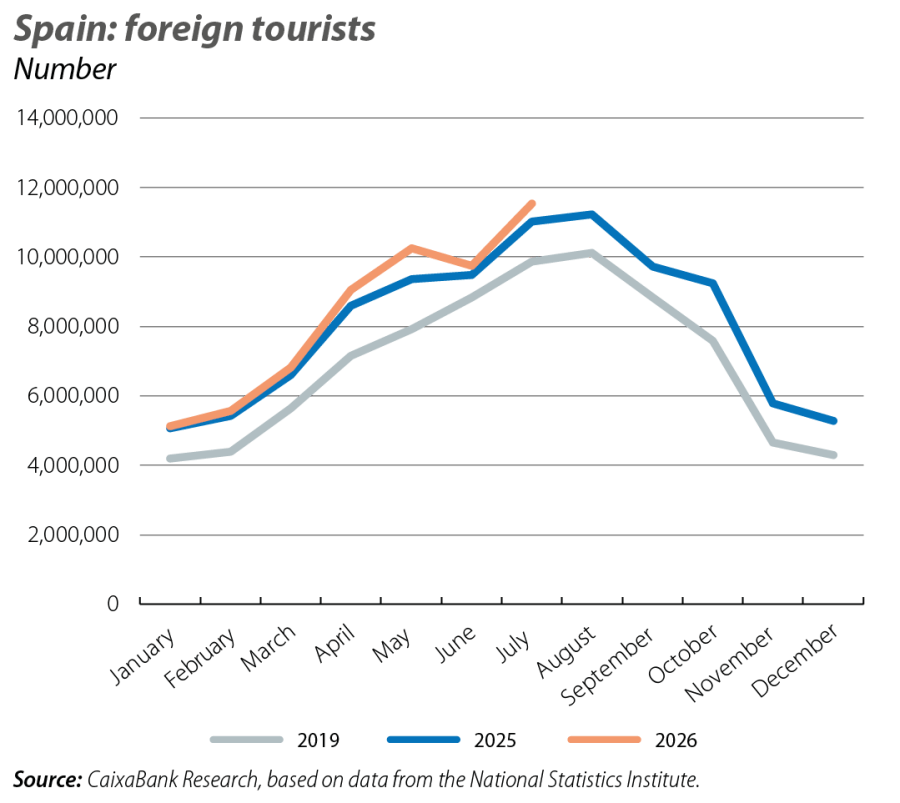
In July, nearly 11.5 million international tourists arrived in Spain, spending just over 18.2 billion euros. That is 4.6% and 10.9% more than the previous year, respectively. These figures are significantly higher than those experienced by the sector in July 2025, when arrivals and spending increased by 1.6% and 5.9%, respectively. These results are consistent with the redirection of some international tourist flows towards Spain due to the conflict in the Middle East and confirm the sector’s strong traction. However, rising transport costs and the loss of purchasing power in source markets could gradually limit this momentum if energy tensions persist.
Residential activity picks up slightly in June, but the underlying trend remains one of moderation
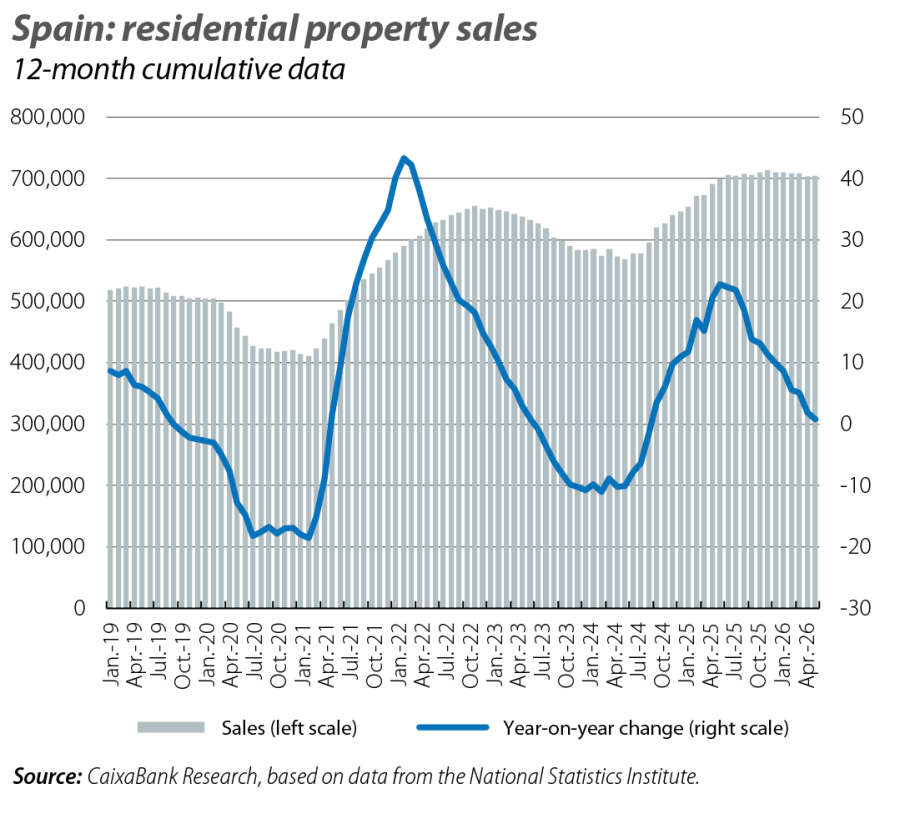
Property sales increased by 1.6% year-on-year in June, following several months of declines, with the accumulated volume over the past 12 months reaching 704,000 transactions. This is a historically high level, suggesting that the moderation should be interpreted as a normalisation rather than a change of cycle. However, the sharp rise in prices is gradually eroding households’ purchasing power. Financial conditions have also tightened: in January 2026, the 12-month Euribor stood at around 2.2%, whereas by August it had reached close to 3%. Residential activity is thus expected to continue losing some momentum in the coming months.