The Portuguese economy outperforms expectations in Q2
Portugal's GDP exceeds expectations in Q2, inflation accelerates in August, tourism grows moderately, and the external accounts record their worst result since 2022.
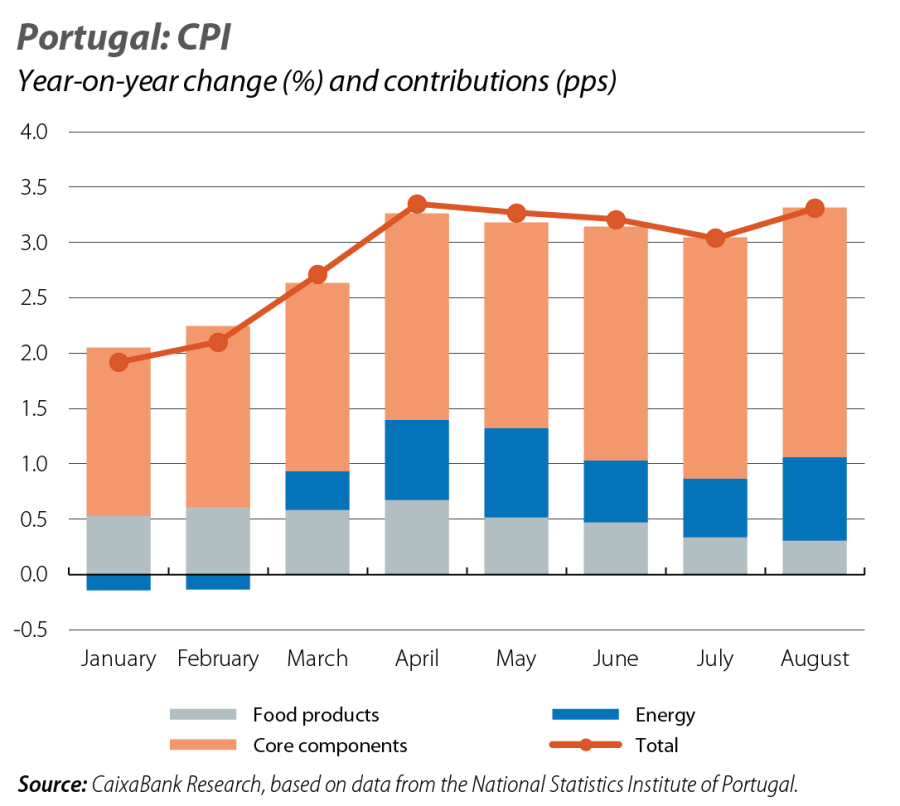
GDP exceeded expectations in Q2, growing by 0.8% quarter-on-quarter and 2.5% year-on-year
Domestic demand contributed 3.8 pps to year-on-year growth, 0.8 points less than in Q1 2026. This was due to a slowdown in the contribution from investment, which had recorded exceptionally high growth in the previous quarter. Consumption, meanwhile, remained strong. The contribution from external demand became less negative, standing at −1.3 pps. This was driven by more dynamic exports, which grew by 4.0%. Imports continued to record strong growth, especially services (+16.0%, 8.8 pps higher than in Q1 2026), while goods imports slowed. The Portuguese economy’s strong performance this quarter introduces upside risks to our GDP growth forecast for 2026 (1.8%), as several supporting factors remain in place, including the strong labour market and the execution of NGEU funds, now in their final phase.
Inflation accelerated in August, while the labour market remained stable
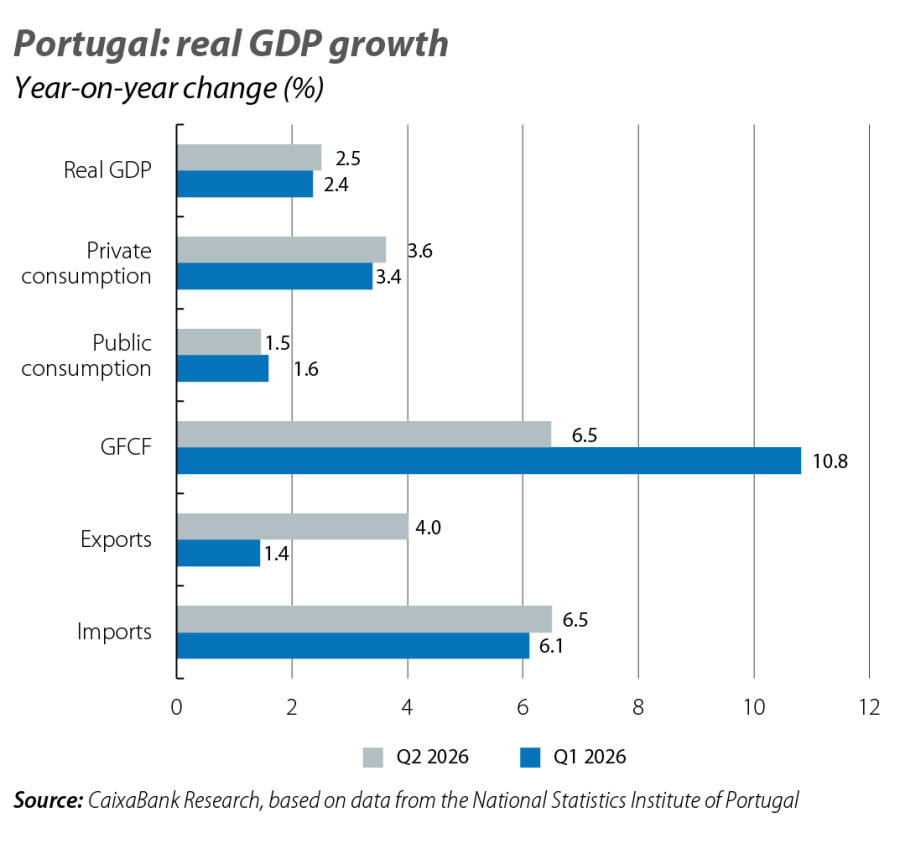
Headline inflation reached 3.3% (vs. 3.0% in July). According to the National Statistics Institute’s flash estimate, this increase was almost entirely due to rising fuel prices, which resulted in a further increase in energy inflation (+12.2% year-on-year, compared to 8.7% in July). Unprocessed food inflation slowed to 3.4% (vs. 3.7% in July). Core inflation continues to follow a more contained pattern (2.7%, 0.1 pps higher than in July) and so far there are no signs of energy goods affecting other components of the basket. The unemployment rate remained at 5.7% in July, while the employed population stood at 5.347 million people. This figure is 0.1% lower than in June, but the trend remains positive (+1.5% compared to July 2025), suggesting that the labour market will continue to show strength in the coming months, albeit with signs of stabilisation.
Tourism records moderate growth and the external accounts register their worst result since 2022
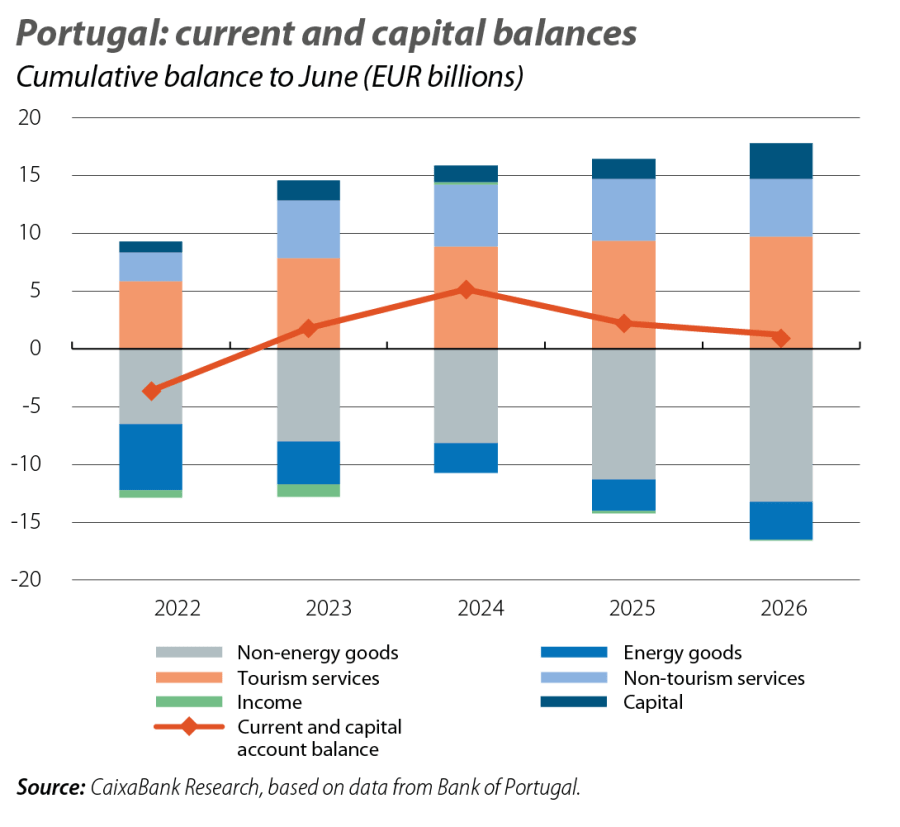
Tourist accommodation establishments received 3.4 million guests (+1.0% year-on-year) and recorded 9.6 million overnight stays (+2.1% year-on-year). This places the cumulative growth in the number of tourists and overnight stays at 1.8% and 1.5%, respectively, driven mainly by the strength of resident tourism. The combined balance of the current and capital accounts stood at 1.2 billion euros (cumulative balance to June), representing a reduction of 1.0 billion euros compared to the same period the previous year. This pattern reflects a 2.3-billion-euro deterioration in the current account balance, specifically in the balance of trade in goods (–2.5 billion euros), mainly due to the non-energy component. The services balance remained virtually unchanged (+34 million euros) as the increase in the tourism sector surplus was offset by a decline in non-tourism services.