Higher growth and more inflation in Portugal
The Portuguese economy demonstrated greater dynamism than initially estimated following the upward revision of the historical GDP series, which raised the growth recorded in the first two quarters of 2026. Moreover, the available indicators suggest that activity has shown strong momentum in the third quarter. In parallel, inflation rose in September, while the growth in house prices continued to moderate. Finally, Portugal continued to record a strong external position, with an external lending capacity equivalent to 2.3% of GDP at the end of the second quarter.
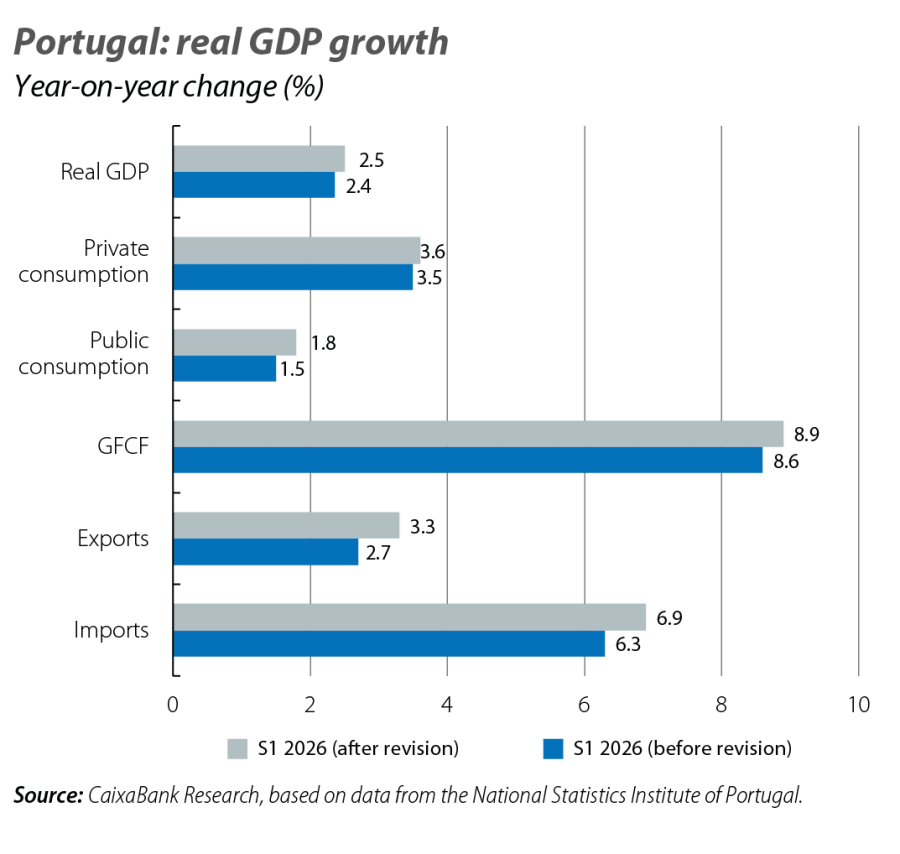
The publication of the historical GDP series led to an upward revision of growth in the first two quarters of 2026
The publication of the historical GDP series led to an upward revision of growth in the first two quarters of 2026 and placed the half-yearly increase at 2.5%, 0.1 percentage point higher than the previous estimate. The revision also places growth for 2024 at 2.7% (an upward revision of 0.5 pps) and maintains growth for 2025 at 1.9%. Domestic demand remained the main driver of growth in the first half of 2026, with upward revisions in consumption (+3.6% year-on-year, +0.1 pp) and investment (+8.9% year-on-year, +0.3 pps). Overall, this review, a better-than-expected second quarter, and the expectation of continued growth in the second half have led us to revise the growth forecast for 2026 to 2.3% (previously 1.8%).
The available indicators for Q3 show strong momentum
The Economic Sentiment Indicator (ESI) rose to 102.4 points (vs. 101.6 in Q2), with uneven performance across components. Confidence in industry improved, while confidence among consumers, services and construction were affected by rising inflation and interest rates. Consumption and labour market indicators continue to show notable strength. The high household savings rate, along with the announcement of new fiscal stimuli in Q4, provides a significant cushion for disposable income and will help sustain growth towards the end of the year.
Inflation rises in September, while house prices grow at a more moderate pace
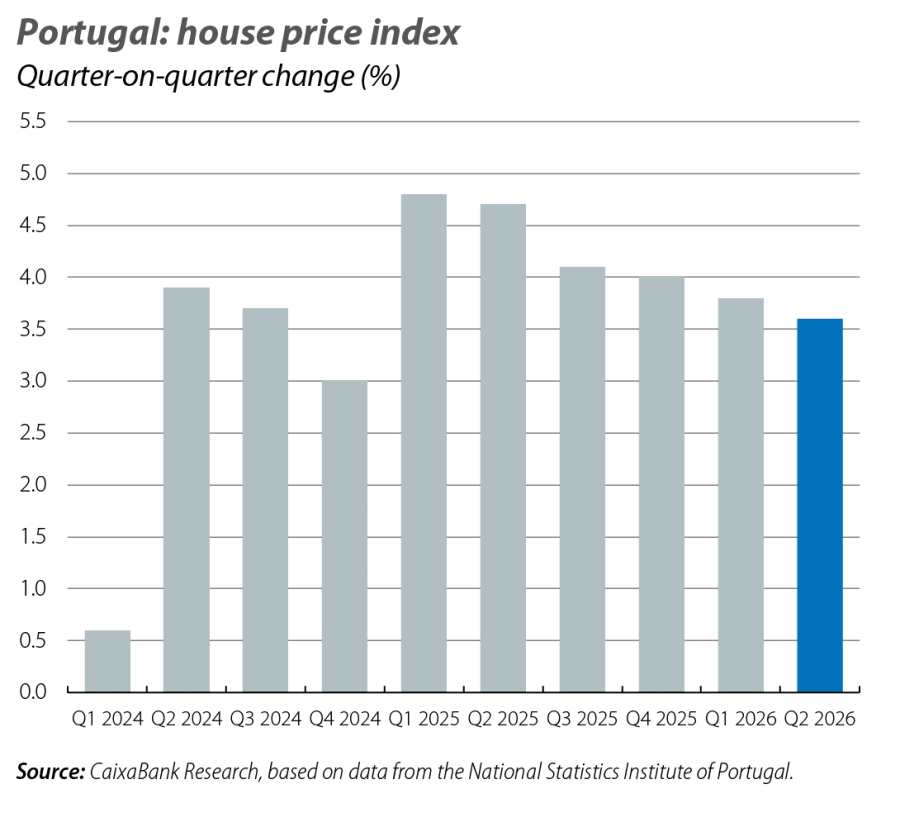
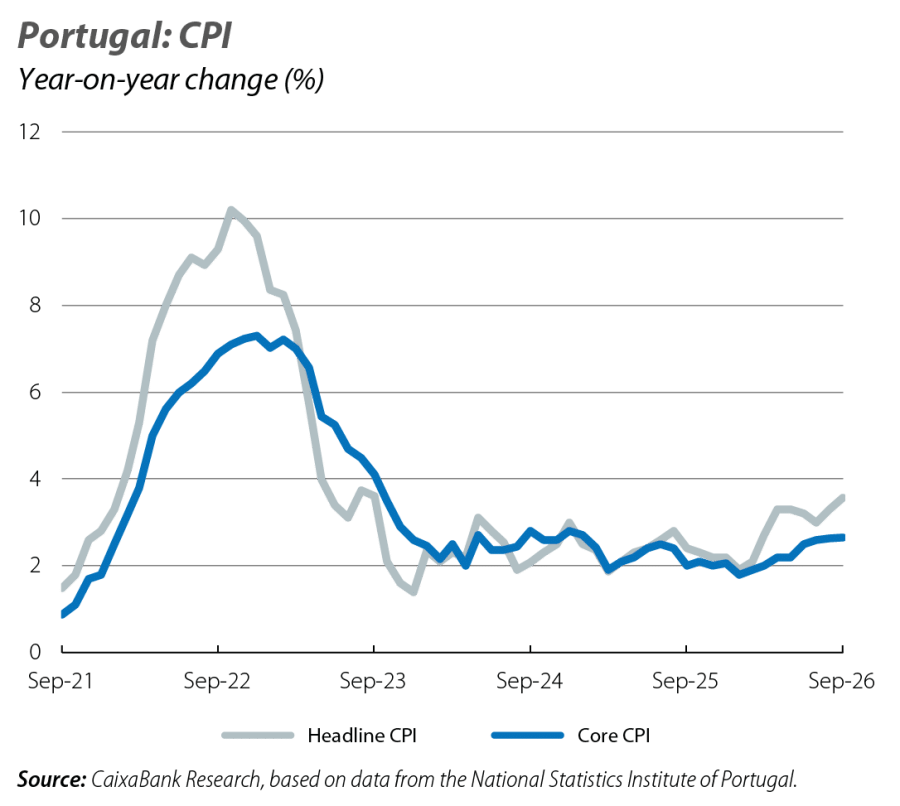
The year-on-year rate of change in the CPI stood at 3.6% in September (+0.3 pps compared to August). Core inflation rose to 2.7% (+0.1 pp) and remains on a more restrained trajectory. The house price index, meanwhile, rose by 16.5% year-on-year in Q2 (vs. 17.8% in Q1). The number of transactions in the quarter remained strong and well above the series average, albeit with a slowdown (–6.4% year-on-year). Although the persistence of high demand and supply-side constraints will continue to support prices, we expect the moderation trend to persist n the second half of the year amid rising interest rates.
The economy records an external lending capacity of 2.3% of GDP at the end of Q2
Households remain the largest contributors to this surplus, with a lending capacity equivalent to 4.1% of GDP. Non-financial corporations, meanwhile, continue to reduce their funding needs, reflecting their lower levels of debt. The general government recorded an external lending capacity (government balance in national accounting terms) of 0.5% of GDP (–0.1 pp vs. the same period the previous year). Budget execution data also show a reduction in the surplus during this period (from 0.9% to 0.5% of GDP). On the expenditure side, the most notable factors are the significant increase in public investment, exceeding 30%, and the fiscal impact of the storms at the beginning of the year, estimated at around 550 million euros.