The trajectory of employment growth in Spain
Employment in Spain has experienced rapid growth in recent years. The unemployment rate has also fallen sharply, but it remains one of the highest in the euro area. Can the labour market continue to support Spain’s economic growth?

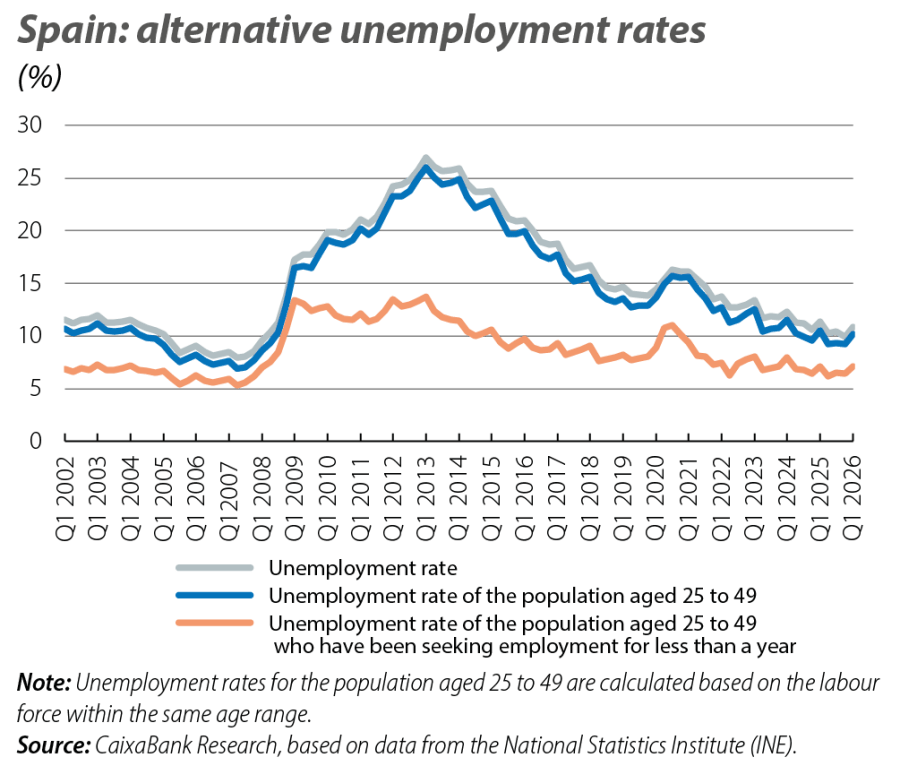
It is well known that employment in Spain has experienced rapid growth in recent years. The unemployment rate has also fallen sharply, reaching 10.5% in 2025, the best figure since 2008 and almost 4 pps below the 2019 figure. Nevertheless, it remains one of the highest in the euro area. Furthermore, the number of job vacancies in 2025 was almost 50% higher than in 2019; 40% of the jobs created were filled by foreign-born workers, and in Q2 2026 more than 40% of firms reported being constrained by the availability of labour.1 In light of these figures, one might question whether the labour market can continue to support Spain’s economic growth.
A significant portion of unemployment is concentrated among groups who experience difficulties entering the labour market, most notably the long-term unemployed. In the years leading up to the 2008 financial crisis, only 25% of the unemployed had been seeking work for more than a year. However, this group exceeded 50% during the subsequent recovery period and has remained at around 40% in recent years (35% in Q1 2026).
- 1
Bank of Spain’s EBAE business activity survey.
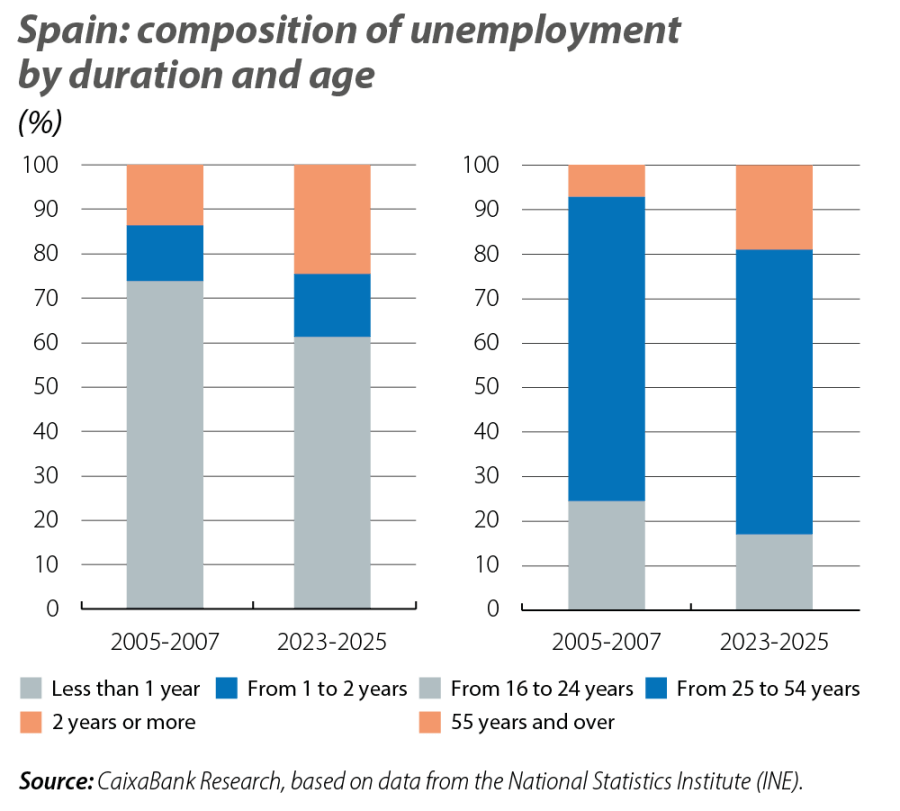
This factor is compounded by an increase in unemployment among older workers. The proportion of unemployed individuals aged 55 or over has increased significantly since the financial crisis and, in the current cycle, is nearly double the pre-2008 level. Qualifications also play a crucial role: around half of the unemployed have a low level of education.2 These three factors – long duration, senior age, and low education – create a pool of unemployment that is difficult to absorb.
Groups with higher employability have a lower unemployment rate. For example, the unemployment rate for people aged 25 to 49 who have been unemployed for less than a year is around 6%. This is significantly lower than the rate for the population as a whole, although it is still above the euro area’s 4%.
- 2
Low educational level: having completed at most the first stage of secondary education.
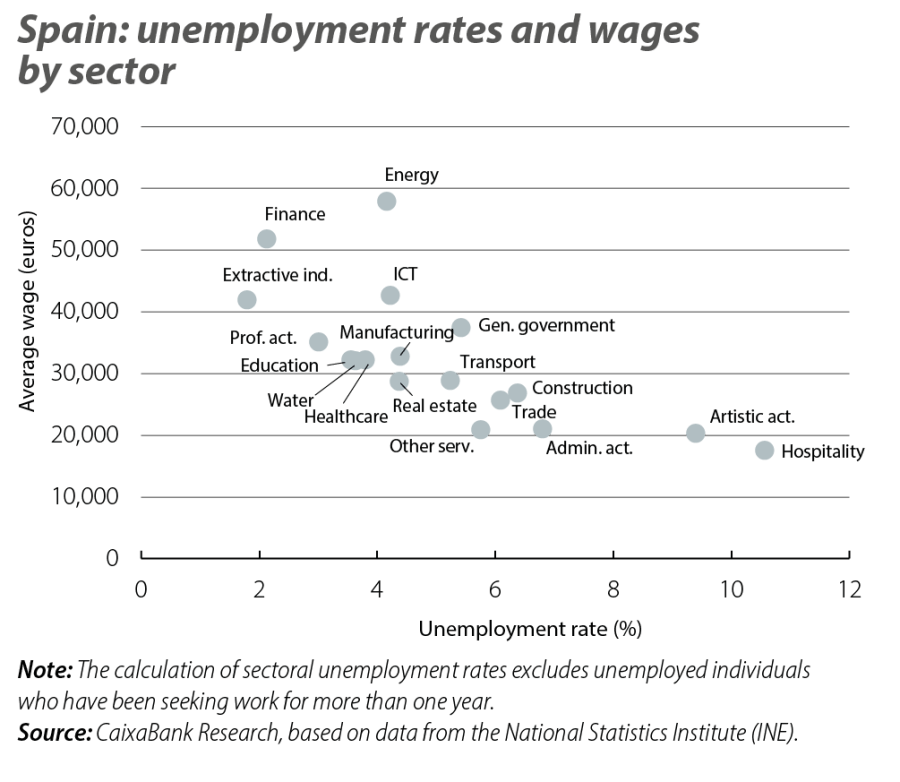
By sector, the unemployment rate lies below 5% in half of them, which account for 40% of employment. Sectors with lower unemployment rates also tend to have higher wages.
Spain’s labour market still shows a relatively high level of slack overall, so it should be able to continue supporting economic growth. However, it is essential to strengthen the mechanisms that incentivise and facilitate the employment of individuals who face greater challenges in finding work. Active employment policies are crucial, especially those focused on training in sectors and professions that experience the greatest difficulties in finding labour.